


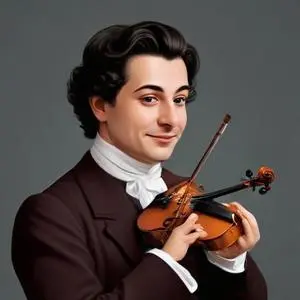
A virtuosic violinist and composer who wrote over 150 concertos and sonatas, known for his technically demanding and expressive works that showcased his mastery of the instrument.
Giuseppe Tartini, a renowned Italian composer and violinist of the Baroque era, left an indelible mark on the music world with his pioneering compositions, particularly his iconic Violin Sonata in G Minor, famously known as the "Devil's Trill Sonata". This masterpiece showcases Tartini's technical wizardry and emotional depth, solidifying his position as one of the most celebrated violinists of his time.
Born on April 8, 1692, in Pirano, Republic of Venice (now Piran, Slovenia), Tartini was destined for a life of music. His parents, Gianantonio and Caterina Zangrando, envisioned him as a Franciscan friar, and thus, he received basic musical training. However, Tartini's passion for music led him to pursue a career in law at the University of Padua, where he also developed his fencing skills.
Tartini's life was marred by controversy and drama. His marriage to Elisabetta Premazore, a woman his father disapproved of due to her poverty and unknown father, led to his arrest and subsequent flight to the monastery of St. Francis in Assisi. Here, he studied under Bohuslav Matějernohorsk, while escaping prosecution.
A pivotal moment in Tartini's career came when he heard Francesco Maria Veracini's virtuosic playing in 1716. Inspired and humbled, Tartini retreated to Ancona, where he devoted himself to intense practice, perfecting his craft in solitude. This period of dedication catapulted him to fame, earning him the appointment of Maestro di Cappella at the Basilica di Sant'Antonio in Padua in 1721.
Tartini's oeuvre boasts over a hundred works, primarily violin concertos and sonatas. His innovative compositions showcased his mastery of harmony and counterpoint, influencing generations of musicians to come. His most famous works include:
Tartini's impact on the development of violin music is immeasurable. His contributions paved the way for future virtuosos, such as Niccolò Paganini and Wolfgang Amadeus Mozart. His legacy extends beyond the Baroque era, influencingRomantic and Classical composers alike.
"The Devil told me I had to practice."
This enigmatic quote, attributed to Tartini, adds to the mystique surrounding his legendary "Devil's Trill Sonata", underscoring the composer's deep connection with his craft.
Tartini's later years were marked by personal struggles and declining health. He passed away on February 26, 1770, leaving behind a rich legacy that continues to inspire and captivate audiences to this day.
In conclusion, Giuseppe Tartini's remarkable life and works serve as a testament to his boundless creativity, innovative spirit, and technical mastery, solidifying his place as one of the most revered figures in the history of classical music.
Born in 1678
A virtuosic violinist and prolific composer, he crafted over 400 concertos, including "The Four Seasons," which remains a beloved and iconic masterpiece of classical music.
Born in 1685
A master of Baroque music, he composed over 1,000 works, including orchestral suites, cantatas, and passions, that still inspire and influence musicians today. His innovative use of counterpoint and harmony raised the bar for classical music.
Born in 1685
A renowned Baroque composer and organist, famous for creating majestic orchestral suites, operas, and oratorios, including the iconic "Messiah" masterpiece.
Born in 1782
A virtuosic violinist and composer who revolutionized the instrument's technical possibilities, leaving an indelible mark on classical music.
Born in 1756
A child prodigy and master of classical music, he composed over 600 works, including symphonies, operas, and chamber music, that continue to inspire and influence musicians today.
Born in 1770
A musical genius who expanded the possibilities of classical music, creating iconic symphonies and piano sonatas that continue to inspire and influence generations of artists.
Born in 1811
A virtuosic pianist and composer who revolutionized classical music with his technically demanding and emotionally expressive works, blending Hungarian folk influences with Romantic-era drama.
Born in 1809
A renowned 19th-century musician who masterfully blended classical and romantic styles, creating iconic works like the "Wedding March" and "Elijah" oratorio. His compositions continue to inspire and influence generations of artists.
