


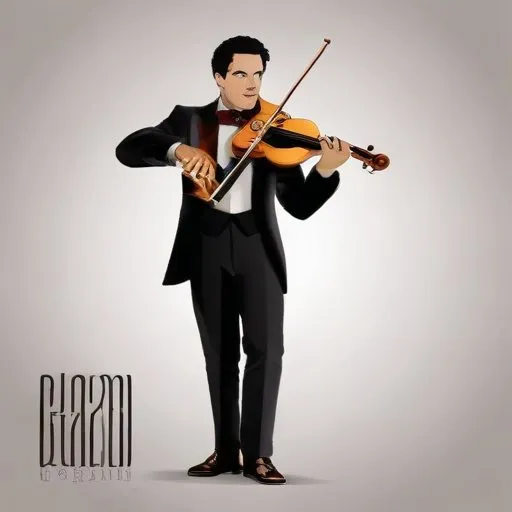
A virtuosic violinist and composer, known for his innovative and expressive works that blended Italian and German styles, influencing the development of the classical violin concerto.
Francesco Maria Veracini, a renowned Italian composer and violinist, is celebrated for his groundbreaking contributions to the world of music, particularly in the realm of violin sonatas. With a unique and distinct style that defied conventions, Veracini's compositions heralded the end of the Baroque era and paved the way for a new era of musical expression.
Born on February 1, 1690, in Florence, Italy, Veracini was immersed in a family of musicians and artists. His uncle, Antonio Veracini, a skilled violinist, taught him the instrument, while his grandfather, Francesco di Niccol Veracini, ran a music school in the family home. This environment nurtured Veracini's passion for music, and he went on to study with prominent musicians, including Giovanni Maria Casini and Francesco Feroci.
Veracini's compositions revealed a bold and innovative spirit, earning him recognition as a master of his craft. His violin sonatas, characterized by complex harmonies and melodies, showcased his exceptional skill as a composer. Critics and contemporaries alike praised his unique style, with Charles Burney noting that Veracini "had certainly a great share of whim and caprice, but he built his freaks on a good foundation, being an excellent contrapuntist."
Veracini's violin sonatas, numbering over 50, are considered some of the most significant works of the Baroque era. These compositions showcased his mastery of the instrument, as well as his ability to create complex, harmonious structures. Luigi Torchi, a musicologist, went so far as to say that Veracini "rescued the imperiled music of the eighteenth century."
Veracini's talents as a violinist were in high demand, and he performed alongside esteemed musicians of his time. He was known to have appeared in concert with his uncle, Antonio Veracini, and was a soloist in Venice at the Christmas masses at San Marco in 1711. His compositions were also performed by prominent violinists, including Carlo Ambrogio Lonati, whom Veracini esteemed as a great violinist.
Veracini's contributions to music have been enduring, and his legacy extends beyond his own compositions. The asteroid 10875 Veracini was named in his honor, a testament to his significance in the world of music. His innovative style and compositions paved the way for future generations of musicians, solidifying his place as a visionary in the world of classical music.
Veracini's personal life was marked by a strong sense of family and tradition. He was born into a family of musicians and artists, and his own son, Benedetto, went on to become a painter. Veracini's cousin, Niccol Agostino Veracini, was also a painter. Despite his many accomplishments, Veracini's life was not without its challenges, and he faced financial difficulties towards the end of his life.
Francesco Maria Veracini passed away on October 31, 1768, leaving behind a legacy of innovation and excellence in the world of music. His compositions continue to inspire and delight audiences, ensuring his place as one of the most significant figures in the history of classical music.
Born in 1678
A virtuosic violinist and prolific composer, he crafted over 400 concertos, including "The Four Seasons," which remains a beloved and iconic masterpiece of classical music.
Born in 1685
A master of Baroque music, he composed over 1,000 works, including orchestral suites, cantatas, and passions, that still inspire and influence musicians today. His innovative use of counterpoint and harmony raised the bar for classical music.
Born in 1685
A renowned Baroque composer and organist, famous for creating majestic orchestral suites, operas, and oratorios, including the iconic "Messiah" masterpiece.
Born in 1685
A virtuosic harpsichordist and composer, renowned for crafting over 550 sonatas that showcased his innovative and expressive style, blending Italian and Portuguese influences. 42
Born in 1653
A virtuosic violinist and composer who revolutionized the concerto grosso form, creating a new era of classical music. His influential works elevated the violin to a solo instrument, shaping the course of Western classical music.
Born in 1692
A virtuosic violinist and composer who wrote over 150 concertos and sonatas, known for his technically demanding and expressive works that showcased his mastery of the instrument.
Born in 1782
A virtuosic violinist and composer who revolutionized the instrument's technical possibilities, leaving an indelible mark on classical music.
Born in 1695
Noted for his innovative and expressive oboe playing, as well as his contributions to the development of the classical symphony, particularly in the galant style.
