


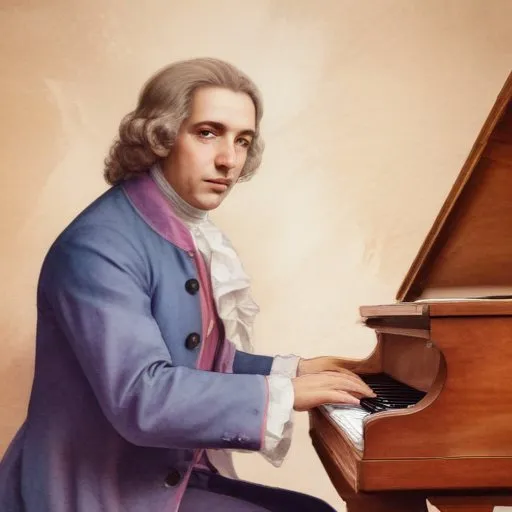
A virtuosic harpsichordist and composer, renowned for crafting over 550 sonatas that showcased his innovative and expressive style, blending Italian and Portuguese influences. 42
Domenico Scarlatti is renowned for his monumental contribution to the world of music, leaving behind an incredible legacy of 555 keyboard sonatas that continue to mesmerize and inspire generations of musicians and music enthusiasts. As a Baroque composer, his innovative and expressive style has had a profound impact on the development of the Classical period.
Scarlatti was born on October 26, 1685, in Naples, Kingdom of Naples, to the esteemed composer and teacher Alessandro Scarlatti. His early life was immersed in music, studying under his father and other prominent composers of the time, including Gaetano Greco, Francesco Gasparini, and Bernardo Pasquini.
In 1701, Scarlatti was appointed as a composer and organist at the Chapel Royal of Naples, working briefly under his father. He later revised Carlo Francesco Pollarolo's opera Irene for performance at Naples, showcasing his exceptional skill and talent.
In 1709, Scarlatti entered the service of the exiled Polish queen Marie Casimire in Rome, where he met the English composer and organist Thomas Roseingrave. This period of his life was marked by the composition of several operas for Queen Casimire's private theatre.
Scarlatti's association with the Portuguese and Spanish royal families began in 1719, when he became the Maestro di Cappella to King John V of Portugal. He spent much of his life in the service of these royal families, composing music that would cater to their refined tastes.
Scarlatti's keyboard sonatas, characterized by their intricate fingerwork, complex harmonies, and innovative use of ornamentation, revolutionized the genre. His compositions blurred the lines between the Baroque and Classical styles, paving the way for future generations of composers.
One of the most fascinating aspects of Scarlatti's music is its unique blend of Italian and Iberian influences. His time in Portugal and Spain exposed him to the rich cultural heritage of these regions, which he incorporated into his compositions, creating a distinctive and captivating sound.
Scarlatti's life was marked by numerous encounters with prominent figures of the time, including George Frideric Handel, with whom he engaged in a famous harpsichord competition at the palace of Cardinal Ottoboni in Rome. Although Handel was considered superior on the organ, Scarlatti's exceptional skill on the harpsichord earned him the admiration of his contemporaries.
Throughout his life, Scarlatti was known for his humility and reverence towards his fellow composers. He often spoke of Handel's skill with great admiration, crossing himself in veneration when mentioning his name.
Domenico Scarlatti's contributions to the world of music are immeasurable. His keyboard sonatas continue to inspire and challenge musicians, while his innovative style has influenced generations of composers.
In the world of classical music, Scarlatti's legacy is one of creativity, innovation, and dedication. His music remains a testament to the power of artistic expression, transcending time and boundaries to captivate audiences around the world.
Born in 1660
Baroque-era mastermind behind over 600 cantatas, operas, and orchestral works, shaping the course of classical music with his innovative style and harmonic genius.
Born in 1685
A renowned Baroque composer and organist, famous for creating majestic orchestral suites, operas, and oratorios, including the iconic "Messiah" masterpiece.
Born in 1685
A master of Baroque music, he composed over 1,000 works, including orchestral suites, cantatas, and passions, that still inspire and influence musicians today. His innovative use of counterpoint and harmony raised the bar for classical music.
Born in 1678
A virtuosic violinist and prolific composer, he crafted over 400 concertos, including "The Four Seasons," which remains a beloved and iconic masterpiece of classical music.
Born in 1653
A virtuosic violinist and composer who revolutionized the concerto grosso form, creating a new era of classical music. His influential works elevated the violin to a solo instrument, shaping the course of Western classical music.
Born in 1668
A renowned Baroque composer and organist, known for his intricate and expressive harpsichord music that showcased his mastery of counterpoint and ornamentation. His works continue to inspire and influence classical music today.
Born in 1683
A prominent figure in the Baroque period, this composer and theorist revolutionized Western classical music with innovative harmonies and treatises on music theory, shaping the course of classical music.
Born in 1782
A virtuosic violinist and composer who revolutionized the instrument's technical possibilities, leaving an indelible mark on classical music.
