


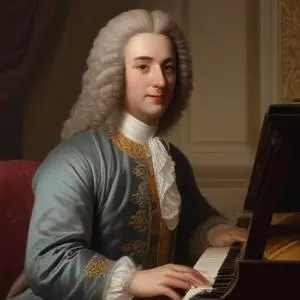
A prominent figure in the Baroque period, this composer and theorist revolutionized Western classical music with innovative harmonies and treatises on music theory, shaping the course of classical music.
Jean-Philippe Rameau, a renowned French composer and music theorist, is celebrated for his groundbreaking contributions to the world of opera and harmony. As a leading figure in the 18th century, he dominated the French opera scene, replacing Jean-Baptiste Lully as the primary composer, and earned recognition as the premier French composer for the harpsichord, alongside François Couperin.
In the 1720s, Rameau gained fame as a prominent music theorist with the publication of his Treatise on Harmony in 1722. This comprehensive work cemented his reputation as a master of harmony, and his compositions for the harpsichord began to circulate throughout Europe. Rameau's debut opera, Hippolyte et Aricie, premiered in 1733, causing a stir with its innovative use of harmony, which challenged the traditional style of Lully.
Rameau's preeminence in French opera was soon acknowledged, but he faced opposition from Lully's supporters, who favored the traditional style of music. The controversy, known as the Querelle des Bouffons, erupted in the 1750s, with Rameau being attacked as an establishment composer by those who preferred Italian opera. Despite these challenges, Rameau continued to compose masterpieces, leaving an indelible mark on the world of opera.
Rameau's music fell out of favor by the end of the 18th century, but it was not until the 20th century that serious efforts were made to revive his works. Today, he enjoys renewed appreciation, with frequent performances and recordings of his music. Rameau's contributions to the world of opera and harmony remain unparalleled, solidifying his position as one of the most important French composers of the 18th century.
Rameau's innovative use of harmony and his contributions to French opera have had a lasting impact on the world of classical music. His works continue to inspire composers, and his influence can be seen in various musical genres. Rameau's legacy serves as a testament to the power of music to transcend time and cultural boundaries.
Little is known about Rameau's personal life, including his relationships and family. He was known to be a secretive person, and even his wife was unaware of his early life. This lack of information has contributed to the scarcity of biographical information available about Rameau.
Jean-Philippe Rameau's groundbreaking contributions to French opera and harmony have left an indelible mark on the world of classical music. As a pioneer and master of his craft, Rameau's legacy continues to inspire and influence generations of composers, solidifying his position as one of the most important French composers of the 18th century.
Born in 1712
A pioneering thinker who shaped modern democracy and education with his ideas on social contracts, general will, and the importance of early childhood education. His writings influenced the French Revolution and modern political thought.
Born in 1694
A witty and insightful 18th-century writer and philosopher who used satire to critique societal norms and advocate for reason, tolerance, and human rights.
Born in 1714
A pioneering opera composer who revolutionized the art form with his innovative and expressive works, blending music and drama in a way that captivated audiences.
Born in 1782
A virtuosic violinist and composer who revolutionized the instrument's technical possibilities, leaving an indelible mark on classical music.
Born in 1756
A child prodigy and master of classical music, he composed over 600 works, including symphonies, operas, and chamber music, that continue to inspire and influence musicians today.
Born in 1770
A musical genius who expanded the possibilities of classical music, creating iconic symphonies and piano sonatas that continue to inspire and influence generations of artists.
Born in 1811
A virtuosic pianist and composer who revolutionized classical music with his technically demanding and emotionally expressive works, blending Hungarian folk influences with Romantic-era drama.
