


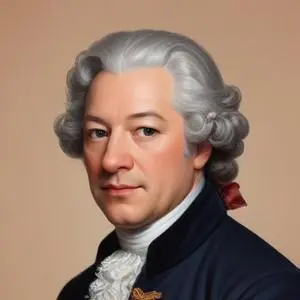
A pioneering opera composer who revolutionized the art form with his innovative and expressive works, blending music and drama in a way that captivated audiences.
Christoph Willibald Gluck, a German composer, is renowned for transforming the operatic landscape of the 18th century with his groundbreaking reforms and innovative works. He broke free from the conventional structures of opera seria, introducing dramatic changes that revolutionized the art form, earning him a place among the greatest opera composers of all time.
Born on July 2, 1714, in the Upper Palatinate region of the Holy Roman Empire, Gluck's early life was marked by a strong connection to the cultural heritage of Bohemia, where he was raised. His great-grandfather, Simon Gluckh von Rockenzahn, is believed to have originated from the town of Rokycany, in western Bohemia.
Gluck's most significant contribution to opera was his radical reform of dramatic practices, which had been stagnant for decades. He achieved this by introducing orchestral recitative, reducing the lengthy da capo arias, and emphasizing drama over sheer vocal virtuosity. This approach resulted in a more cohesive, engaging, and emotionally resonant experience for audiences.
Gluck's innovative compositions, such as Orfeo ed Euridice and Alceste, showcased his vision for a more dramatic and expressive opera. These works not only won over audiences but also garnered the approval of intellectuals, who had long advocated for operatic reform.
In 1773, Gluck moved to Paris, where he fused Italian and French opera traditions, creating a unique synthesis that captivated the Parisian stage. His opera Iphigénie en Tauride (1779) is often considered his magnum opus. However, the poor reception of Echo et Narcisse (1779) led to his disillusionment and eventual return to Vienna.
Gluck's pioneering efforts had a profound impact on the development of opera, influencing generations of composers, including Mozart and Berlioz. His reforms paved the way for the creation of new, more expressive, and dramatic opera styles, leaving an indelible mark on the world of classical music.
Throughout his life, Gluck remained committed to his artistic vision, continually pushing the boundaries of opera and leaving behind a legacy that continues to inspire and enchant audiences to this day.
Born in 1756
A child prodigy and master of classical music, he composed over 600 works, including symphonies, operas, and chamber music, that continue to inspire and influence musicians today.
Born in 1770
A musical genius who expanded the possibilities of classical music, creating iconic symphonies and piano sonatas that continue to inspire and influence generations of artists.
Born in 1732
A renowned composer and pianist of the Classical period, known for his symphonies, operas, and chamber music that showcased his innovative and expressive style. He played a significant role in shaping the Classical music era.
Born in 1782
A virtuosic violinist and composer who revolutionized the instrument's technical possibilities, leaving an indelible mark on classical music.
Born in 1811
A virtuosic pianist and composer who revolutionized classical music with his technically demanding and emotionally expressive works, blending Hungarian folk influences with Romantic-era drama.
Born in 1810
A Polish pianist and composer renowned for his delicate, expressive, and technically demanding piano music that evokes deep emotions and continues to inspire generations of musicians and music lovers. His nocturnes, waltzes, and preludes are staples of classical music.
Born in 1833
A renowned pianist and composer, he crafted complex, expressive works that blended traditional and innovative techniques, leaving an indelible mark on classical music.
Born in 1678
A virtuosic violinist and prolific composer, he crafted over 400 concertos, including "The Four Seasons," which remains a beloved and iconic masterpiece of classical music.
