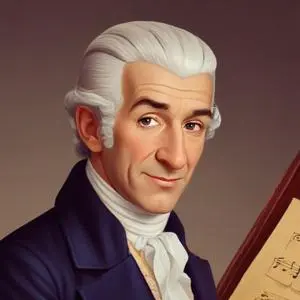
Joseph Haydn: The Musical Visionary Behind the Symphonic Revolution
The Father of the Symphony and the String Quartet
Joseph Haydn, a luminary of the Classical period, is renowned for his instrumental role in shaping the symphony and string quartet into what we know and love today. His pioneering spirit, innovative compositions, and dedication to his craft have earned him the esteemed titles of "Father of the Symphony" and "Father of the String Quartet."
A Humble Beginning
Born on March 31, 1732, in Rohrau, Austria, Haydn's earliest years were marked by a deep connection to music. His father, Mathias Haydn, a wheelwright and folk musician, recognized his son's talent and secured an apprenticeship for him with Johann Matthias Frankh, a schoolmaster and choirmaster in Hainburg. This decision proved pivotal, as it laid the foundation for Haydn's future success.
A Life of Musical Innovation
Haydn's career as a court musician for the wealthy Esterházy family spanned nearly three decades. During this time, he was largely isolated from other composers and trends, forcing him to become original and innovative in his compositions. His music, however, circulated widely, and he became the most celebrated composer in Europe.
Chamber Music Mastery
Haydn's contributions to chamber music are unparalleled. He perfected the string quartet, elevating it from a mere accompaniment to a central element of classical music. His Op. 33 quartets, composed in 1781, marked a significant turning point in the evolution of the genre.
Symphonic Landmarks
Haydn's symphonies, numbering over 100, showcased his mastery of orchestration and thematic development. His Symphony No. 94, "Surprise," and Symphony No. 100, "Military," are iconic examples of his innovative spirit and ability to evoke emotion through music.
Influence and Legacy
Haydn's impact on classical music is immeasurable. He mentored renowned composers such as Mozart and Beethoven, shaping the course of musical history. His music has inspired generations of composers, from Brahms to Bartók, and continues to be performed and revered today.
Personal Relationships and Anecdotes
Haydn's bond with Mozart was one of mutual respect and admiration. The two composers often performed each other's works, and Mozart even dedicated his "Prague" Symphony to Haydn. Beethoven, who was Haydn's pupil, credited his teacher with instilling in him the importance of originality and innovation.
Trivia and Fun Facts
- Haydn was known for his wit and sense of humor, often incorporating humorous elements into his compositions.
- He was a prolific composer, writing over 750 works during his lifetime.
- Haydn's music was performed at the royal courts of Europe, earning him the nickname "The Darling of the Ladies."
Philosophical Contributions and Beliefs
Haydn's music reflects his commitment to the Enlightenment values of reason, individuality, and artistic expression. He believed that music had the power to evoke emotions, inspire creativity, and bring people together.
Career Highlights and Major Works
- String Quartets, Op. 33 (1781)
- Symphony No. 94, "Surprise" (1791)
- Symphony No. 100, "Military" (1793-1794)
- Oratorio, "The Creation" (1798)
- Masses, including the "Missa in Tempore Belli" (1796)
Impact on Modern Society
Haydn's contributions to classical music have had a lasting impact on modern society. His music has been featured in films, television, and popular culture, introducing his work to new generations of music lovers. His innovative spirit and dedication to his craft continue to inspire composers, musicians, and music enthusiasts alike.
Historical Context and Legacy
Haydn's life and music reflect the cultural, social, and artistic trends of the Classical period. His commitment to innovation, experimentation, and artistic expression has ensured his place as one of the most celebrated and influential composers in history.
FAQ
Who was Joseph Haydn and what were his contributions to music?
Joseph Haydn was an Austrian composer and pianist who made significant contributions to the development of classical music. He is known for his symphonies, operas, and chamber music.
What are some of Joseph Haydns most famous compositions?
Some of Joseph Haydns most famous compositions include his symphonies, particularly the Surprise Symphony and the Military Symphony, as well as his operas such as The Creation and The Seasons.
How did Joseph Haydns music influence the development of classical music?
Joseph Haydns music had a significant impact on the development of classical music, as he helped to establish the classical symphony and the string quartet as prominent musical forms. He also influenced later composers such as Mozart and Beethoven.
What was Joseph Haydns role in the development of opera?
Joseph Haydn played a significant role in the development of opera, as he composed several operas that were popular in his time. His operas often featured complex plots and characters, and his music was known for its lyricism and dramatic flair.
How can Joseph Haydns music be interpreted in modern times?
Joseph Haydns music can be interpreted in modern times by analyzing its themes of joy, humor, and drama. His music can also be seen as a reflection of the cultural and intellectual currents of the Enlightenment era.