


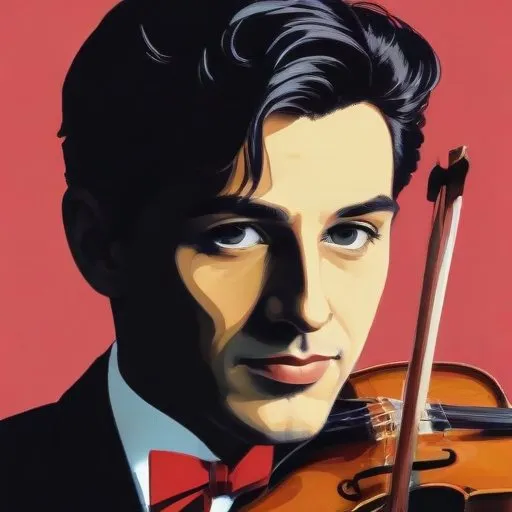
A virtuosic violinist and composer, he was a prominent figure in the development of the concerto grosso and opera, leaving a lasting impact on Baroque music.
Antonio Veracini was a renowned Italian composer and violinist of the Baroque era, celebrated for his exquisite chamber music and virtuosic violin playing. Born in Florence in 1659, Veracini's contributions to music have left an indelible mark on the world of classical music.
Veracini was born into a musical family, with his father, Francesco di Niccol Veracini, being a noted violinist and music teacher. Antonio learned to play the violin from a young age, and later took over his father's music school when his health began to fail.
Veracini's compositions are characterized by their elegance, refinement, and technical mastery. His three published collections of chamber music, Sonate a tre, Sonate da camera, and Sonate da camera a due, showcase his innovative approach to the genre. These works demonstrate his ability to balance harmony, melody, and counterpoint, creating a rich tapestry of sound.
In addition to his chamber music, Veracini is believed to have composed at least three oratorios, although only the printed librettos have survived.
Veracini's music had a profound impact on the development of Baroque music, influencing prominent composers such as Arcangelo Corelli and Giuseppe Tartini. His nephew, Francesco Maria Veracini, also became a celebrated violinist and composer, further cementing the Veracini family's contribution to classical music.
Despite his success, Veracini led a relatively quiet life, rarely leaving Florence except for two visits to Rome, where he is thought to have met Arcangelo Corelli. He died in 1733, at the age of 74, leaving behind a legacy of beautiful music that continues to inspire and delight audiences.
Antonio Veracini's contributions to classical music are a testament to his innovative spirit, technical prowess, and artistic vision. As a composer, violinist, and teacher, he played a significant role in shaping the Baroque era, leaving behind a rich legacy that continues to inspire and influence musicians to this day.
Born in 1685
A master of Baroque music, he composed over 1,000 works, including orchestral suites, cantatas, and passions, that still inspire and influence musicians today. His innovative use of counterpoint and harmony raised the bar for classical music.
Born in 1685
A renowned Baroque composer and organist, famous for creating majestic orchestral suites, operas, and oratorios, including the iconic "Messiah" masterpiece.
Born in 1678
A virtuosic violinist and prolific composer, he crafted over 400 concertos, including "The Four Seasons," which remains a beloved and iconic masterpiece of classical music.
Born in 1782
A virtuosic violinist and composer who revolutionized the instrument's technical possibilities, leaving an indelible mark on classical music.
Born in 1756
A child prodigy and master of classical music, he composed over 600 works, including symphonies, operas, and chamber music, that continue to inspire and influence musicians today.
Born in 1770
A musical genius who expanded the possibilities of classical music, creating iconic symphonies and piano sonatas that continue to inspire and influence generations of artists.
Born in 1811
A virtuosic pianist and composer who revolutionized classical music with his technically demanding and emotionally expressive works, blending Hungarian folk influences with Romantic-era drama.
Born in 1714
A prominent composer of the Neapolitan School, he wrote over 80 operas and was a key figure in the transition between the Baroque and Classical periods. His music was known for its dramatic intensity and expressive melodies.
