


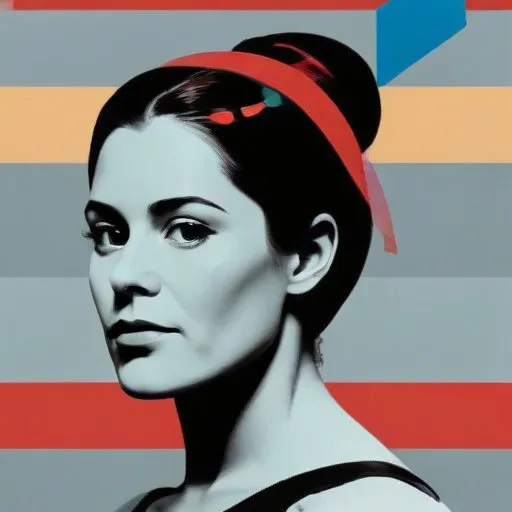
A renowned soprano and actress of the 19th century, celebrated for her stunning vocal range and captivating stage presence. She was a European opera sensation, performing for royalty and aristocracy.
Henriette Sontag, a German operatic soprano, was known for her sweet-toned, lyrical voice and brilliant exponent of florid singing, captivating audiences across Europe and America. With a career spanning over two decades, she became a household name in the world of opera, performing in iconic roles and collaborating with legendary composers.
Born Gertrude Walpurgis Sontag on January 3, 1806, in Koblenz, Germany, Henriette was born into a family of actors and actresses. Her parents, Franz and Franziska Sontag, recognized her talent at a young age, and she made her debut at the tender age of 6. Her brother, Karl Sontag, would also go on to become an actor.
In 1823, Henriette's career took off when she sang in Carl Maria von Weber's Der Freischütz at Leipzig. She created the title role in Weber's Euryanthe in December of the same year, solidifying her position as a rising star. Her success was immediate, and she was invited to perform in the first performances of Beethoven's Symphony No. 9 and Missa Solemnis in 1824, at the age of 18.
Henriette's talent took her to the stages of Paris, Berlin, and London, where she performed to rave reviews. In 1825, she was engaged by the Königstädt Theatre in Berlin, and in 1826, she debuted at the Paris Comédie-Italienne, performing in Gioachino Rossini's The Barber of Seville. Her performances in England and Germany only added to her growing fame.
Around 1829, Henriette secretly married Count Carlo Rossi, which led to her temporary retirement from the stage. However, when her husband's financial situation deteriorated, she returned to performing.
In 1849, Henriette was encouraged by impresario Benjamin Lumley to perform at Covent Garden Theatre, where she proved that her vocal powers remained unrivaled. In 1852, she embarked on a tour of America, captivating audiences with her performances.
In May 1854, Henriette performed at a literary evening in honor of Mexican President Antonio López de Santa Anna, debuting the lyrics of Francisco González Bocanegra's national anthem, set to an Italian musical arrangement. Tragically, a day after singing , she contracted cholera, which took her life at the age of 48 in Mexico City.
Henriette Sontag's remarkable talent and contributions to the world of opera have left an indelible mark. Her legacy continues to inspire generations of sopranos, and her music remains a testament to her extraordinary gift.
Born in 1813
A renowned composer of iconic operas like La Traviata and Aida, known for his masterful blending of drama and music. His works continue to captivate audiences worldwide.
Born in 1811
A virtuosic pianist and composer who revolutionized classical music with his technically demanding and emotionally expressive works, blending Hungarian folk influences with Romantic-era drama.
Born in 1813
A revolutionary composer who transformed opera with his epic, mythological works, creating a new era of musical storytelling. His iconic operas, such as "Der Ring des Nibelungen," continue to captivate audiences worldwide.
Born in 1809
A renowned 19th-century musician who masterfully blended classical and romantic styles, creating iconic works like the "Wedding March" and "Elijah" oratorio. His compositions continue to inspire and influence generations of artists.
Born in 1810
A renowned Romantic-era composer and influential music critic, known for his expressive and emotionally charged works, including symphonies, piano music, and art songs.
Born in 1819
A renowned 19th-century pianist and composer, she was one of the first females to achieve recognition in a male-dominated field, creating over 60 pieces of music. Her compositions showcased romanticism and lyricism.
Born in 1833
A renowned pianist and composer, he crafted complex, expressive works that blended traditional and innovative techniques, leaving an indelible mark on classical music.
Born in 1797
A renowned composer of symphonies, operas, and chamber music, particularly famous for his emotional and expressive lieder (art songs) that showcased his mastery of melody and harmony.
