


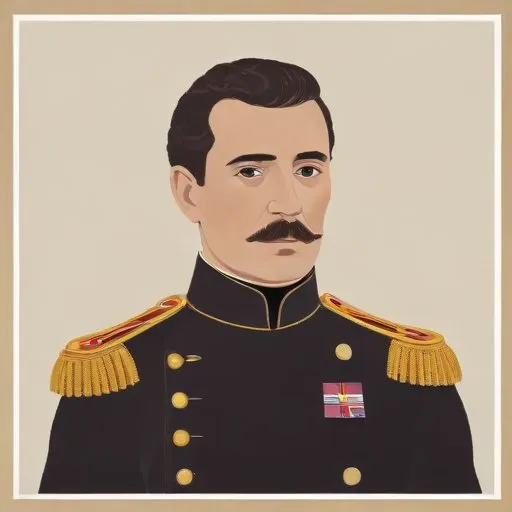
King of the Two Sicilies from 1816 to 1825, known for his efforts to unify Italy and his role in the country's struggle for independence.
Ferdinand I, also known as Ferdinand IV of Naples and Ferdinand III of Sicily, was the King of the Two Sicilies from 1816 until his death in 1825. He is best known for his determination and resilience in the face of Napoleon's invasion, which led to his deposition not once, but twice, from the throne of Naples.
Born on January 12, 1751, in Naples, Ferdinand was the third son of King Charles VII and Queen Maria Amalia. Due to treaty provisions, his father abdicated the Neapolitan and Sicilian titles in his favor in 1759, making Ferdinand the founder of the cadet House of Bourbon-Two Sicilies.
Ferdinand's minority ended in 1767, and his first act as king was the expulsion of the Jesuits. The following year, he married Archduchess Maria Carolina of Austria, with whom he had 17 children. During his reign, Ferdinand faced numerous challenges, including the French invasion in 1799, which led to the establishment of the Parthenopean Republic. He was deposed for six months before being restored to the throne.
However, his troubles didn't end there. In 1806, Napoleon's forces invaded Naples again, and Ferdinand was deposed once more. He fled to Sicily, where he remained until the end of the Napoleonic Wars in 1815. Upon his return, he was restored to the throne, and in 1816, he became the King of the Two Sicilies.
Ferdinand was known for his love of pleasure, idleness, and outdoor sports. Despite this, he took an active role in promoting the economy and infrastructure of his kingdom. He encouraged agriculture, commerce, and industry, and invested in the construction of roads, bridges, and public buildings.
He also supported the arts and education, founding the Royal Academy of Fine Arts in Naples and the University of Palermo. Ferdinand was a devout Catholic and a strong supporter of the Church, which influenced his policies and decisions throughout his reign.
Ferdinand's reign had a lasting impact on the development of the Two Sicilies. He played a significant role in shaping the region's economy, infrastructure, and culture. His support for education and the arts helped foster a cultural renaissance in Naples and Sicily.
Moreover, Ferdinand's determination to resist Napoleon's invasion and his subsequent restoration to the throne inspired a sense of national pride and identity among the people of the Two Sicilies.
Ferdinand I of the Two Sicilies was a complex and multifaceted figure, whose reign was marked by both turmoil and triumph. Despite facing numerous challenges, he remained committed to his people and his kingdom, leaving behind a lasting legacy that continues to shape the region to this day.
Ferdinand's story serves as a testament to the power of determination and resilience, and his contributions to the development of the Two Sicilies will always be remembered as a significant chapter in the region's rich history.
Born in 1499
Reigned from 1559 to 1565, this Pope oversaw the final session of the Council of Trent, shaping Catholic doctrine and practice for centuries to come. He also commissioned the construction of the Sistine Chapel's dome.
Born in 1807
Led a military campaign to unify Italy, becoming a national hero and symbol of Italian independence. He's also known for his charisma and unconventional style.
