


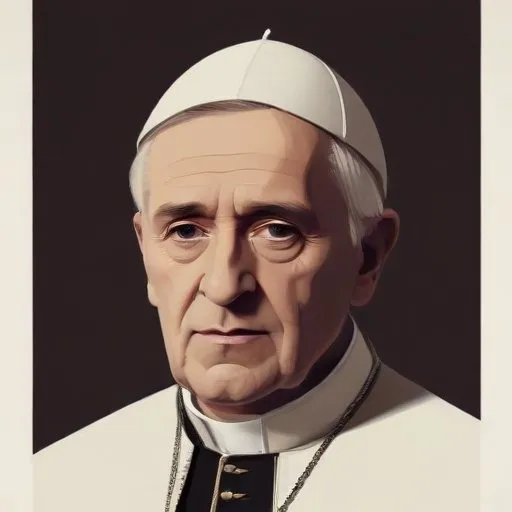
Reigned from 1559 to 1565, this Pope oversaw the final session of the Council of Trent, shaping Catholic doctrine and practice for centuries to come. He also commissioned the construction of the Sistine Chapel's dome.
Pope Pius IV is renowned for presiding over the final session of the Council of Trent, a pivotal event that shaped the course of Catholicism in the 16th century. As the 224th Pope of the Catholic Church, he played a crucial role in consolidating the Catholic Reformation, leaving an indelible mark on the church and its future.
Born Giovanni Angelo Medici on March 31, 1499, in Milan, Italy, Pius IV hailed from a branch of the House of Medici, a prominent Italian family. Although his family claimed a connection to the Florentine Medici, modern historians have found no proof of this link.
Medici studied philosophy and medicine in Pavia, later earning his doctorate in both canon and civil law from the University of Bologna in 1525. His expertise as a jurist earned him a reputation, and he quickly rose through the ranks, becoming the governor of several towns, the archbishop of Ragusa (1545-1553), and the vicelegate of Bologna.
On April 8, 1549, Pope Paul III elevated Medici to the rank of cardinal, and he received his red hat and titular church title on May 10. As a trusted papal legate, Medici was sent on diplomatic missions to the Holy Roman Empire and Hungary, solidifying his position within the church hierarchy.
Upon the death of Pope Paul IV, Medici was elected pope on December 25, 1559, taking the name Pius IV. He was installed on January 6, 1560, and quickly set about implementing his vision for the Catholic Church.
Pius IV's pontificate was marked by significant reforms and initiatives. He convened the final session of the Council of Trent, which aimed to address the challenges posed by the Protestant Reformation. The Council's decrees, promulgated by Pius IV, became the foundation of Catholic doctrine and practice for centuries to come.
In addition to his work on the Council of Trent, Pius IV initiated several building projects in Rome, including the improvement of the city's water supply. He also fostered the development of the Catholic Church in the Americas, appointing bishops and establishing dioceses in newly colonized regions.
Pius IV was closely advised by his nephew, Cardinal Charles Borromeo, who would later become a prominent saint and reformer in his own right. The pope's reputation for wisdom and fairness earned him the respect of his contemporaries, including the Habsburg Emperor Ferdinand I.
Pius IV's papacy was characterized by a commitment to Catholic orthodoxy and the suppression of heresy. He strongly believed in the authority of the Papacy and the importance of maintaining the unity of the Church in the face of Protestantism and other challenges.
Pius IV's papacy took place during a tumultuous period in European history, marked by the Protestant Reformation and the rise of nation-states. Despite these challenges, he played a crucial role in shaping the course of Catholicism, leaving a lasting legacy that would influence the church for centuries to come.
Born in 1417
A 15th-century pope who played a significant role in the fall of the Western Schism, ending the division in the Catholic Church. He's also known for his lavish spending and nepotism.
Born in 1504
Leader of the Catholic Church during the Counter-Reformation, he excommunicated Queen Elizabeth I and played a key role in the Council of Trent.
Born in 1502
Introduced the Gregorian calendar, a solar-based calendar that's widely used today, reforming the Julian calendar's inaccuracies.
Born in 1536
Led the Catholic Church during a tumultuous period, issuing papal bulls and playing a key role in the Counter-Reformation. He's also famous for his coffee habit, being the first Pope to try and approve of it.
Born in 1535
The second shortest-reigning pope in history, serving for just 27 days in 1605, he is most known for his brief but tumultuous papacy marked by power struggles and controversy.
Born in 1487
A 16th-century Pope who commissioned Michelangelo to paint the Sistine Chapel's frescoes and was a patron of the arts, leaving a lasting impact on Renaissance art and architecture.
Born in 1417
A 15th-century pope who played a significant role in the fall of the Western Schism, ending the division in the Catholic Church. He's also known for his lavish spending and nepotism.
Born in 1487
A 16th-century Pope who commissioned Michelangelo to paint the Sistine Chapel's frescoes and was a patron of the arts, leaving a lasting impact on Renaissance art and architecture.
