


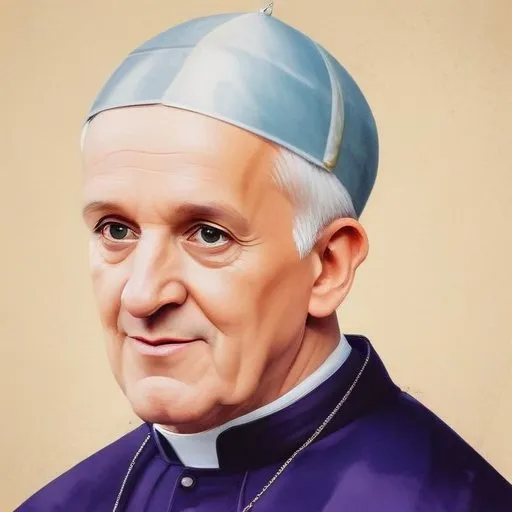
A fierce defender of Catholic orthodoxy, he implemented strict reforms and established the Roman Inquisition to root out heresy. His papacy was marked by controversy and conflict.
Known for his unwavering determination to reform the Catholic Church, Pope Paul IV reigned from 1555 to 1559, leaving an indelible mark on the papacy. He is remembered for his unrelenting fight against the Protestant movement, his establishment of the Index Librorum Prohibitorum, and his tireless work ethic, issuing new decrees and regulations daily despite his advanced age.
Born Gian Pietro Carafa on June 28, 1476, Pope Paul IV was a man of strong convictions, dedicated to his faith and the reform of the Church. As a young priest, he co-founded the Congregation of Clerics Regular Theatines with Saint Cajetan, an order focused on clerical reform and spiritual renewal.
During his papacy, Pope Paul IV implemented several reforms, aimed at strengthening the Catholic Church and countering the Protestant Reformation. Some of his notable achievements include:
Despite his advanced age, Pope Paul IV remained a tireless worker, issuing new decrees and regulations daily. Some of his personal milestones include:
Pope Paul IV's legacy is complex and multifaceted. While his reforms and determination to counter the Protestant movement had a significant impact on the Catholic Church, his methods were often seen as harsh and divisive.
Despite this, his tireless work ethic and commitment to reform have earned him a place in history as a leader who shaped the Catholic Church. His legacy continues to inspire and influence the Church to this day.
Born in 1504
Leader of the Catholic Church during the Counter-Reformation, he excommunicated Queen Elizabeth I and played a key role in the Council of Trent.
Born in 1487
A 16th-century Pope who commissioned Michelangelo to paint the Sistine Chapel's frescoes and was a patron of the arts, leaving a lasting impact on Renaissance art and architecture.
Born in 1417
A 15th-century pope who played a significant role in the fall of the Western Schism, ending the division in the Catholic Church. He's also known for his lavish spending and nepotism.
Born in 1487
A 16th-century Pope who commissioned Michelangelo to paint the Sistine Chapel's frescoes and was a patron of the arts, leaving a lasting impact on Renaissance art and architecture.
Born in 1535
The second shortest-reigning pope in history, serving for just 27 days in 1605, he is most known for his brief but tumultuous papacy marked by power struggles and controversy.
Born in 1536
Led the Catholic Church during a tumultuous period, issuing papal bulls and playing a key role in the Counter-Reformation. He's also famous for his coffee habit, being the first Pope to try and approve of it.
Born in 1611
Led the Catholic Church during a tumultuous period, reforming the Church's finances and combating corruption, while also opposing the French monarch's attempts to exert control over the Church.
Born in 1568
The 17th-century Catholic leader who reigned for 21 years, known for his strong stance against Galileo Galilei and his scientific discoveries, as well as his extensive patronage of the arts.
