


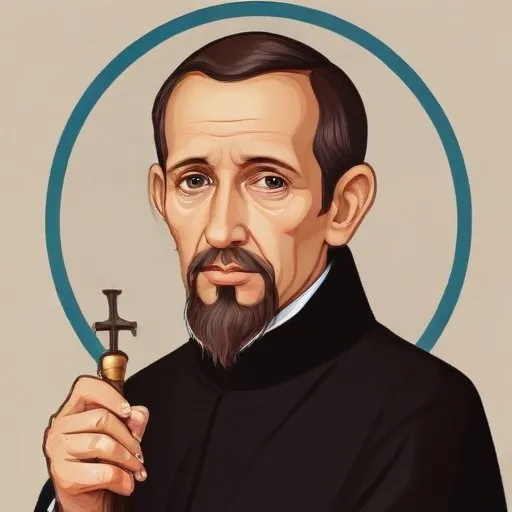
Italian Catholic priest and reformer who founded the Theatine Order to revitalize the Church and helped establish the first pawnshop to provide loans to the poor. He's also the patron saint of bankers and the unemployed.
Saint Cajetan, known as Gaetano dei Conti di Thiene, is revered as a beacon of hope and reform in the Catholic Church. As the co-founder of the Theatines, a congregation dedicated to spiritual and physical healing, Cajetan left an indelible mark on the lives of countless individuals.
Born on October 6, 1480, in the Veneto Region of Italy, Cajetan was the son of Gaspar, lord of Thiene, and Mary Porta. Following the death of his father at the tender age of two, Cajetan was nurtured by his mother, who instilled in him a deep sense of piety.
Cajetan pursued his passion for law, earning his degree as doctor utriusque juris (civil and canon law) at the age of 24. His exceptional skills soon caught the attention of Pope Julius II, who employed him as a diplomat. Cajetan played a pivotal role in reconciling the Republic of Venice with the papal court in 1506.
In 1522, Cajetan founded a hospital for incurables in Vicenza, and soon after, another in Venice. His true calling, however, lay in spiritual healing. He joined the Oratory of Divine Love in Rome, where he envisioned a congregation that would blend monasticism with active ministry.
In 1524, Pope Clement VII canonically erected the Theatines, with Giovanni Pietro Carafa, the Bishop of Chieti, as its first superior. The order's name, "Theatines," originated from the Latin name for Chieti, Theate.
Despite the slow growth of the Theatines, Cajetan persevered, undeterred by the challenges that lay ahead. During the sack of Rome in 1527, he was tortured by mutinous soldiers of Charles V. Miraculously, he escaped to Venice, where he met Jerome Emiliani, whom he assisted in his charitable endeavors.
Saint Cajetan's feast day, celebrated on August 7, serves as a testament to his unwavering commitment to the Catholic Church and humanity. His congregation, the Theatines, continues to thrive, inspired by his ideals of spiritual and physical healing.
Saint Cajetan, a champion of reform and compassion, left an indelible mark on the Catholic Church and humanity. His legacy continues to inspire generations, reminding us of the transformative power of spiritual healing and selfless service.
Born in 1417
A 15th-century pope who played a significant role in the fall of the Western Schism, ending the division in the Catholic Church. He's also known for his lavish spending and nepotism.
Born in 1491
Founded the Jesuit Order, a Catholic religious organization known for its missionary and educational work, and developed the Spiritual Exercises, a guide for spiritual growth and discernment.
Born in 1506
Co-founder of the Society of Jesus, a Catholic religious order, known for his missionary work in Asia, especially in India and Japan, and for his role in the Counter-Reformation. He's revered for his tireless efforts to spread Christianity and his compassion for the poor and marginalized.
Born in 1538
A 16th-century Italian reformer who played a key role in the Counter-Reformation, implementing significant reforms within the Catholic Church, and was known for his piety and charitable works.
Born in 1542
A 16th-century theologian and doctor of the Church, known for his writings on spirituality and his role in shaping Catholic doctrine. He was a key figure in the Counter-Reformation, defending Catholicism against Protestantism.
Born in 1504
Leader of the Catholic Church during the Counter-Reformation, he excommunicated Queen Elizabeth I and played a key role in the Council of Trent.
