


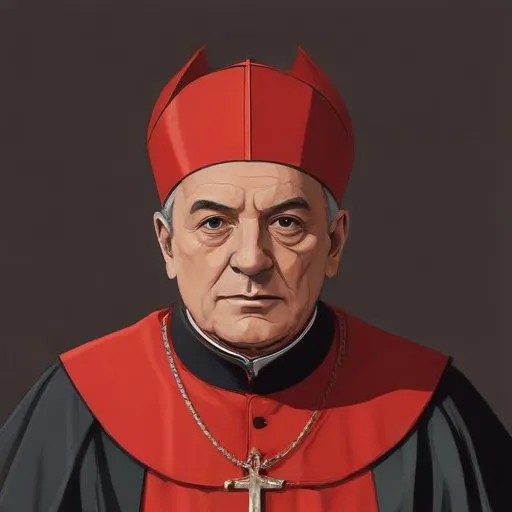
A powerful and influential figure in the Catholic Church, he played a crucial role in shaping the Church's policies and was a skilled diplomat, known for his clever negotiations and strategic alliances.
Alessandro Farnese, a renowned Italian cardinal and diplomat, is celebrated for his exemplary patronage of the arts, his diplomatic prowess, and his significant contributions to the Renaissance era. As a member of the powerful Farnese family, he leveraged his influence to foster a cultural renaissance, supporting some of the most iconic artists, architects, and writers of his time.
Born on October 7, 1520, at the family castle in Valentano, Tuscany, Alessandro Farnese was the son of Pierluigi Farnese, Duke of Parma, and Girolama Orsini. He received his early education at Bologna, where he studied alongside his cousin, Guido Ascanio Sforza di Santa Fiora, and later became a member of the prestigious Collegio Ancarano, a hub for students specializing in legal studies.
At the tender age of 14, Alessandro was appointed Cardinal Deacon of Sant'Angelo in Pescheria by his grandfather, Pope Paul III. This marked the beginning of his illustrious career, which would span over five decades. He went on to hold various offices, including Vice-Chancellor of the Holy Roman Church, Governor of Tivoli, Archpriest of St. Mary Major Basilica, and Archpriest of St. Peter's Basilica.
Farnese's greatest legacy lies in his patronage of the arts. He was a devoted supporter of artists, architects, and writers, and his patronage enabled the creation of some of the most iconic works of the Renaissance. He commissioned masterpieces from artists like Michelangelo, Titian, and Annibale Carracci, and his palace in Rome became a hub for artistic innovation and creativity.
Farnese's patronage of the arts and his contributions to the Renaissance era have had a lasting impact on modern society. He inspired a generation of artists, architects, and writers, and his legacy continues to influence cultural and artistic developments to this day.
Alessandro Farnese passed away on March 2, 1589, leaving behind a legacy that continues to inspire and awe art lovers around the world. His unwavering commitment to the arts and his visionary patronage have cemented his place in history as one of the greatest patrons of the Renaissance era.
Alessandro Farnese's extraordinary life and legacy serve as a testament to the power of patronage and the enduring impact of the Renaissance era. His contributions to art, architecture, and culture continue to inspire and influence generations, cementing his place as one of the most important figures of the 16th century.
Born in 1417
A 15th-century pope who played a significant role in the fall of the Western Schism, ending the division in the Catholic Church. He's also known for his lavish spending and nepotism.
Born in 1487
A 16th-century Pope who commissioned Michelangelo to paint the Sistine Chapel's frescoes and was a patron of the arts, leaving a lasting impact on Renaissance art and architecture.
Born in 1536
Led the Catholic Church during a tumultuous period, issuing papal bulls and playing a key role in the Counter-Reformation. He's also famous for his coffee habit, being the first Pope to try and approve of it.
Born in 1535
The second shortest-reigning pope in history, serving for just 27 days in 1605, he is most known for his brief but tumultuous papacy marked by power struggles and controversy.
Born in 1431
Ruthless and cunning, this Pope was infamous for his corrupt and immoral ways, using his power to further his family's interests.
Born in 1487
A 16th-century Pope who commissioned Michelangelo to paint the Sistine Chapel's frescoes and was a patron of the arts, leaving a lasting impact on Renaissance art and architecture.
Born in 1611
Led the Catholic Church during a tumultuous period, reforming the Church's finances and combating corruption, while also opposing the French monarch's attempts to exert control over the Church.
Born in 1568
The 17th-century Catholic leader who reigned for 21 years, known for his strong stance against Galileo Galilei and his scientific discoveries, as well as his extensive patronage of the arts.
