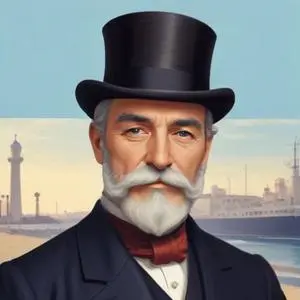
Ferdinand de Lesseps: The Visionary Behind the Suez Canal
A Diplomat and Developer Extraordinaire
Ferdinand de Lesseps, a French diplomat and entrepreneur, is renowned for his monumental achievement in building the Suez Canal, which revolutionized global trade and navigation by connecting the Mediterranean Sea to the Red Sea. Completed in 1869, this engineering marvel reduced sailing distances and times between Europe and East Asia, cementing de Lesseps' status as a visionary and pioneer in the field of infrastructure development.
Early Life and Ancestry
Born on November 19, 1805, in Versailles, France, de Lesseps came from a family with a rich history of diplomatic service. His ancestors, tracing back to the 14th century, hailed from Spain and settled in Bayonne during the Angevin Empire. De Lesseps' great-grandfather, Pierre de Lesseps, served as town clerk and secretary to Queen
Maria Anna of Neuburg, while his uncle was ennobled by King Louis XVI, and his father, Mathieu de Lesseps, was made a count by Emperor Napoleon I.
Diplomatic Career and Suez Canal
De Lesseps pursued a diplomatic career, occupying various posts from 1825 to 1849. It was during this period that he developed an interest in canal construction, which would eventually lead to his most celebrated achievement. The Suez Canal, initially proposed by
Napoleon Bonaparte, was revived by de Lesseps, who formed the Suez Canal Company in 1858. Despite facing numerous challenges, including skeptical investors and treacherous terrain, de Lesseps persevered, and the canal was finally opened on November 17, 1869.
The Panama Canal Endeavor
De Lesseps' success with the Suez Canal emboldened him to attempt a similar project in Panama. In the 1880s, he launched the Panama Canal Company, aiming to build a sea-level canal across the Isthmus of Panama. However, the project was plagued by epidemics of malaria and yellow fever, as well as financial difficulties. The planned Lesseps Panama Canal was never completed, and the project was eventually bought out by the United States, which completed the canal in 1914 with a non-sea-level design featuring locks.
Legacy and Impact
De Lesseps' contributions to global infrastructure and trade cannot be overstated. His vision and perseverance in the face of adversity paved the way for future generations of engineers and entrepreneurs. The Suez Canal, in particular, has had a profound impact on international commerce, facilitating the exchange of goods and ideas between East and West.
Awards and Honors
De Lesseps received numerous accolades for his achievements, including the Grand Cross of the Legion of Honor and the title of Comte de Lesseps.
Personal Life and Milestones
De Lesseps married Agathe Delamalle in 1837, and the couple had five sons and three daughters. He passed away on December 7, 1894, at the age of 89, leaving behind a legacy that continues to inspire and influence the world of infrastructure development.
Trivia and Fun Facts
- De Lesseps was known for his charismatic personality and exceptional communication skills, which helped him secure funding and support for his projects.
- He was a prolific writer, publishing several books on his experiences and ideas on canal construction.
- De Lesseps' ancestors were said to have been involved in the construction of the Canal du Midi in France, built in the 17th century.
Philosophical Contributions and Beliefs
De Lesseps' vision and perseverance were rooted in his unwavering belief in the power of human ingenuity and the importance of international cooperation. He was a firm advocate for the benefits of global trade and commerce, recognizing the potential for canals to bridge cultural and geographical divides.
Influence on Modern Society
The Suez Canal, de Lesseps' magnum opus, has had a profound impact on modern society, facilitating the exchange of goods, ideas, and cultures between nations. His legacy continues to inspire innovation and progress in the fields of infrastructure development, international relations, and global trade.
FAQ
What is Ferdinand de Lesseps famous for in the world of engineering?
Ferdinand de Lesseps is renowned for his remarkable achievement in developing the Suez Canal, one of the most ambitious engineering projects of the 19th century. He overcame numerous technical and financial challenges to complete the canal, which revolutionized global trade and commerce.
What drove Ferdinand de Lesseps vision for the Suez Canal?
Ferdinand de Lesseps was driven by a desire to connect East and West, facilitate global trade, and promote economic growth. He believed that the Suez Canal would have a profound impact on international relations, commerce, and cultural exchange.
What were the challenges Ferdinand de Lesseps faced in building the Suez Canal?
Ferdinand de Lesseps confronted numerous obstacles, including treacherous desert terrain, extreme weather conditions, and financial setbacks. He also faced opposition from rival nations and skeptics who doubted the feasibility of the project.
What was the significance of the Suez Canals opening in 1869?
The Suez Canals opening marked a major milestone in global history, as it reduced travel time and costs between Europe and Asia, increased trade volumes, and cemented Egypts strategic importance as a commercial hub.
What awards did Ferdinand de Lesseps receive for his work on the Suez Canal?
Ferdinand de Lesseps was awarded the Grand Cross of the Legion of Honor, the highest French honor, for his exceptional service to France and humanity. He also received numerous international accolades, including honorary degrees and medals from prestigious institutions.