


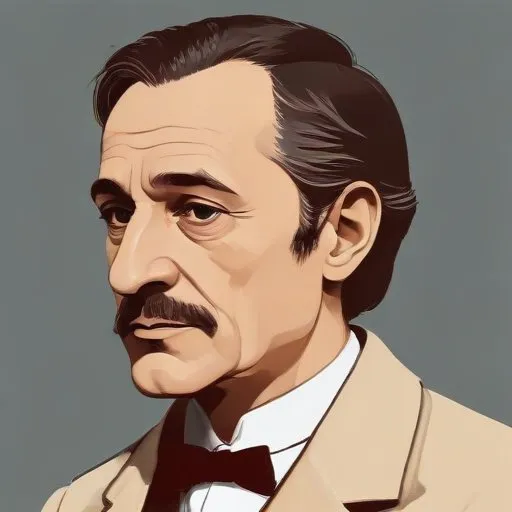
A Hungarian poet, critic, and politician who played a key role in shaping the country's literary and cultural identity, and is best known for writing the lyrics to the Hungarian national anthem.
Ferenc Klcsey, also known as Francis Kolcsey, is renowned for writing Hungary's national anthem, "Himnusz," in 1823. This iconic poem cemented his place in Hungarian history, making him a celebrated poet, literary critic, orator, and politician.
Born on August 8, 1790, in Szdemeter, Hungary (now Suca, Romania), Klcsey faced adversity from an early age. Orphaned and handicapped by the loss of an eye to smallpox, he went on to make a remarkable recovery. At 15, he befriended Ferenc Kazinczy, adopting his linguistic reforms, which would later shape his writing style.
Klcsey's early metrical pieces, published in the Transylvanian Museum, didn't garner much attention. However, his severe criticisms of prominent writers like Mihly Csokonai Vitz, Jnos Kis, and Dniel Berzsenyi, published in 1817, made him unpopular among his contemporaries.
From 1821 to 1826, Klcsey published numerous poems in various magazines, including Aurora, Hebe, and Aspasia, showcasing his exceptional talent. His collaboration with Pl Szemere on the periodical "Literatura Life and Literature" (1826-1829) earned him recognition as a critical writer.
From 1832 to 1835, Klcsey served in the Hungarian Diet, where his liberal views and eloquence made him a prominent parliamentary leader. In 1830, he was elected a member of the Hungarian Academy of Sciences, delivering two notable orations: one on Kazinczy in 1832 and another on Dniel Berzsenyi in 1836.
In 1838, Klcsey defended opposition leader Mikls Wesselnyi, who was accused of treason, with remarkable eloquence, although the outcome was unsuccessful. This episode underscores Klcsey's commitment to his liberal ideals and his role as a vocal advocate for change.
Ferenc Klcsey's contributions to Hungarian literature and politics are undeniable. His national anthem, "Himnusz," remains a symbol of national pride, and his literary critiques and poems continue to inspire generations of writers and scholars. As a liberal thinker, Klcsey played a significant role in shaping Hungary's politics and cultural identity.
Ferenc Klcsey's remarkable life, marked by adversity and triumph, is a testament to his unwavering dedication to his craft and his country. His legacy continues to inspire Hungarians and literature enthusiasts around the world.
Born in 1802
A key figure in the Hungarian Revolution of 1848, leading the fight for independence from Austria and becoming a symbol of Hungarian nationalism. He's revered for his passionate oratory skills and unwavering dedication to his country's freedom.
