


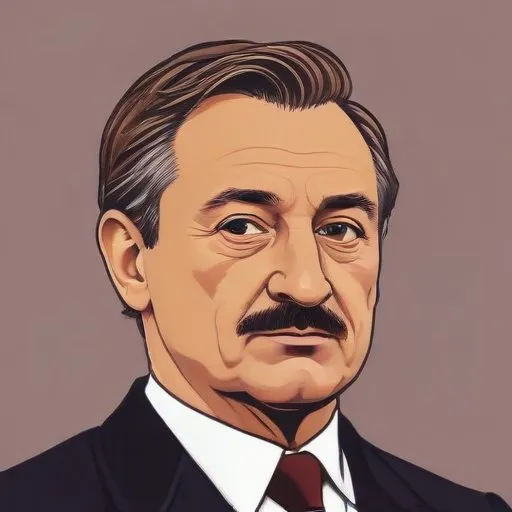
A key figure in the Hungarian Revolution of 1848, leading the fight for independence from Austria and becoming a symbol of Hungarian nationalism. He's revered for his passionate oratory skills and unwavering dedication to his country's freedom.
Lajos Kossuth, a Hungarian nobleman, lawyer, journalist, and politician, is best known for his pivotal role as the Governor-President of the Kingdom of Hungary during the revolution of 1848-1849. He emerged as a champion of democracy and freedom, earning him the recognition as the "Father of Hungarian Democracy."
Kossuth was born on September 19, 1802, in Monok, Kingdom of Hungary, to a Lutheran noble family of Slovak origin. His father, László Kossuth, was a lawyer and a member of the lower nobility, with a small estate. Kossuth was the eldest of five children, with two brothers, Simon and György, and one sister, Jana.
Kossuth's exceptional oratory skills and talent in political debates propelled him to prominence. He became a renowned journalist and politician, using his platform to advocate for democracy and freedom. His remarkable English and American speeches earned him international recognition, with influential contemporaries like Horace Greeley and Daniel Webster praising his work.
Kossuth's contributions to the cause of democracy and freedom were widely recognized during his lifetime. He was honored in Great Britain and the United States, with a bronze bust in the United States Capitol bearing the inscription "Father of Hungarian Democracy, Hungarian Statesman, Freedom Fighter, 1848-1849." Friedrich Engels, a prominent socialist thinker, considered Kossuth a truly revolutionary figure, comparing him to Danton and Carnot in one person.
Kossuth's fight for democracy and freedom has inspired generations, earning him a place in history as a beacon of hope and courage. His legacy continues to inspire people around the world, promoting the values of democracy, freedom, and human rights.
"Now, I think it is time to get married, and my wife is not to be a Hungarian, but a Democrat, an enemy of despotism, and an advocate of the freedom of thought and speech."
"The Hungarian nation is a nation of men, and the people will defend their rights with their own strength. The Government, I repeat, is a Government of the people, by the people, and for the people."
Kossuth's life and work are a testament to the power of democracy and freedom. His fight for Hungarian independence and democracy has inspired people around the world, making him a symbol of hope and courage in the face of oppression. His legacy continues to inspire, reminding us of the importance of standing up for our rights and fighting for a better future.
Born in 1803
A Hungarian statesman who played a key role in the country's unification with Austria, creating the dual monarchy of Austria-Hungary in 1867. He's known for his efforts to establish a constitutional government and promote national unity.
Born in 1823
This Hungarian poet and activist was a key figure in the country's struggle for independence and is celebrated for his passionate and patriotic verses, which inspired a nation. He's often considered the national poet of Hungary.
Born in 1799
A Hungarian-Austrian commander and politician who played a key role in the Hungarian Revolution of 1848 and later became a prominent figure in the Austrian Empire's government. He's known for his military victories and political reforms.
