


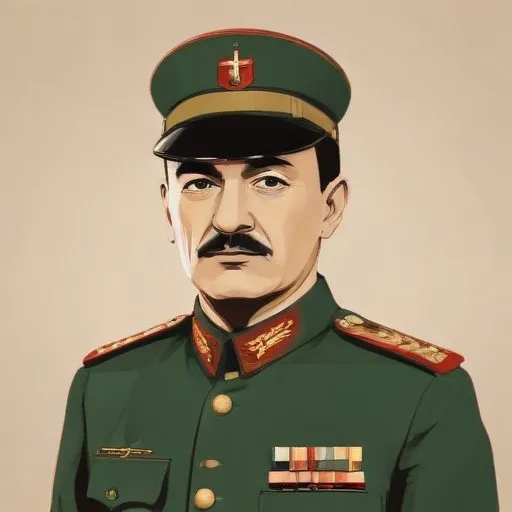
Led a communist government in Hungary after World War II, implementing Soviet-style policies and suppressing opposition. He played a key role in the country's post-war reconstruction and alignment with the Soviet Union.
Ferenc Mnnich, a renowned Hungarian Communist politician, is remembered for his crucial role in shaping Hungary's history, particularly during the tumultuous period following World War I and II. As the Chairman of the Council of Ministers of the People's Republic of Hungary from 1958 to 1961, Mnnich played a pivotal role in the country's transition to communism.
Born on November 18, 1886, in Hungary, Mnnich was of German descent. During World War I, he served in the Austro-Hungarian Army, fighting on the Eastern front, where he earned a decoration for bravery and rose to the rank of major. Following his capture in October 1915, Mnnich was imprisoned in a prisoner-of-war camp in Tomsk, Siberia.
It was during his imprisonment that Mnnich joined the Communist Party of the Soviet Union, marking the beginning of his communist ideology. He went on to serve as a commander of an international POW unit fighting for the Bolsheviks and eventually became a regimental commander in 1918. Upon returning to Hungary in September 1918, Mnnich helped establish the Hungarian Communist Party.
Mnnich's dedication to the communist cause earned him key positions within the party. He headed the Organization Department of the War Commissariat for the Hungarian Soviet Republic and later became a war commissar for the Slovak Soviet Republic. After the dissolution of the HSR, Mnnich joined Bla Kuns faction and participated in the March Action in the Weimar Republic, which ultimately led to his arrest and deportation back to Hungary.
Mnnich's commitment to communism extended beyond Hungary's borders. He fought in the Spanish Civil War as commissar of the Rakosi Battalion of the XIII International Brigade. During World War II, he served as a partisan training officer and fought in the Battle of Stalingrad. Mnnich's international experiences had a profound impact on his worldview and shaped his approach to politics.
Following World War II, Mnnich returned to Hungary and served as the head of the Hungarian Department of Radio Moscow. He later held various diplomatic posts in Helsinki, Sofia, Moscow, and Belgrade, and was a member of parliament in Hungary from 1949 to 1953. Mnnich's diplomatic career culminated in his appointment as Chairman of the Council of Ministers of the People's Republic of Hungary from 1958 to 1961.
Ferenc Mnnich's life and legacy are a testament to his unwavering dedication to the communist ideology. Through his varied roles and experiences, Mnnich played a significant part in shaping Hungary's history, leaving behind a lasting impact on the nation's politics and society.
Ferenc Mnnich's life and legacy are deeply intertwined with the tumultuous period of Hungarian history, marked by World War I, World War II, and the country's transition to communism. His contributions to the development of Hungary's communist government have left a lasting impact on the nation's politics and society.
Born in 1892
A Hungarian communist leader who ruled the country with an iron fist from 1949 to 1956, known for his brutal suppression of dissent and forced industrialization.
Born in 1912
A Hungarian mechanic-turned-politician who served as Prime Minister of Hungary from 1956 to 1988, known for his role in crushing the 1956 Hungarian Revolution and later introducing economic reforms.
Born in 1896
Led a reformist government in Hungary during the 1956 revolution, attempting to establish a multi-party system and withdraw from the Soviet-dominated Warsaw Pact. His efforts ultimately led to Soviet invasion and his execution.
Born in 1868
Led a right-wing authoritarian government in Hungary between the two World Wars, known for his anti-Semitic and nationalist policies. He collaborated with Nazi Germany during World War II.
