


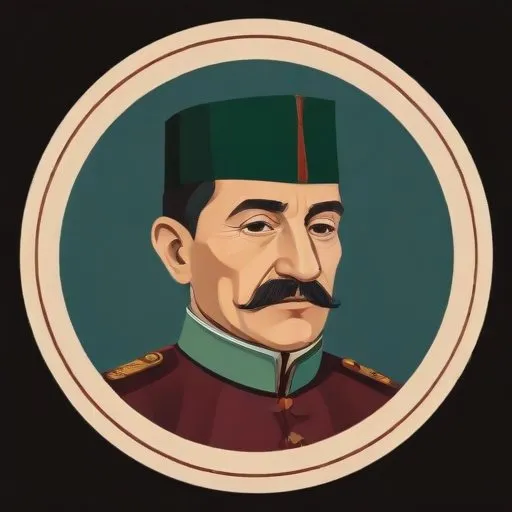
A Hungarian noble and military leader who played a key role in the country's struggle for independence against the Habsburgs in the 17th century. He's known for his bravery and strategic military victories.
Ferenc Ndasdy, a prominent figure in 16th-century Hungarian history, is best known for his marriage to the infamous Elizabeth Báthory, also known as the "Blood Countess," and his influential role in shaping the country's politics and nobility.
Born on October 6, 1555, Ferenc Ndasdy was a member of one of the wealthiest and most influential noble families in Hungary. His mother, Orsolya Ndasdy (née Kanizsay), was a cunning and ambitious woman who sought to strengthen the family's ties with other prominent noble families through strategic marriages.
In 1571, Ferenc's mother arranged his marriage to 10-year-old Elizabeth Báthory, daughter of Count György and Anna Báthory. This union would prove to be a pivotal moment in Hungarian history, as the Báthory family was considered even more illustrious and influential than the Ndasdy family.
While Ferenc struggled with literacy in his mother tongue, Elizabeth was an exceptionally educated woman, fluent in multiple languages, including Latin, German, and Greek. This significant educational disparity would define their relationship and influence their roles in Hungarian society.
The lavish wedding ceremony, attended by over 4,500 guests, took place on May 8, 1575, at Castle Vranov in Slovakia. In a unique arrangement, Ferenc adopted the Báthory name, acknowledging the prestige and honor associated with his wife's family.
After the wedding, the newlyweds, along with Ferenc's mother and other Ndasdy family members, resided in Čachtice Castle, located in present-day Slovakia. This 13th-century fortress would serve as the backdrop for the tumultuous and mysterious life of Elizabeth Báthory.
Ferenc Ndasdy's life and marriage to Elizabeth Báthory have captivated historians and the general public alike. While his own accomplishments are overshadowed by those of his wife, his role in facilitating the rise of the Báthory family and his contribution to the complex tapestry of Hungarian history are undeniable.
Ferenc Ndasdy's fascinating life, marked by his influential family and tumultuous marriage, continues to intrigue historians and inspire new generations of readers.
Born in 1868
Led a right-wing authoritarian government in Hungary between the two World Wars, known for his anti-Semitic and nationalist policies. He collaborated with Nazi Germany during World War II.
Born in 1890
The 33rd Prime Minister of Hungary, a politician and diplomat who served during World War II and was involved in the country's fascist regime. He is known for his role in Hungary's involvement in the war and the subsequent war crimes trials.
