


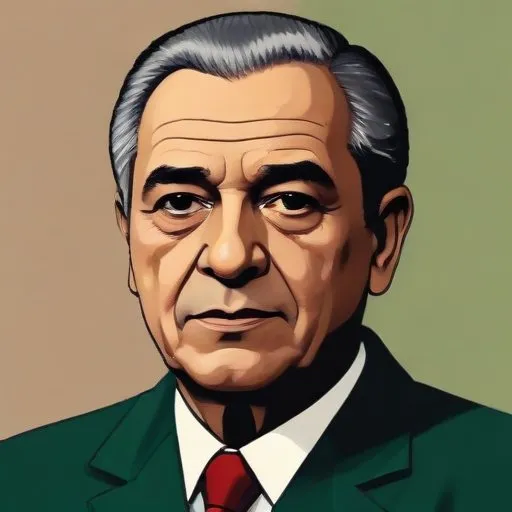
A renowned sociologist and politician who served as President of Brazil from 1995 to 2003, implementing economic reforms and stabilizing the country's economy. He's also a respected academic and writer.
Fernando Henrique Cardoso is a renowned Brazilian sociologist, professor, and politician who served as the 34th President of Brazil from 1995 to 2003, becoming the first Brazilian president to be reelected for a subsequent term. He is widely recognized for his groundbreaking research on dependency theory, slavery, and political theory, earning him numerous prestigious awards and honors.
Cardoso was born on June 18, 1931, in Rio de Janeiro, Brazil, to a family of wealthy Portuguese immigrants. He has African ancestry through his great-great-grandmother and great-grandmother. He spent most of his life in São Paulo, where he was educated as a sociologist and became a professor of political science and sociology at the Universidade de São Paulo.
During his presidency, Cardoso implemented significant economic reforms, including the introduction of the Real Plan, which helped to stabilize Brazil's economy and reduce inflation. He also played a crucial role in strengthening Brazil's international relations, particularly with the United States and Europe.
Cardoso was married to Ruth Vilaa Correia Leite Cardoso, an anthropologist, from 1953 until her passing in 2008. They had three children together. Cardoso is a widower and has continued to contribute to the fields of sociology and politics through his writings and public appearances.
Cardoso's work has been influenced by dependency theory, which critiques the idea that underdeveloped countries are economically dependent on developed countries. He has also written extensively on political theory, exploring the complexities of power and governance in modern societies.
Cardoso's presidency and academic career have had a profound impact on modern Brazilian society, shaping the country's economic and political landscape. His contributions to the fields of sociology and politics continue to inspire new generations of scholars, policymakers, and leaders.
Fernando Henrique Cardoso's legacy is cemented in his tireless pursuit of knowledge, his commitment to public service, and his unwavering dedication to improving the lives of Brazilians. As a pioneer in sociological research and politics, he has left an indelible mark on Brazilian history and continues to inspire future leaders and scholars.
78 Years Old
Brazil's first female president, a key figure in the country's economic development and a symbol of female empowerment in Latin American politics.
86 Years Old
Brazil's 25th Vice President, a lawyer and politician, who took over as President after Dilma Rousseff's impeachment and implemented austerity measures to address the country's economic crisis. He's known for his controversial presidency and corruption charges.
96 Years Old
Brazil's 33rd President, a skilled engineer and politician, led the country during a period of economic crisis and implemented significant reforms. He's most known for stabilizing the economy and introducing the Real Plan.
96 Years Old
A Brazilian lawyer and politician who served as the 31st President of Brazil, known for his role in the country's transition from military to civilian rule. He's also remembered for his controversial presidency marked by economic crisis and corruption allegations.
Born in 1910
A Brazilian lawyer and politician who served as Prime Minister of Brazil, known for being the first civilian to assume the office after a long period of military rule. He's also famous for dying before taking office, sparking a national crisis.
