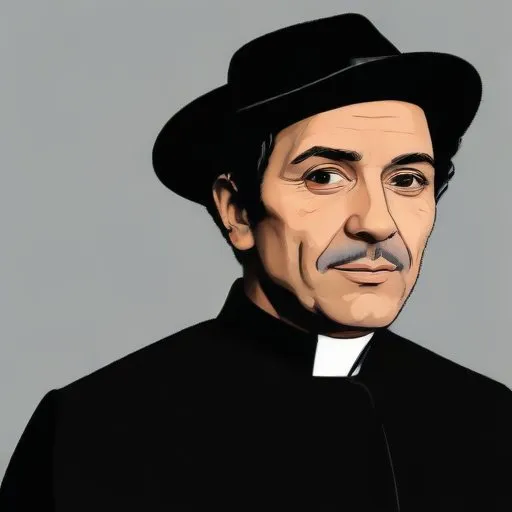
Fernando LopesGraa: The Portuguese Maestro of Music and Dissent
A Life Dedicated to Music and Revolution
Fernando LopesGraa was a renowned Portuguese composer, conductor, and musicologist, celebrated for his contributions to the country's rich musical heritage. As a fierce opponent of the authoritarian regime of
António de Oliveira Salazar, LopesGraa's life and work were deeply entrenched in the struggle for democracy and social justice.
Early Life and Musical Beginnings
Born on December 17, 1906, in Tomar, Portugal, LopesGraa began his musical journey at a young age, studying piano in his hometown. In 1924, he enrolled at the Conservatório Nacional de Lisboa, where he further developed his musical skills. His talent and dedication earned him a spot in Vianna da Motta's Classe de Virtuosidade in 1927.
Political Awakening and Artistic Expression
LopesGraa's involvement with the Portuguese Communist Party and his strong opposition to the Estado Novo regime defined his life and art. In 1931, he was arrested and expelled to Alpiara for his political beliefs. This experience only strengthened his resolve, and he continued to create music that reflected his commitment to social justice.
Musical Contributions and Accolades
LopesGraa's compositions are a testament to his mastery of multiple genres. He is credited with completing the Dicionário de Música (Dictionary of Music), a project started by his teacher, Tomás Borba. His work on traditional Portuguese songs earned him recognition, and his ballet-revue, La fièvre du temps, was commissioned by the Maison de la Culture de Paris in 1938.
- 1940: Won the composition prize from Crculo de Cultura Musical for his 1st Concert for Piano and Orchestra.
- 1942: Awarded a prize from Crculo de Cultura Musical for História Trágico-Marítima, based on a poem by Miguel Torga.
- 1944: Received the Composition Prize from Crculo de Cultura Musical for Sinfonia.
- 1952: Won another composition prize from Crculo de Cultura Musical for his 3rd Piano Sonata, dedicated to Hélène Boschi.
Legacy and Impact
Fernando LopesGraa's contributions to Portuguese music and culture are immeasurable. Through his music, he gave voice to the struggles and hopes of his people, inspiring generations of artists and activists. His legacy extends beyond the realm of music, as he remained unwavering in his commitment to social justice and democracy.
Today, LopesGraa's work continues to inspire and educate, serving as a testament to the power of art to challenge and transform society.
FAQ
What is Fernando Lopes-Graças most famous composition?
Fernando Lopes-Graças most famous composition is probably Requiem, a large-scale choral work that showcases his mastery of orchestration and his deep understanding of Portuguese folk music.
How did Fernando Lopes-Graças work reflect his Portuguese heritage?
Fernando Lopes-Graças work often reflected his Portuguese heritage, drawing on Portuguese folk music and exploring themes of national identity and culture. His compositions were heavily influenced by the countrys rich musical traditions.
What was Fernando Lopes-Graças role in Portuguese music?
Fernando Lopes-Graça was a prominent Portuguese composer and conductor, known for his contributions to Portuguese music and his role in promoting the countrys rich cultural heritage.
How did Fernando Lopes-Graças work impact Portuguese culture?
Fernando Lopes-Graças work had a significant impact on Portuguese culture, helping to shape the countrys musical identity and promoting a deeper understanding of Portuguese history and culture.
What honors did Fernando Lopes-Graça receive for his contributions to music?
Fernando Lopes-Graça received numerous honors for his contributions to music, including the Grand Prize of the Portuguese Academy of Sciences and the Order of Santiago da Espada.