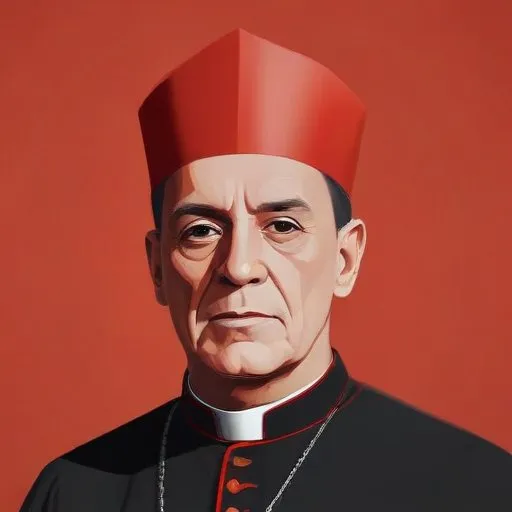
Fernando Quiroga Palacios: A Devout Servant of the Roman Catholic Church
A Life of Dedication and Service
Fernando Quiroga Palacios was a renowned Spanish Cardinal of the Roman Catholic Church, best known for his unwavering commitment to his faith and his esteemed position as Archbishop of Santiago de Compostela from 1949 until his passing in 1971. Elevated to the cardinalate in 1953 by
Pope Pius XII, Quiroga Palacios played a significant role in shaping the Church's trajectory during the mid-20th century.
Early Life and Education
Born on January 21, 1900, in San Pedro de Maceda, near Maceda, Ourense, Quiroga Palacios pursued his theological studies at the seminary in Ourense, the Pontifical University of Santiago de Compostela, and the Pontifical Biblical Institute in Rome. He was ordained to the priesthood on June 10, 1922, and completed his studies in 1925.
Pastoral Work and Academic Pursuits
While engaging in pastoral work in Ourense, Quiroga Palacios simultaneously served as a professor and spiritual advisor at the Ourense seminary from 1925 to 1942. His dedication to his community and educational pursuits earned him the respect of his peers and the recognition of the Church hierarchy.
Rise to Prominence
In 1942, Quiroga Palacios was appointed lectoral canon of the cathedral chapter of Valladolid, where he continued his pastoral and seminary work until 1945. On November 24, 1945, Pope Pius XII appointed him Bishop of Mondoedo, and he received his episcopal consecration on March 24, 1946.
Cardinal and Archbishop
Quiroga Palacios's elevation to Archbishop of Santiago de Compostela on June 4, 1949, marked a significant milestone in his career. He became a Cardinal Priest of Sant'Agostino on January 12, 1953, solidifying his position as a prominent figure within the Church.
International Representations and Councils
As a papal legate, Quiroga Palacios represented the Church at the Marian Congress in Manila, Philippines, in December 1954. He also participated in the 1958 papal conclave and attended the Second Vatican Council from 1962 to 1965. During this period, he played a key role in the conclave of 1963 that selected Pope Paul VI.
Leadership and Legacy
Quiroga Palacios served as the first President of the Spanish Episcopal Conference from 1966 to 1969, demonstrating his commitment to guiding the Church in Spain. His legacy is marked by his tireless dedication to his faith, his educational pursuits, and his leadership within the Church.
Personal Milestones and Key Life Events
- January 21, 1900: Born in San Pedro de Maceda, near Maceda, Ourense
- June 10, 1922: Ordained to the priesthood
- 1945: Appointed Bishop of Mondoedo
- 1949: Elevated to Archbishop of Santiago de Compostela
- 1953: Appointed Cardinal Priest of Sant'Agostino
- December 7, 1971: Passed away in Madrid at the age of 71
Final Resting Place
Fernando Quiroga Palacios is buried in the Cathedral of Santiago de Compostela, a testament to his enduring connection to the city and the Church he served with devotion.
FAQ
What was Fernando Quiroga Palacioss role in the Catholic Church?
Fernando Quiroga Palacios was a Spanish Cardinal who served as the Bishop of Santiago de Compostela and later as the Archbishop of Santiago de Compostela. He was a prominent figure in the Catholic Church in Spain.
What was Fernando Quiroga Palacioss stance on social issues?
Fernando Quiroga Palacios was known for his progressive stance on social issues, including education and labor rights. He was a strong advocate for the rights of workers and the poor.
How did Fernando Quiroga Palacios contribute to the Second Vatican Council?
Fernando Quiroga Palacios was a key contributor to the Second Vatican Council, where he played a role in shaping the Churchs teachings on issues such as ecumenism and religious freedom.
What awards did Fernando Quiroga Palacios receive for his service to the Church?
Fernando Quiroga Palacios received numerous awards for his service to the Church, including the Grand Cross of the Order of Charles III. He was also named a Cardinal by Pope Paul VI.
What is Fernando Quiroga Palacioss legacy in the Catholic Church?
Fernando Quiroga Palacios is remembered as a champion of social justice and a leader in the Catholic Church. His commitment to the poor and marginalized helped to inspire a generation of Catholics.