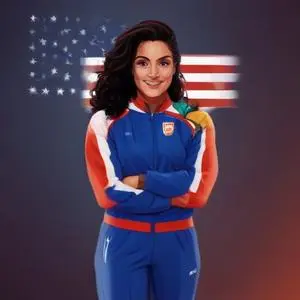
Florence Griffith Joyner: The Fastest Woman in the World
The Queen of the Track
Florence Griffith Joyner, affectionately known as Flo-Jo, is renowned for being the fastest woman in the world, holding the title for over three decades. Her incredible speed and athleticism earned her multiple world records, Olympic medals, and a place in the hearts of track and field enthusiasts worldwide.
Early Life and Beginnings
Born on December 21, 1959, in Los Angeles, California, Florence was the seventh of eleven children. She grew up in the Jordan Downs public housing complex in the Watts section of Los Angeles, where her love for running was ignited at a young age. Florence joined the
Sugar Ray Robinson Organization, running in track meets on weekends, and went on to win the
Jesse Owens National Youth Games two years in a row at the ages of 14 and 15.
Rise to Fame
Florence's talent and dedication earned her a full scholarship to California State University, Northridge (CSUN), where she continued to excel in track and field. She later transferred to the University of California, Los Angeles (UCLA), further honing her skills. In 1984, Florence made her Olympic debut, winning a silver medal in the 200-meter distance at the Los Angeles Olympics.
World Records and Olympic Triumph
The 1988 U.S. Olympic trials were a defining moment in Florence's career, as she set a new world record in the 100-meter sprint with a staggering time of 10.49 seconds. This record still stands today, a testament to her incredible speed and endurance. At the 1988 Seoul Olympics, Florence won three gold medals, cementing her status as a global track and field sensation.
A Sudden Exit and Post-Athletic Career
In February 1989, Florence abruptly retired from athletics, leaving the world wondering what could have been. However, she remained a prominent figure, capitalizing on her fame through endorsement deals, acting, and designing. Her eclectic personal style and charisma made her a beloved pop culture icon.
The Legacy Lives On
Florence Griffith Joyner's impact on track and field is immeasurable. She inspired generations of athletes, particularly women, to push their limits and strive for excellence. Her records remain unbeaten, and her legacy continues to motivate and awe fans worldwide. In 1998, Florence passed away at the age of 38 due to complications from an epileptic seizure caused by a congenital birth defect.
Awards and Honors
- Olympic gold medals (3): 1988 Seoul Olympics (100m, 200m, 4x100m relay)
- Silver medal: 1984 Los Angeles Olympics (200m)
- World records: 100m (10.49s), 200m (21.34s)
- Inducted into the USA Track & Field Hall of Fame (1995)
- Inducted into the California Hall of Fame (2012)
Florence Griffith Joyner's remarkable story serves as a beacon of inspiration, reminding us that with dedication, hard work, and passion, we can achieve greatness and leave a lasting impact on the world.
FAQ
What was Florence Griffith Joyners athletic career like?
Florence Griffith Joyner, also known as Flo-Jo, was an American sprinter who set multiple world records in the 100m and 200m events. She won three gold medals and one silver medal at the 1988 Summer Olympics in Seoul, South Korea.
What records did Florence Griffith Joyner set?
Florence Griffith Joyner set multiple world records in the 100m and 200m events, including a 100m world record of 10.49 seconds that still stands today. She was known for her incredible speed and powerful running style.
What was Florence Griffith Joyners personality like?
Florence Griffith Joyner was known for her outgoing and confident personality, earning her the nickname Flo-Jo. She was a trailblazer for womens track and field and an icon in the sports world.
What was Florence Griffith Joyners impact on womens sports?
Florence Griffith Joyner was a pioneer for womens sports, inspiring a generation of female athletes and breaking down barriers for women in track and field. She remains one of the most iconic and beloved athletes in American history.
What is Florence Griffith Joyners legacy?
Florence Griffith Joyners legacy extends beyond her impressive athletic achievements. She remains an icon and a symbol of excellence in womens sports, inspiring future generations of athletes and continuing to be celebrated as a pioneer in the sport.