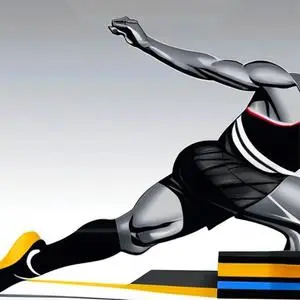
Jesse Owens: The Track and Field Legend Who Defied Racial Barriers
A Four-Time Olympic Gold Medalist
Jesse Owens is renowned for his outstanding achievements in the track and field arena, where he claimed four gold medals at the 1936 Olympic Games in Berlin, Germany. This remarkable feat cemented his status as a sporting legend, earning him international recognition and acclaim.
Early Life and Education
Born on September 12, 1913, in Oakville, Alabama, Jesse Owens was the youngest of ten children to Henry Cleveland Owens, a sharecropper, and Mary Emma Fitzgerald. As a grandson of a slave, Owens' life was shaped by the struggles of the African American community during the early 20th century. At the age of nine, he moved to Cleveland, Ohio, with his family, seeking better opportunities as part of the Great Migration.
The Birth of a Track and Field Star
Owens' athletic talent was first discovered by his high school track coach, Charles Riley, who recognized the young athlete's potential. Owens' dedication and hard work soon paid off, as he set multiple records in high school and eventually earned a scholarship to Ohio State University.
A Dominant Force in Track and Field
At the 1935 Big Ten track meet in Ann Arbor, Michigan, Owens achieved an unprecedented feat, setting three world records and tying another in less than an hour. This remarkable display of athleticism has been hailed as the greatest 45 minutes in sports history. Owens' exceptional speed, agility, and endurance made him a dominant force in track and field, earning him numerous accolades and recognition as the greatest athlete of his time.
The 1936 Olympic Games: A Triumph Over Adversity
The 1936 Summer Olympics in Berlin, Germany, provided Owens with the perfect platform to showcase his athleticism and challenge the racial prejudices of the time. Despite the prevailing atmosphere of racial tension and discrimination, Owens emerged as a beacon of hope, winning four gold medals in the 100 meters, long jump, 200 meters, and 4 x 100-meter relay events. His remarkable achievement single-handedly dismantled
Adolf Hitler's myth of Aryan supremacy, earning Owens international acclaim and admiration.
Legacy and Impact
Jesse Owens' legacy extends far beyond his impressive athletic achievements. He has inspired generations of athletes, breaking down racial barriers and paving the way for future generations of African American athletes. The Jesse Owens Award, established in his honor, is USA Track & Field's highest accolade for the year's best track and field athlete. Owens' remarkable story has been recognized by ESPN as one of the greatest sporting achievements of the 20th century.
Personal Life and Later Years
After retiring from athletics, Owens worked as a sports promoter, public speaker, and businessman. He was married to Minnie Ruth Solomon from 1935 until his passing on March 31, 1980. Owens' later years were marked by health issues, including lung cancer, which ultimately claimed his life.
Quotes and Memorable Sayings
- "The battles that count aren't the ones for gold medals. The struggles within yourself – the invisible, inevitable battles inside all of us – that's where it's at."
- "I always loved running; it was something you could do by yourself and under your own power."
Awards and Honors
- Four-time Olympic gold medalist (1936)
- Jesse Owens Award (established in his honor)
- Ranked sixth greatest North American athlete of the 20th century by ESPN
- Shortlisted for the BBC's Sports Personality of the Century (1999)
Trivia and Fun Facts
- Owens was known as "J.C." until the age of nine, when his teacher mistakenly recorded his name as Jesse.
- He worked as a gas station attendant and a playground janitor to support his family during the Great Depression.
Jesse Owens' remarkable life and achievements continue to inspire and captivate audiences, serving as a testament to the power of human resilience, determination, and athletic excellence.
FAQ
What were Jesse Owens achievements in track and field?
Jesse Owens was a legendary American sprinter and long jumper who won four gold medals at the 1936 Berlin Olympics, setting multiple world records in the process.
What was Jesse Owens experience like during the 1936 Olympics?
Jesse Owens performance at the 1936 Olympics was a historic moment, as he defied Adolf Hitlers Aryan race theories and proved the equality of African American athletes. He faced intense media scrutiny and racism, but remained focused and determined.
What was Jesse Owens impact on the Civil Rights Movement?
Jesse Owens was a symbol of hope and inspiration for African Americans during the Civil Rights Movement. His achievements challenged racial stereotypes and paved the way for future generations of athletes and activists.
What were Jesse Owens contributions to sports beyond track and field?
Jesse Owens was a sports enthusiast who supported and promoted various sports, including basketball, football, and baseball. He also worked as a sports broadcaster and ambassador, spreading the message of athletic excellence and fair play.
How is Jesse Owens remembered today?
Jesse Owens is remembered as an American hero, a trailblazer who broke down racial barriers and inspired generations of athletes and citizens. His legacy continues to inspire and educate people around the world.