


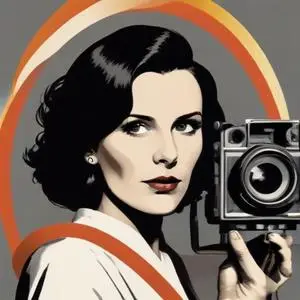
A pioneering female filmmaker who crafted iconic, influential, and controversial propaganda films for the Nazi Party, showcasing her exceptional cinematography and direction skills.
Leni Riefenstahl is renowned for producing some of the most iconic and technically innovative propaganda films of the 20th century, namely Triumph of the Will (1935) and Olympia (1938), which cemented her position as a pioneering female filmmaker in Nazi Germany. Her visually stunning and awe-inspiring films continue to fascinate audiences today, despite their deeply troubled historical context.
Born Helene Bertha Amalie Riefenstahl on August 22, 1902, in Berlin, Germany, Leni grew up in a successful family with a passion for the arts. Her early interests lay in swimming, dancing, and art, which would eventually lead her to pursue a career in acting and filmmaking.
Riefenstahl's career in film began in the 1920s, during which she starred in five successful motion pictures between 1925 and 1929. Her experiences in front of the camera soon led her to venture behind the lens, and in 1932, she directed her first film, The Blue Light, becoming one of the few women in Germany to do so during the Weimar era.
Riefenstahl's collaboration with Adolf Hitler and the Nazi Party resulted in the creation of two of her most infamous films: Triumph of the Will, which documented the 1934 Nuremberg Rally, and Olympia, a two-part documentary about the 1936 Summer Olympics in Berlin. These films earned her worldwide recognition and critical acclaim, solidifying her position as a master of propaganda filmmaking.
Following World War II, Riefenstahl's involvement with the Nazi Party led to her arrest and subsequent trial. Although she was not charged with war crimes, her reputation was irreparably damaged. Throughout her later life, she denied knowledge of the Holocaust, sparking criticism and outrage from many quarters.
In the decades that followed, Riefenstahl devoted herself to photography and writing, publishing an autobiography and two photography books on the Nuba people of Sudan. Despite her controversial past, her artistic contributions continue to inspire and influence filmmakers, photographers, and artists around the world.
| 1902 | Leni Riefenstahl born in Berlin, Germany |
| 1925-1929 | Stars in five successful motion pictures |
| 1932 | Directs her first film, The Blue Light |
| 1935 | Releases Triumph of the Will |
| 1938 | Releases Olympia |
| 2003 | Leni Riefenstahl passes away at the age of 101 |
Riefenstahl's remarkable life and career continue to fascinate and disturb audiences, serving as a poignant reminder of the complex and often troubled relationships between art, politics, and morality.
Born in 1889
The dictator of Nazi Germany, responsible for the genocide of six million Jews and millions of other people during World War II, and infamous for his extreme nationalist and anti-Semitic ideology.
Born in 1897
A mastermind of Nazi propaganda, he crafted a persuasive narrative that fueled the Third Reich's rise to power, leaving a lasting impact on the world.
Born in 1893
A high-ranking Nazi official, he was a decorated World War I fighter pilot and later became a prominent politician, serving as Minister President of Prussia. He's infamous for his role in the Nazi regime and war crimes trials.
Born in 1912
The longtime companion and eventually wife of the Nazi leader, known for her devotion to him and her ultimate fate of dying alongside him in the final days of World War II. She kept a private life, but her relationship with Hitler remains a subject of fascination and scrutiny.
Born in 1900
Leading the SS and Gestapo, he oversaw the Nazi regime's brutal security apparatus and implemented the "Final Solution," orchestrating the genocide of six million Jews during World War II.
Born in 1905
A prominent figure in Nazi Germany, serving as Minister of Armaments and War Production, known for his architectural designs and role in the war effort.
Born in 1900
A powerful and secretive figure in the Nazi Party, known for controlling access to Hitler and overseeing the party's administrative and financial machinery. He vanished after Hitler's death, sparking decades of speculation about his fate.
Born in 1903
Austrian-German lawyer and general who served as the highest-ranking leader of the Nazi police forces, responsible for overseeing the Gestapo, SS, and concentration camps during World War II. He was a key figure in the Holocaust and other atrocities committed by the Nazi regime.
