


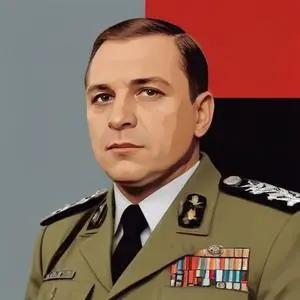
A powerful and secretive figure in the Nazi Party, known for controlling access to Hitler and overseeing the party's administrative and financial machinery. He vanished after Hitler's death, sparking decades of speculation about his fate.
As Adolf Hitler's private secretary and head of the Nazi Party Chancellery, Martin Bormann wielded immense power and influence, earning him the reputation as one of the most feared and reviled figures of the Third Reich. His mastery of bureaucratic manipulation and control over the flow of information made him a crucial cog in the Nazi machinery.
Bormann's journey to the pinnacle of Nazi power began humbly, with his joining the paramilitary Freikorps organization in 1922. His involvement in the murder of Walther Kadow, for which he served nearly a year in prison, marked an early glimpse into his willingness to take drastic measures to achieve his goals.
Following his release from prison, Bormann joined the Nazi Party in 1927 and the Schutzstaffel (SS) in 1937. His administrative prowess soon caught the attention of Rudolf Hess, Deputy Führer and Hitler's second-in-command, who appointed Bormann as his chief of staff in 1933.
Bormann's assiduous nature and ability to provide concise briefings and summaries of events earned him a spot in Hitler's inner circle. He accompanied the Führer everywhere, becoming an indispensable advisor and confidant. This proximity to power allowed Bormann to shape policy and influence decision-making, often to devastating effect.
After Hess's ill-fated solo flight to Britain in 1941, Bormann assumed his duties, solidifying his position as Head of the Parteikanzlei (Party Chancellery). This appointment granted him final approval over civil service appointments, legislation, and de facto control over domestic matters.
Bormann's role in perpetuating the Nazi regime's atrocities is well-documented. He was a leading proponent of the ongoing persecution of Christian churches and favored harsh treatment of Jews and Slavs in occupied territories. His involvement in the Holocaust and war crimes earned him a conviction and death sentence in absentia at the Nuremberg Trials.
In the dying days of the Third Reich, Bormann returned with Hitler to the Führerbunker in Berlin, where he remained until the Red Army closed in. Following Hitler's suicide on April 30, 1945, Bormann and others attempted to flee Berlin, but his fate remains shrouded in mystery. While his body was never found, it is presumed that he died on May 2, 1945, during the chaos of the war's final days.
Martin Bormann's legacy is one of ruthless ambition, bureaucratic manipulation, and complicity in some of humanity's darkest hours. His influence on modern society serves as a cautionary tale about the dangers of unchecked power and the devastating consequences of blind loyalty.
Born in 1889
The dictator of Nazi Germany, responsible for the genocide of six million Jews and millions of other people during World War II, and infamous for his extreme nationalist and anti-Semitic ideology.
Born in 1897
A mastermind of Nazi propaganda, he crafted a persuasive narrative that fueled the Third Reich's rise to power, leaving a lasting impact on the world.
Born in 1893
A high-ranking Nazi official, he was a decorated World War I fighter pilot and later became a prominent politician, serving as Minister President of Prussia. He's infamous for his role in the Nazi regime and war crimes trials.
Born in 1894
A high-ranking Nazi official who flew to Scotland on a solo mission to negotiate peace with the UK, but was instead arrested and imprisoned.
Born in 1900
Leading the SS and Gestapo, he oversaw the Nazi regime's brutal security apparatus and implemented the "Final Solution," orchestrating the genocide of six million Jews during World War II.
Born in 1893
A German diplomat who served as the Nazi regime's Foreign Minister, orchestrating key alliances and treaties that led to World War II. He was a close associate of Adolf Hitler and played a crucial role in shaping Nazi foreign policy.
Born in 1905
A prominent figure in Nazi Germany, serving as Minister of Armaments and War Production, known for his architectural designs and role in the war effort.
Born in 1876
A German naval leader who played a key role in the Kriegsmarine during World War II, overseeing the German U-boat fleet and naval operations. He was a close advisor to Adolf Hitler and implemented the German naval strategy during the war.
