


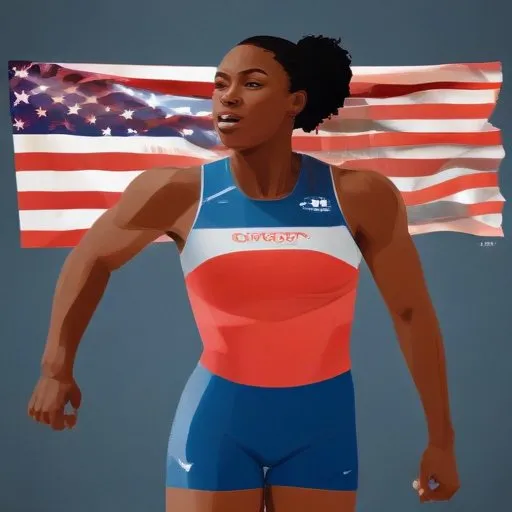
American Olympic hurdler who won two gold medals at the 1948 London Olympics, setting a world record in the 80-meter hurdles. She was a pioneering female athlete in a male-dominated sport.
Florieda Batson was a pioneering American hurdler who made history as the captain of the United States team at the Women's Olympics in Paris in 1922. With her impressive athletic skills and determination, she became an inspiration to many, paving the way for future generations of female athletes.
Florieda Batson was born on November 20, 1900, in New Orleans, Louisiana, to Robert Percy Batson, a successful businessman born in Barbados, and his wife Florieda Burton Batson. Tragedy struck early in her life when her mother passed away when Florieda was just three years old. Her two older brothers also died in accidents, leaving her to be raised by relatives in Alabama and New York.
Despite the challenges, Florieda's father ensured she received a good education. She attended Rosemary Hall Academy (now Choate Rosemary Hall) in Connecticut, where she developed her passion for sports. After graduating, she enrolled at Smith College, further nurturing her athletic talents.
At Rosemary Hall, Florieda discovered her talent for hurdling, in addition to playing field hockey and basketball. She quickly rose to become the leading American short-distance female hurdler, remaining undefeated between 1919 and 1921. During this period, she set U.S. records in the 60-yard high hurdles (9.0 seconds) and the 100-yard low hurdles (14.4 seconds).
In 1922, Florieda was invited to join the team of 13 American women attending the Women's Olympics in Paris, an event organized by French women's athletics pioneer Alice Milliat. The team, comprising mostly East Coast prep school and college students, elected Florieda as their captain.
Unfortunately, Florieda suffered a setback during the team's first practice in Paris. She sprained her left ankle when she hit a hurdle, which affected her performance in the competition. Although she won her qualifying heat, she failed to finish the final due to her injured ankle.
After the Women's Olympics, Florieda returned to New Orleans and began her career as a sports editor for the New Orleans Item. In 1924, she married local businessman William Joseph Gibbens, Jr., with whom she had two daughters, Patricia and Jean.
Florieda's legacy extends beyond her athletic achievements. She paved the way for future generations of female athletes, inspiring them to pursue their passions and push beyond the boundaries of what was deemed possible. Her determination, perseverance, and trailblazing spirit continue to inspire people to this day.
Florieda Batson's life was a remarkable journey of triumph and perseverance. As a pioneering athlete, she inspired generations of women to pursue their passions and push beyond the boundaries of what was deemed possible. Her legacy continues to inspire people to this day, serving as a reminder of the power of determination and hard work.
Born in 1908
African American athlete who won two gold medals in the 100m and 200m sprint events at the 1932 Summer Olympics, breaking racial barriers in sports.
Born in 1910
A renowned Olympic gold medalist and congressman, known for his impressive athletic career and later transition into politics, advocating for civil rights and social justice.
Born in 1913
A legendary athlete who shattered records and racial barriers at the 1936 Berlin Olympics, winning four gold medals in the 100m, 200m, 4x100m relay, and long jump events.
Born in 1889
American sprinter and sailor who won two gold medals at the 1912 Summer Olympics and later became a successful sailor, winning several championships. He was also a naval officer and businessman.
Born in 1923
American sprinter and hurdler who won four Olympic gold medals, including the 100-meter dash and 4x100-meter relay at the 1948 and 1952 Olympics. He is the only male athlete to win Olympic titles in both sprinting and hurdling events.
