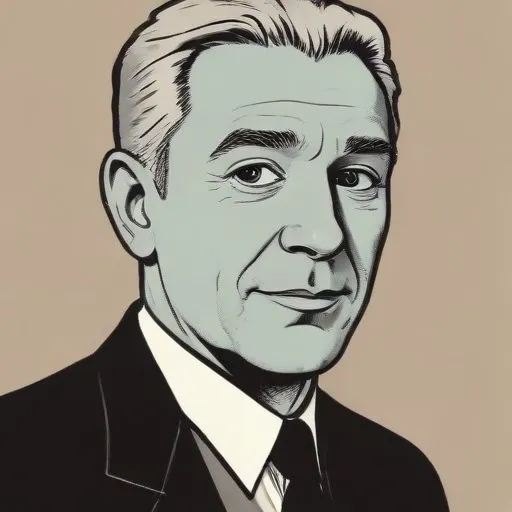
Ford Frick: The Visionary Behind Baseball's Golden Era
A Legacy of Leadership and Innovation
Ford Frick is widely regarded as one of the most influential figures in baseball history, serving as the National League president from 1934 to 1951 and the third Commissioner of Major League Baseball from 1951 to 1965. During his tenure, Frick played a pivotal role in shaping the modern game, navigating the league through tumultuous times, and leaving an indelible mark on the sport.
Early Life and Career
Born on December 19, 1894, in Wawaka, Indiana, Frick grew up with a passion for sports and education. He attended DePauw University, where he played first base for the university's baseball team and ran track. After graduating in 1915, Frick taught English at Colorado Springs High School and Colorado College, while also moonlighting as a sports writer for The Gazette.
Rise to Prominence
Frick's journalistic talents eventually led him to the National League, where he served as the public relations director from 1934 to 1951. During this period, he played a crucial role in establishing the Baseball Hall of Fame as a museum to honor the greatest players in baseball history. His vision and leadership helped to cement the Hall of Fame's place as a sacred institution in the baseball world.
Commissioner of Major League Baseball
In 1951, Frick became the third Commissioner of Major League Baseball, a position he held until 1965. During his tenure, he faced numerous challenges, including the threat of a player strike in response to the racial integration of the major leagues. Frick's diplomatic skills and leadership helped to quell the unrest, paving the way for the likes of
Jackie Robinson and other trailblazing African American players.
Expansion and Challenges
Frick's commissionership was marked by significant expansion, with the addition of new teams and the growth of baseball's popularity nationwide. However, he also faced opposition from Congress, which threatened to revoke the league's antitrust exemption. Frick's deft handling of these challenges helped to maintain the league's integrity and ensure its continued prosperity.
Legacy and Honors
In recognition of his immense contributions to baseball, Frick was elected to the National Baseball Hall of Fame in 1970. The Ford C. Frick Award, established in 1978, recognizes outstanding MLB broadcasters and serves as a testament to Frick's enduring legacy.
Personal Milestones and Key Life Events
- December 19, 1894: Born in Wawaka, Indiana
- 1915: Graduated from DePauw University
- 1934-1951: Served as National League president
- 1951-1965: Served as Commissioner of Major League Baseball
- 1970: Elected to the National Baseball Hall of Fame
- April 8, 1978: Passed away at the age of 83
Philosophical Contributions and Beliefs
Frick's leadership philosophy was built on a foundation of fair play, integrity, and innovation. He believed in the power of baseball to bring people together, fostering a sense of community and shared experience. His commitment to the game's growth and development helped to ensure its place as a beloved American institution.
Influence on Modern Society
Frick's impact on baseball extends far beyond his own lifetime. His leadership and vision helped to shape the game into the multibillion-dollar industry it is today. His commitment to diversity and inclusion paved the way for generations of players from diverse backgrounds, and his establishment of the Baseball Hall of Fame serves as a lasting tribute to the game's rich history.
FAQ
Who is Ford Frick?
Ford Frick was an American journalist and businessman who served as the third Commissioner of Major League Baseball from 1951 to 1965. He played a significant role in shaping the modern game.
What was Ford Fricks contribution to baseball?
Frick was instrumental in introducing the modern baseball commissioner system, which gave the commissioner more authority to govern the league. He also played a key role in the expansion of baseball, with the addition of new teams and the introduction of the National League Championship Series.
Where did Ford Frick work as a journalist?
Before becoming the Commissioner of Baseball, Frick worked as a journalist for several newspapers, including the New York World-Telegram and the New York Evening Journal.
What awards did Ford Frick receive?
Frick was inducted into the National Baseball Hall of Fame in 1970 and received the Commissioners Historic Achievement Award in 1998 for his contributions to the game.
When did Ford Frick pass away?
Frick passed away on April 8, 1978, at the age of 83, leaving behind a legacy of dedicated service to baseball.