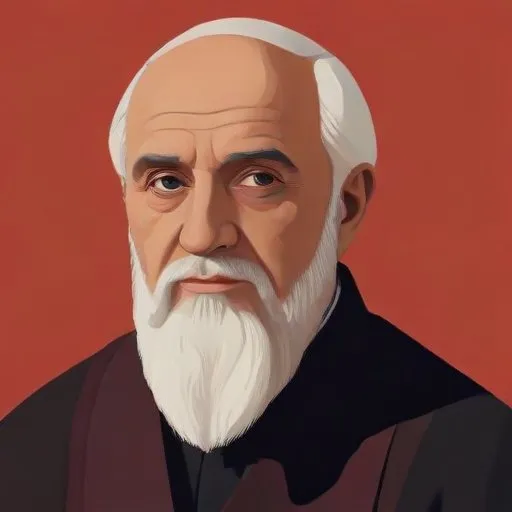
Francesco Antonio Zaccaria: The Prolific Writer and Theologian
A Master of Many Disciplines
Francesco Antonio Zaccaria is renowned for his staggering contribution to the world of theology, history, and literature. With an impressive repertoire of 161 printed works to his name, he is widely regarded as one of the most prolific writers of his time.
Early Life and Education
Born on March 27, 1714, in Venice, Italy, Zaccaria was the son of Tancredi, a noted jurist. He joined the Austrian province of the Society of Jesus on October 18, 1731, and went on to study grammar, humanities, and rhetoric. He was ordained as a priest in Rome in 1740.
Career Highlights
Zaccaria's career was marked by numerous milestones. He taught in various institutions, including the College of Gorizia, and worked as a preacher and controversial lecturer in Ancona, Fermo, and Pistoia. In 1751, he succeeded Muratori as the ducal archivist and librarian of Modena, a position he held until 1768. He was then appointed librarian at the Jesuit professed house in Rome.
Theological and Historical Contributions
Zaccaria's written works are a testament to his vast knowledge and expertise. His series on the bishops of Cremona, Lodi, and Osimo are considered seminal works on church history. He also wrote extensively on theology, canon law, and ecclesiastical antiquities. His 13-volume
Thesaurus Theologicus is a comprehensive compilation of theological treatises by various authors.
Awards and Honors
Zaccaria's contributions did not go unnoticed. He was a member of at least 19 Italian academies and received a annual pension from
Clement XIII, which was continued by Clement XIV and increased by Pius VI. He was also appointed professor of church history at the Sapienza and director of the Pontifical Ecclesiastical Academy.
Legacy
Francesco Antonio Zaccaria's legacy is that of a tireless scholar and writer. His works continue to be a valuable resource for scholars and researchers. He died on October 10, 1795, in Rome, leaving behind a rich cultural heritage.
Notable Works
- Series Episcoporum Cremonensium (Milan, 1749)
- Laudensium (Milan, 1763)
- Auximatium (Osimo, 1764)
- Vico Aequensium (Rome, 1778)
- Caesenatium (Cesena, 1779)
- De Santi Martiri Fedele, Capoforo, Gratiniano, e Felino (Milan, 1750)
- Acta SS. Bollandiana (Antwerp, 1755)
- Raccolta di dissertazioni di storia ecclesiastica (22 vols., Rome, 1792-1797)
- Istoria del Concilio di Trento (Faenza, 1797)
A Life of Devotion and Scholarship
Francesco Antonio Zaccaria's life was a testament to his devotion to his faith and his passion for learning. His contributions to the world of theology, history, and literature continue to inspire and educate scholars to this day.
FAQ
What were the contributions of Francesco Antonio Zaccaria to Italian historiography?
Francesco Antonio Zaccaria was an Italian historian and theologian who made significant contributions to Italian historiography. He wrote several influential works on Italian history, including Storia dellItalia.
What was Francesco Antonio Zaccarias role in the development of historical methodology?
Francesco Antonio Zaccaria played a crucial role in the development of historical methodology. He emphasized the importance of primary sources and critical analysis in historical research.
What were the notable works of Francesco Antonio Zaccaria?
Francesco Antonio Zaccaria wrote several notable works, including Storia dellItalia and Istoria del Concilio di Trento. His writings emphasized the importance of objectivity and accuracy in historical research.
How did Francesco Antonio Zaccaria influence later historians?
Francesco Antonio Zaccarias work had a profound impact on later historians, including Leopold von Ranke and Heinrich Graetz. His emphasis on critical analysis and primary sources helped to establish historiography as a respected discipline.
What legacy did Francesco Antonio Zaccaria leave behind?
Francesco Antonio Zaccaria left behind a lasting legacy in Italian historiography. He was a pioneer of historical methodology and a master of critical analysis, and his work continues to influence the development of historiography today.