


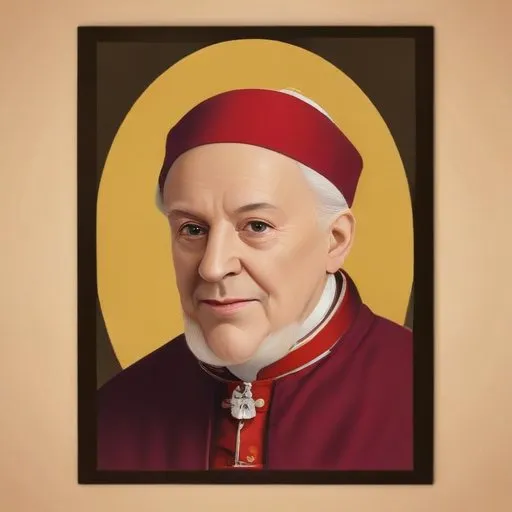
The 18th-century head of the Catholic Church who opposed the suppression of the Jesuits and was a patron of the arts, known for his diplomatic efforts to maintain Church influence.
Pope Clement XIII, born Carlo della Torre di Rezzonico, was the head of the Catholic Church and ruler of the Papal States from 1758 to 1769. He is renowned for his unwavering support of the Society of Jesus, despite mounting pressure to suppress the order, and his pioneering efforts to mend the schism with Protestant England and the Low Countries.
Carlo della Torre di Rezzonico was born on March 7, 1693, to a recently ennobled family in Venice. He was the second of two children to Giovanni Battista della Torre Rezzonico and Vittoria Barbarigo. Rezzonico received a Jesuit education in Bologna and later studied at the University of Padua, where he earned his doctorate in canon law and civil law.
In 1716, Rezzonico became the Referendary of the Apostolic Signatura, followed by his appointment as Governor of Fano in 1721. He was ordained to the priesthood in 1731 and was elevated to the cardinalate in 1737 as the Cardinal-Deacon of San Nicola in Carcere. Rezzonico filled various important posts in the Roman Curia and was chosen as Bishop of Padua in 1743, receiving episcopal consecration from Pope Benedict XIV himself.
Clement XIII's pontificate was marked by his fierce defense of the Jesuits, whom he saw as vital to the Catholic Church's mission. Despite intense opposition, he resisted pressures to suppress the order, recognizing their value in evangelization and education. His papacy also saw efforts to mend the schism with Protestant England and the Low Countries, although these endeavors ultimately bore little fruit.
Clement XIII's commitment to ecumenical dialogue and his support for the Jesuits have had a lasting impact on the Catholic Church's approach to interfaith relations and education. His legacy serves as a testament to the importance of fostering understanding and cooperation between different faith traditions.
Clement XIII's papacy was guided by a deep commitment to the principles of Catholicism and a desire to promote unity and understanding between different faith traditions. His philosophical contributions continue to inspire dialogue and cooperation between Christians and people of other faiths.
| Year | Event |
|---|---|
| 1693 | Birth of Carlo della Torre di Rezzonico |
| 1716 | Becomes Referendary of the Apostolic Signatura |
| 1731 | Ordained to the priesthood |
| 1737 | Elevated to the cardinalate |
| 1743 | Chosen as Bishop of Padua |
| 1758 | Installed as Pope Clement XIII |
| 1769 | Death of Pope Clement XIII |
Born in 1675
A 18th-century pope who reformed the Catholic Church, promoting tolerance and scholarship, and is known for his encyclicals on topics like usury and the sacraments.
Born in 1504
Leader of the Catholic Church during the Counter-Reformation, he excommunicated Queen Elizabeth I and played a key role in the Council of Trent.
Born in 1876
The leader of the Catholic Church from 1939 to 1958, known for his controversial role during World War II, particularly in regards to the Holocaust. He is also remembered for his encyclicals on social justice and liturgical reforms.
Born in 1810
The first pope to fully embrace modernity, he issued the groundbreaking encyclical Rerum Novarum, which addressed social justice and workers' rights, shaping the Catholic Church's stance on social issues.
Born in 1554
Established the Congregation for the Propagation of the Faith, a missionary organization that aimed to spread Catholicism globally, and standardized the papal conclave process.
Born in 1568
The 17th-century Catholic leader who reigned for 21 years, known for his strong stance against Galileo Galilei and his scientific discoveries, as well as his extensive patronage of the arts.
Born in 1611
Led the Catholic Church during a tumultuous period, reforming the Church's finances and combating corruption, while also opposing the French monarch's attempts to exert control over the Church.
Born in 1599
A 17th-century pope who commissioned grand architectural projects, including the colonnade of St. Peter's Square, and was a patron of the arts.
