


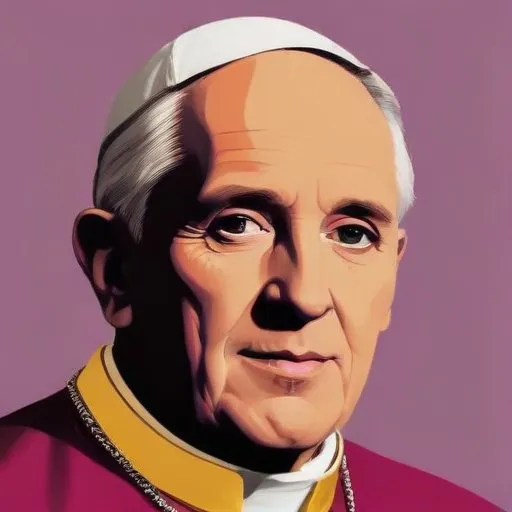
A 18th-century pope who reformed the Catholic Church, promoting tolerance and scholarship, and is known for his encyclicals on topics like usury and the sacraments.
Pope Benedict XIV, born Prospero Lorenzo Lambertini, was a trailblazing pontiff who reigned from 1740 to 1758, leaving an indelible mark on the Catholic Church and the world. This erudite pope was a passionate advocate for scientific learning, artistic expression, and the revitalization of Thomism, earning him the reputation as one of the most learned scholars to have sat on the papal throne.
Born in Bologna, Italy, on March 31, 1675, Lambertini came from a noble family and was raised in an environment that fostered his intellectual curiosity. He pursued his studies in canon and civil law, becoming a distinguished scholar in his own right.
During his papacy, Benedict XIV implemented reforms aimed at promoting economic growth and reducing taxation in the Papal States. He encouraged agriculture, supported free trade, and worked to revitalize the economy, earning him praise for his prudent governance.
A committed Thomist, Benedict XIV was dedicated to upholding the teachings of St. Thomas Aquinas and promoting a deeper understanding of Catholic doctrine. He believed in the importance of reason and faith, and his writings reflected his commitment to integrating these two pillars of Western thought.
Towards the end of his papacy, Benedict XIV faced challenges from the Society of Jesus, which ultimately led to their expulsion from Portugal in 1758. Despite these difficulties, he remained committed to his vision for the Church and its role in the world.
Benedict XIV was known for his humility, kindness, and dedication to his faith. He was esteemed by both Catholics and Protestants, and his papacy was marked by a commitment to peace, learning, and artistic expression.
The legacy of Pope Benedict XIV extends far beyond his papacy. He played a significant role in shaping the Catholic Church's approach to science, art, and culture, and his commitment to education and intellectual inquiry continues to inspire scholars and leaders today.
"A priest without insolence or interest, a prince without favorites, a pope without nepotism, an author without vanity, a man whom neither intellect nor power could corrupt." — Horace Walpole
Pope Benedict XIV's papacy was marked by a pursuit of knowledge, a passion for the arts, and a commitment to Catholic teaching. His legacy is a testament to the power of faith, reason, and intellectual curiosity, and serves as an inspiration to future generations of scholars, artists, and leaders.
Born in 1536
Led the Catholic Church during a tumultuous period, issuing papal bulls and playing a key role in the Counter-Reformation. He's also famous for his coffee habit, being the first Pope to try and approve of it.
Born in 1652
The 18th-century Pope who banned Freemasonry and reformed the Roman Curia, leaving a lasting impact on the Catholic Church's governance and relations with secret societies.
Born in 1504
Leader of the Catholic Church during the Counter-Reformation, he excommunicated Queen Elizabeth I and played a key role in the Council of Trent.
Born in 1876
The leader of the Catholic Church from 1939 to 1958, known for his controversial role during World War II, particularly in regards to the Holocaust. He is also remembered for his encyclicals on social justice and liturgical reforms.
Born in 1810
The first pope to fully embrace modernity, he issued the groundbreaking encyclical Rerum Novarum, which addressed social justice and workers' rights, shaping the Catholic Church's stance on social issues.
Born in 1554
Established the Congregation for the Propagation of the Faith, a missionary organization that aimed to spread Catholicism globally, and standardized the papal conclave process.
Born in 1499
Reigned from 1559 to 1565, this Pope oversaw the final session of the Council of Trent, shaping Catholic doctrine and practice for centuries to come. He also commissioned the construction of the Sistine Chapel's dome.
Born in 1810
The first pope to fully embrace modernity, he issued the groundbreaking encyclical Rerum Novarum, which addressed social justice and workers' rights, shaping the Catholic Church's stance on social issues.
