


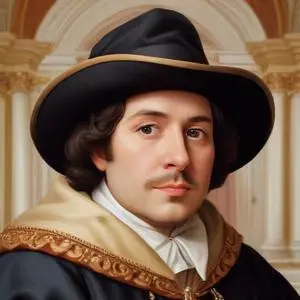
A Baroque mastermind who crafted iconic Roman churches, blending dramatic curves and geometric precision to create awe-inspiring spaces.
Francesco Borromini, a 17th-century Italian architect, left an indelible mark on the world of architecture with his innovative and distinctive style, which continues to inspire and awe to this day. Known for his radical manipulation of classical architectural forms, geometric precision, and symbolic meanings in his buildings, Borromini was a true pioneer of the Roman Baroque movement.
Born on September 25, 1599, in Bissone, Ticino, Switzerland, Borromini's life was a tale of contrasts. While he was a brilliant architect, his personality was marred by melancholy and a quick temper, which often led him to withdraw from lucrative commissions. This conflicted character ultimately led to his tragic suicide in 1667.
Despite lacking formal training, Borromini was an voracious learner, amassing a vast library by the end of his life. He was particularly drawn to the works of Michelangelo and the ruins of Antiquity, which heavily influenced his architectural style. His soft lead drawings, a testament to his skill, are still revered today.
Borromini's work, although not widely recognized during his lifetime, has had a profound influence on later architects. Guarino Guarini, a Piedmontese architect, was heavily inspired by Borromini's style, while Sir John Soane, a British architect, was a vocal critic of his work. However, from the late 19th century onward, Borromini's genius has been reevaluated, and his architecture is now celebrated for its inventiveness and originality.
"Architecture is not just about building, it's about creating a sense of harmony between the physical and the spiritual."
Borromini's innovative style, tumultuous personality, and tragic life story have cemented his place as one of the most fascinating figures in architectural history. His legacy continues to inspire architects, designers, and art lovers around the world.
Born in 1598
A renowned Baroque master who crafted exquisite sculptures and paintings that captivated 17th-century Rome, leaving an indelible mark on the art world.
Born in 1596
A prominent Baroque painter who created elaborate, dramatic, and emotive works that adorned the ceilings of Roman palaces and churches, influencing the development of 17th-century art.
Born in 1508
A renowned Renaissance architect and theorist, famous for designing iconic buildings that harmoniously blend classical and modern elements, including a majestic church and a historic theater.
Born in 1475
Renaissance master of iconic works like the ceiling of the Sistine Chapel, creating breathtakingly beautiful and emotionally powerful art that continues to inspire and awe.
Born in 1404
Renaissance mastermind who excelled in various artistic and intellectual pursuits, leaving a lasting impact on the development of humanism and art theory.
Born in 1548
Renaissance architect who designed numerous buildings in Italy and wrote influential treatises on architecture, particularly "The Idea of a Universal Architecture".
