


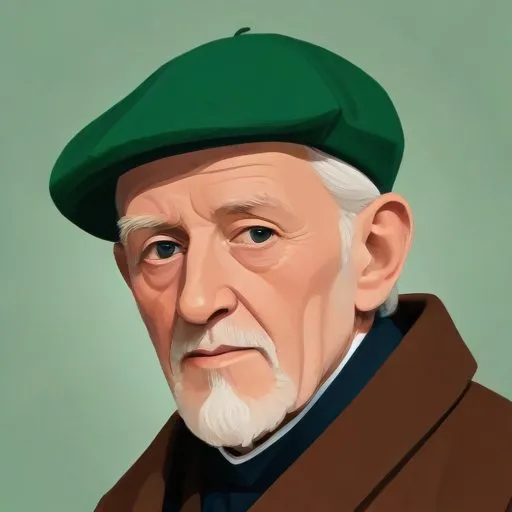
Developed influential ideas on morality, aesthetics, and human nature, shaping the Scottish Enlightenment and modern Western philosophy.
Francis Hutcheson, a renowned Irish philosopher, is best known for his profound impact on the Scottish Enlightenment, earning him the title of one of its founding fathers. His magnum opus, A System of Moral Philosophy, cemented his legacy as a pioneer in the field of moral philosophy.
Born on August 8, 1694, in Drumalig, County Down, Northern Ireland, Hutcheson was the son of a Scottish Presbyterian minister. He received his early education at Killyleagh and later attended the University of Glasgow, where he studied philosophy, classics, and general literature from 1710 to 1718.
Hutcheson's academic prowess earned him a degree in 1712, and he went on to work as a tutor to the Earl of Kilmarnock. However, faced with suspicion about his Irish roots and association with the New Licht theologian John Simson, he returned to Ireland and received a license to preach.
Hutcheson's decision to pursue a career in academia led him to start a private academy in Dublin, where he taught for 10 years. During this period, he gained the friendship and respect of prominent inhabitants, including The Rt. Hon. and Most Rev. Dr. William King, the Church of Ireland Lord Archbishop of Dublin.
His literary attainments and intellect had a profound impact on several significant Enlightenment thinkers, including David Hume and Adam Smith. His work, A System of Moral Philosophy, published posthumously in 1755, remains a testament to his enduring legacy in the field of moral philosophy.
Hutcheson's philosophical contributions can be seen in his emphasis on the importance of morality, benevolence, and the role of reason in human affairs. He believed that human beings are born with a natural instinct to do good and that moral principles can be derived from human nature itself.
Hutcheson's work had far-reaching implications for modern society, shaping the development of moral philosophy, economics, and politics. His ideas on the importance of human morality and the role of reason continue to influence contemporary thinkers and policymakers.
Francis Hutcheson's legacy is a testament to the power of intellectual curiosity and the impact of human thought on the world. As one of the founding fathers of the Scottish Enlightenment, he played a significant role in shaping the course of Western philosophy and intellectual history.
Today, Hutcheson's work continues to inspire and influence scholars, policymakers, and thinkers around the world, serving as a powerful reminder of the enduring power of human reason and morality.
Born in 1711
A Scottish Enlightenment thinker who developed influential ideas on morality, ethics, and human nature, and is considered one of the most important figures in the history of Western philosophy.
61 Years Old
A lawyer and politician who served in the U.S. House of Representatives from 1987 to 1997, known for his moderate Republican views and advocacy for environmental issues.
Born in 1712
A pioneering thinker who shaped modern democracy and education with his ideas on social contracts, general will, and the importance of early childhood education. His writings influenced the French Revolution and modern political thought.
Born in 1724
Developed influential philosophical frameworks, such as the Critique of Pure Reason, that shaped modern Western thought on ethics, morality, and human understanding.
Born in 1632
A 17th-century thinker who laid the groundwork for modern democracy, arguing that governments derive their power from the people and that individuals have inherent rights to life, liberty, and property.
Born in 1685
An Irish bishop and philosopher who argued that reality is purely spiritual and that objects only exist as perceived by the mind. He's known for his idealist philosophy and the phrase "to be is to be perceived."
Born in 1561
A 16th-17th century Renaissance figure who pioneered the scientific method and empiricism, and served as a prominent government official.
Born in 1596
Developed influential philosophical and mathematical concepts, including the famous phrase "I think, therefore I am," and laid the foundation for modern Western philosophy.
