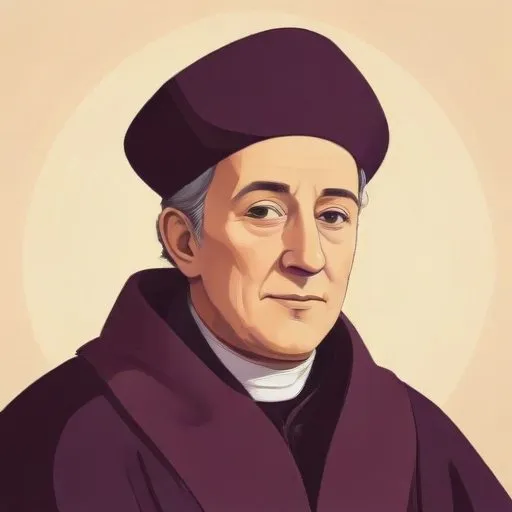
George Berkeley: The Visionary Philosopher of Immaterialism
The Main Proponent of Subjective Idealism
George Berkeley, also known as Bishop Berkeley, is renowned for his groundbreaking philosophical theory of immaterialism, later referred to as subjective idealism. This theory posits that familiar objects like tables and chairs are mere ideas perceived by the mind, and as a result, cannot exist without being perceived.
Early Life and Education
Born on March 12, 1685, in Kilkenny, Ireland, Berkeley was the eldest son of William Berkeley, a farmer. He received his early education at Kilkenny College and later attended Trinity College in Dublin, where he earned his Bachelor's degree in 1704 and his Master's degree in 1707.
Major Works and Contributions
Berkeley's philosophical contributions are vast and varied. Some of his most notable works include:
- An Essay Towards a New Theory of Vision (1709), which explores the limitations of human vision and argues that the proper objects of sight are not material objects, but light and color.
- A Treatise Concerning the Principles of Human Knowledge (1710), his chief philosophical work, which presents his theory of immaterialism.
- Three Dialogues Between Hylas and Philonous (1713), a rewritten version of his previous work, featuring a dialogue between Hylas, representing materialists, and Philonous, representing Berkeley's views.
- De Motu (1721), a critique of Isaac Newton's doctrine of absolute space, time, and motion.
- Alciphron (1732), a Christian apologetic against freethinkers.
- The Analyst (1734), a critique of the foundations of calculus, which influenced the development of mathematics.
Philosophical Beliefs and Critique of Abstraction
Berkeley's philosophical beliefs centered around the idea that reality is purely mental, and that objects only exist as perceived by the mind. He critiqued the concept of abstraction, arguing that it leads to a false understanding of reality. Instead, he believed that knowledge should be derived from sensory experience and individual perception.
Influence on Modern Society and Legacy
Berkeley's ideas have had a significant impact on modern philosophy, influencing thinkers such as
Ernst Mach and
Albert Einstein. His critique of abstraction and emphasis on individual perception paved the way for later philosophical movements, including phenomenology and existentialism. Today, Berkeley is regarded as one of the most important philosophers of the early modern period.
Personal Life and Milestones
Berkeley was ordained as a priest in the Anglican Church of Ireland in 1709. He served as the Bishop of Cloyne from 1734 until his death in 1753. Throughout his life, Berkeley was known for his kind and charitable nature, earning him the respect and admiration of his peers.
Trivia and Fun Facts
- Berkeley was a talented mathematician and was elected as a Fellow of the Royal Society in 1734.
- He was a vocal advocate for the education of women, advocating for the establishment of a college for women in Ireland.
- Berkeley's theories on immaterialism were often met with skepticism and criticism during his lifetime, but have since been recognized as a significant contribution to philosophical thought.
Conclusion
George Berkeley's groundbreaking philosophical theories continue to inspire and challenge thinkers to this day. His emphasis on individual perception, critique of abstraction, and advocacy for education and charity have left a lasting impact on modern society. As a visionary philosopher, Berkeley's legacy serves as a testament to the power of innovative ideas and the importance of questioning our understanding of reality.
FAQ
What is the philosophy of George Berkeley?
George Berkeleys philosophy, also known as subjective idealism, posits that reality is purely mental and that physical objects exist only as perceptions in the mind. He argued that to be is to be perceived.
What is George Berkeleys most famous work?
George Berkeleys most famous work is A Treatise Concerning the Principles of Human Knowledge, published in 1710, where he presents his philosophical views on perception, reality, and knowledge.
What was George Berkeleys role in the Church of Ireland?
George Berkeley was a bishop in the Church of Ireland and played a significant role in promoting Christianity and education in Ireland during the 18th century.
How did George Berkeley influence the development of empiricism?
George Berkeleys ideas on perception and knowledge influenced the development of empiricism, particularly in the works of David Hume and Immanuel Kant, who built upon his philosophical foundation.
What is George Berkeleys contribution to the philosophy of mathematics?
George Berkeleys philosophical critique of calculus, presented in The Analyst, challenged the foundations of mathematics and led to significant developments in the field of mathematics and logic.