


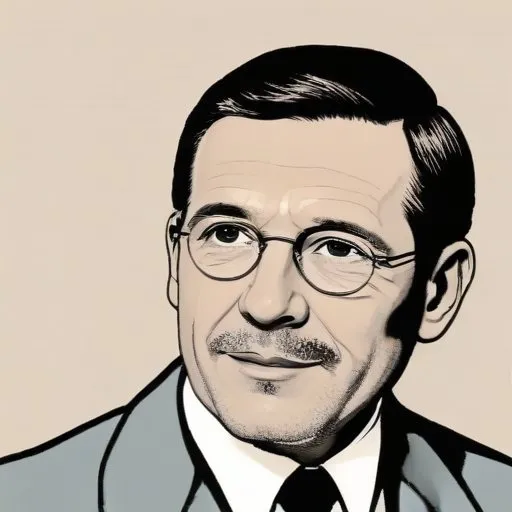
A renowned botanist and author who traveled extensively to study and document plant species, particularly in the Pacific Islands, and wrote numerous books on botany and exploration.
Francis Raymond Fosberg, an American botanist, made monumental contributions to the field of coral reef and island studies, earning him a reputation as a prolific collector and author. His tireless efforts led to the discovery of thousands of plant species, shedding light on the unique ecosystems of islands and coral reefs.
Born on May 20, 1908, in Spokane, Washington, Fosberg grew up in Turlock, California. He received his B.A. in Botany from Pomona College in 1930, laying the foundation for a lifelong passion for plant research.
Fosberg's early career saw him working as a plant researcher at the Los Angeles County Museum, where he specialized in plants from islands on the coast of California and the desert Southwest. In 1932, he moved to Honolulu to work at the University of Hawaii, where he became an assistant to Harold St. John.
In 1937, Fosberg received his M.S. in Botany from the University of Hawaii, and in 1939, he earned his Ph.D. from the University of Pennsylvania. His academic achievements paved the way for his involvement in the Mangarevan Expedition, led by Charles Montague Cooke, Jr., which saw him collect 15,000 plant specimens from 25 high islands and 31 coral islands.
Fosberg's work at the USDA led to his involvement in the Cinchona Missions in Colombia, where he identified stands of Cinchona. He later participated in an economic resources survey in the Micronesian Islands in 1946.
Fosberg's collaboration with Marie-Hélène Sachet led to the mapping of the military geology of islands in the Pacific. This work was instrumental in the development of coral reef and island studies, providing valuable insights into the unique ecosystems of these environments.
In 1966, Fosberg and Sachet joined the Smithsonian's National Museum of Natural History, where they worked in the tropical biology branch of the Ecology program. Fosberg later became curator of the Department of Botany in 1968 and Senior Botanist in 1976, culminating in his appointment as Botanist Emeritus in 1993.
Fosberg's work was driven by a passion for discovery and a desire to understand the intricate relationships within ecosystems. His contributions to coral reef and island studies have inspired generations of scientists, fostering a deeper appreciation for the importance of preserving these delicate environments.
Fosberg's remarkable career was marked by numerous awards and honors, including his role in founding UNESCO's Organization for Flora Neotropica in 1964. This recognition testifies to his enduring impact on the field of botany and his commitment to advancing our understanding of the natural world.
Francis Raymond Fosberg's groundbreaking research has left an indelible mark on the field of coral reef and island studies. His tireless efforts to collect and document plant species have greatly expanded our knowledge of these ecosystems, paving the way for future generations of scientists to build upon his foundation. As a pioneer in his field, Fosberg's legacy continues to inspire and educate, ensuring the preservation of our planet's most fragile and fascinating environments.
Born in 1887
Pioneering ecologist and author who advocated for land ethics and conservation, inspiring a new generation of environmentalists.
Born in 1854
A German physician and biologist who discovered the first effective treatment for syphilis and developed the concept of chemotherapy, earning a Nobel Prize in Physiology or Medicine in 1908.
Born in 1920
A pioneering biologist who applied game theory to evolution, shedding light on the strategic nature of natural selection and its role in shaping species' traits.
97 Years Old
A renowned biologist and author who has made groundbreaking contributions to our understanding of ecology, evolution, and conservation, and is known for his advocacy for biodiversity and the preservation of natural habitats.
85 Years Old
A renowned paleontologist, biologist, and author who challenged traditional views on evolution and natural history through engaging writings and groundbreaking research.
88 Years Old
Pioneering biologist who challenged conventional views on evolution, proposing that symbiotic relationships between organisms drove the development of complex life forms. Her work revolutionized our understanding of cellular biology and the natural world.
Born in 1902
A renowned paleontologist and author who revolutionized the field of evolutionary biology with his groundbreaking work on fossil records and species adaptation. His contributions significantly shaped modern understanding of life on Earth.
