


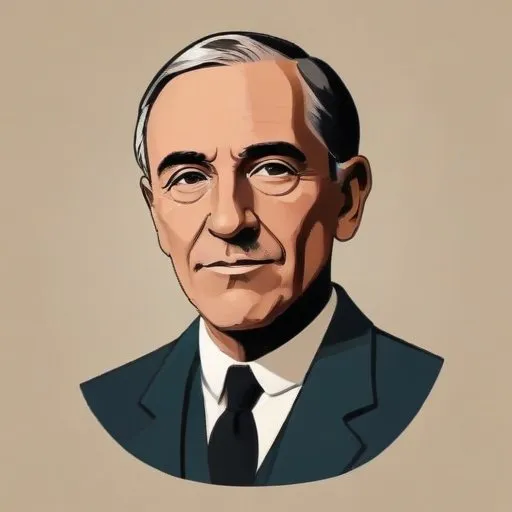
Developed progressive education theories, emphasizing student-centered learning and hands-on activities, revolutionizing the American education system.
John Dewey, a prominent philosopher and educator.
"The true purpose of education is to develop the whole child – mentally, physically, and morally."
As we reflect on Parker's remarkable life and legacy, we are reminded of the power of education to transform lives and shape the future.
Born in 1859
Developed pragmatic philosophy and progressive education theories, focusing on hands-on learning and social reform. Known for his influential ideas on democracy, education, and individual freedom.
Born in 1860
A pioneering social worker and peace activist, she founded Hull House, a settlement that provided social services to immigrants and the working poor, and was awarded the Nobel Peace Prize in 1931.
Born in 1842
Pioneering chemist, ecologist, and educator who championed environmental conservation, sanitation, and women's education, making groundbreaking contributions to public health and urban planning.
Born in 1844
Founded the first psychology laboratory in the US, and is known as the "Father of American Psychology" for his contributions to the field.
Born in 1879
Founded the school of behaviorism, which focused on observable behaviors rather than internal thoughts or feelings, and is known for his controversial "Little Albert" experiment.
Born in 1904
Developed the theory of operant conditioning, which explores the relationship between behavior and environment, and invented the "Skinner box" to study learning and behavior.
