


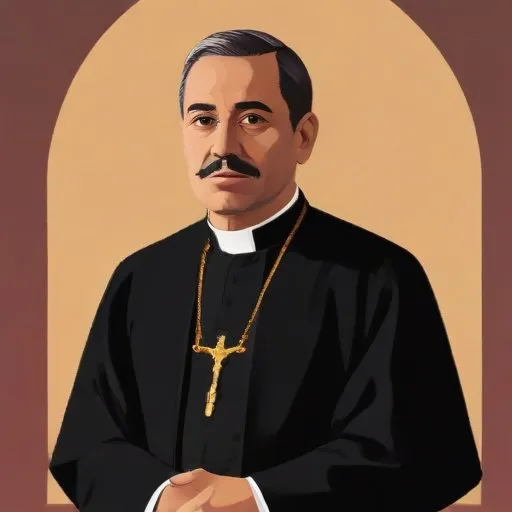
A Mexican priest and scholar who wrote extensively on the history and culture of Mexico, producing influential works that shaped the country's understanding of itself.
Francisco Javier Clavijero, a Mexican Jesuit scholar and historian, is renowned for his pivotal work on the pre-Columbian history and civilizations of Mesoamerica and the central Mexican altiplano. His groundbreaking research has left an indelible mark on our understanding of the region's rich cultural heritage, shedding light on the intricate traditions and customs of the indigenous peoples who once flourished there.
Born on September 9, 1731, in Veracruz, Mexico, Clavijero was the son of a Spanish father and a Criolla mother. His father's frequent transfers to various towns in Mexico, often with strong indigenous presence, allowed Clavijero to develop an intimate connection with the native people and learn their languages, including Nahuatl, from a young age.
Clavijero's educational pursuits took him to Puebla, where he studied grammar at the college of San Jerónimo and philosophy, Latin, and theology at the Jesuit college of San Ignacio. He later entered a seminary in Puebla to study for the priesthood but eventually chose to become a Jesuit. In 1748, he transferred to a Jesuit college in Tepotzotlán, State of Mexico, where he continued to study Latin and learned ancient Greek, French, Portuguese, Italian, German, and English.
Clavijero's intellectual curiosity and passion for understanding the indigenous cultures led him to write his magnum opus, a comprehensive history of Mesoamerica and the central Mexican altiplano. This seminal work showcased his meticulous research, erudite scholarship, and deep appreciation for the region's rich cultural diversity.
In 1767, the Spanish monarch, Charles III, issued a decree expelling the Jesuits from Spanish provinces. Clavijero, forced to leave his homeland, migrated to Italy, where he continued his research and writing. This unexpected turn of events allowed him to focus on his work, unencumbered by the distractions of his native land.
Clavijero's work has had a profound impact on our understanding of Mesoamerica's cultural and historical landscape. His scholarship has inspired generations of historians, anthropologists, and archaeologists, paving the way for a deeper appreciation of the region's complex cultural heritage.
Clavijero's work embodies a deep respect for the indigenous cultures of Mesoamerica, demonstrating his commitment to understanding and preserving their traditions and customs. His scholarship exemplifies the importance of empathy, cultural sensitivity, and intellectual curiosity in the pursuit of knowledge.
Clavijero's research has influenced modern-day archaeologists, anthropologists, and historians, shaping our understanding of Mesoamerica's rich cultural heritage. His work has also inspired a deeper appreciation for the region's indigenous cultures, fostering a more nuanced understanding of the complexities of colonialism and cultural exchange.
Francisco Javier Clavijero's remarkable life and work continue to inspire scholars and enthusiasts alike, offering a timeless testament to the power of curiosity, dedication, and cultural sensitivity in the pursuit of knowledge.
Born in 1753
A Mexican priest who sparked the country's war for independence from Spain with his famous "Grito de Dolores" cry for freedom, leading a rebellion against colonial rule.
Born in 1765
A Mexican priest who led the country's war for independence from Spain, known for his bravery and strategic military tactics. He's considered a national hero in Mexico.
Born in 1783
Mexican royalist turned insurgent who led the country to independence and became its first emperor, known for uniting the country and establishing the Mexican Empire. He played a crucial role in shaping Mexico's early history.
Born in 1786
Led Mexico's war for independence from Spain, becoming the country's first president and establishing its democratic government. He's revered as a national hero and symbol of Mexican independence.
Born in 1794
A charismatic and cunning leader who dominated Mexican politics for decades, known for his role in the Texas Revolution and multiple presidential terms.
Born in 1832
Unconstitutional president of Mexico who briefly seized power in 1832, known for his short-lived and tumultuous reign.
Born in 1813
Mexican general who briefly held power during the Reform War and served as an unconstitutional interim president, known for his conservative stance and opposition to liberal reforms.
Born in 1806
A brief president of Mexico in 1855, known for his short-lived but tumultuous term marked by internal conflicts and power struggles.
