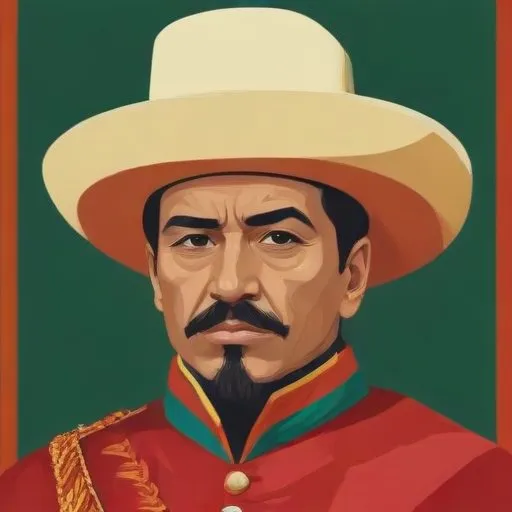
Agustín de Iturbide: The Liberator and First Emperor of Mexico
A Life of Contrasts: From Royalist to Insurgent
Agustín de Iturbide is remembered as the first Emperor of Mexico, reigning from 1822 to 1823, and the leader who brought about Mexican independence from Spain. Born on September 27, 1783, in Valladolid, Michoacán, Iturbide's life was marked by contradictions, shifting allegiances, and a thirst for power.
Early Life and Military Career
Iturbide was born into a privileged family of the landed class, with his parents owning significant agricultural lands and haciendas. His family's Basque heritage and nobility were confirmed by King Juan II of Aragon. Iturbide's father, Joaquín de Iturbide, held administrative positions in the Basque Country, and his ancestors were designated as Royal Merinos in the 15th century.
Iturbide joined the royal Spanish army at a young age, eventually becoming an officer and fighting against the insurgent forces led by
Miguel Hidalgo y Costilla during the Mexican War of Independence. However, in 1820, he changed sides and joined the insurgents, leading a coalition of former royalists and longtime insurgents under his Plan of Iguala.
The Plan of Iguala and Mexican Independence
The Plan of Iguala, also known as the "Plan of the Three Guarantees," was a document signed on February 24, 1821, by Iturbide and insurgent leader
Vicente Guerrero. The plan called for Mexican independence, the establishment of a constitutional monarchy, and the guarantee of equal rights and protection for all citizens. The combined forces under Iturbide's leadership defeated the Spanish, and on September 27, 1821, Mexico gained its independence.
Presidency and Emperorship
After securing independence, Iturbide was proclaimed president of the Regency in 1821. A year later, he was proclaimed Emperor, reigning from May 19, 1822, to March 19, 1823. During his reign, he attempted to consolidate power and establish a constitutional monarchy, but his authoritarian rule and conservative policies sparked opposition and uprisings.
Downfall and Execution
In March 1823, Iturbide was forced to abdicate and went into exile in Europe. He returned to Mexico in July 1824, hoping to regain power, but was arrested and executed by firing squad on July 19, 1824.
Legacy
Agustín de Iturbide's complex and tumultuous life has left a lasting impact on Mexican history. He is remembered as both a hero and a villain, a liberator and a dictator. Today, he is celebrated as a national hero, and his legacy serves as a reminder of the complexities and contradictions of Mexico's struggle for independence.
Interesting Facts
- Iturbide's ancestors were designated as Royal Merinos in the 15th century.
- He was baptized with the names of Saints Augustine, Cosmas, and Damian.
- He was the only male child to survive in his family and eventually became the head of the family.
- His family owned significant agricultural lands and haciendas, including the haciendas of Apeo and Guaracha.
Comparative Analysis with Contemporaries
Iturbide's life and legacy are often compared to those of his contemporaries, such as
Simón Bolívar and
José de San Martín, who also fought for independence in South America. While all three leaders shared a desire for independence and a willingness to take bold action, they differed in their ideologies, tactics, and personal styles. Iturbide's authoritarian tendencies and conservative policies set him apart from the more liberal and federalist leanings of Bolívar and San Martín.
Influence on Modern Society
Iturbide's legacy extends beyond Mexican history, influencing the development of modern societies in Latin America and beyond. His struggles for independence and self-determination have inspired generations of leaders and activists, from Simón Bolívar to
Fidel Castro, and continue to shape the region's politics and identity.
FAQ
What was Agustín de Iturbides role in the Mexican War of Independence?
Agustín de Iturbide was a Mexican royalist turned insurgent who played a crucial role in the Mexican War of Independence. He led a successful campaign against the Spanish, culminating in the signing of the Treaty of Córdoba, which granted Mexico its independence.
What were Agustín de Iturbides motivations for switching sides?
Agustín de Iturbide initially fought on behalf of the Spanish, but he switched sides after becoming disillusioned with the Spanish governments refusal to grant Mexico greater autonomy. He believed that independence was the only way to achieve true self-governance for Mexico.
What was Agustín de Iturbides role as Emperor of Mexico?
Agustín de Iturbide was crowned the first Emperor of Mexico in 1822, following the countrys independence from Spain. He ruled for a brief period, attempting to establish a constitutional monarchy, but his reign was marked by controversy and opposition.
What led to Agustín de Iturbides downfall?
Agustín de Iturbides downfall was largely due to his authoritarian rule and attempts to consolidate power. He faced opposition from liberals, who sought a more democratic government, and his regime was eventually overthrown in 1823.
What is Agustín de Iturbides legacy in Mexican history?
Agustín de Iturbides legacy in Mexican history is complex and multifaceted. While he played a significant role in achieving Mexicos independence, his authoritarian rule and attempts to establish a monarchy are widely criticized. Nevertheless, he is remembered as a key figure in Mexicos struggle for independence.