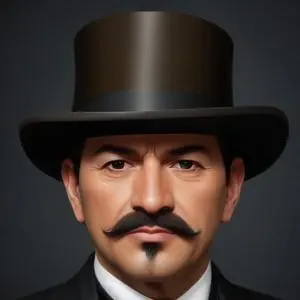
Porfirio Díaz: The Mexican General, Politician, and Dictator
A Leader of Uncertain Legacy
Porfirio Díaz is best known for serving seven terms as President of Mexico, a total of 35 years, from 1876 to 1911, earning him the nickname "The Iron Fist of Mexico". During his rule, which came to be known as the Porfiriato, Díaz transformed Mexico into a modern, industrialized nation, but at a great cost to individual freedoms and democratic institutions.
Early Life and Education
Born on September 15, 1830, in Oaxaca City, Mexico, Porfirio Díaz Mori was raised in a modest family of Oaxacan descent. Initially, he studied to become a priest, but later switched to law, counting among his mentors the future President of Mexico, Benito Juárez.
Rise to Power
Díaz became active in Liberal Party politics, fighting alongside the Liberals to overthrow Santa Anna in the Plan of Ayutla, and later against the Conservative Party in the Reform War. During the Second French Intervention in Mexico, he fought in the Battle of Puebla in 1862, which temporarily repulsed the invaders, but was captured when the French besieged the city with reinforcements a year later. He escaped captivity and made his way to Oaxaca City, becoming political and military commander over all of Southern Mexico.
The Porfiriato: A Era of Modernization and Repression
Díaz's rule, which began in 1876, was marked by rapid modernization, including the construction of railroads, telegraph lines, and the development of industries such as textiles and mining. However, his regime was also characterized by authoritarianism, corruption, and the suppression of individual freedoms. The Porfiriato was marked by numerous human rights abuses, forced labor, and the exploitation of indigenous communities.
Personal Milestones and Key Life Events
- In 1862, Díaz fought in the Battle of Puebla, a major defeat for the French.
- In 1867, he led the forces that took back Mexico City from the French.
- In 1876, he seized power, ousting President Sebastián Lerdo de Tejada in a coup.
- In 1884, he was re-elected president, beginning a 27-year period of continuous rule.
- In 1910, the Mexican Revolution broke out, ultimately leading to his ouster and exile in 1911.
Philosophical Contributions and Beliefs
Díaz's political ideology was shaped by his experiences as a Liberal and his belief in the importance of modernization and industrialization. However, his regime's authoritarian nature and disregard for individual freedoms have been widely criticized.
Legacy and Impact on Modern Society
The Porfiriato had a profound impact on modern Mexican society, shaping the country's politics, economy, and culture. While Díaz's modernization efforts transformed Mexico into a major industrial power, his authoritarianism and human rights abuses have left a lasting scar on the nation's psyche.
Comparative Analysis with Contemporaries
Díaz's rule has been compared to that of other authoritarian leaders of his era, such as
Napoleon III of France and José Tomás Balmaceda of Chile. While he shared similarities with these leaders, his unique blend of modernization and repression sets him apart.
Personal Relationships and Anecdotes
Díaz was known for his charisma and his ability to build relationships with foreign leaders and investors. One notable anecdote is his friendship with American businessman and investor,
William Randolph Hearst, who played a significant role in promoting Díaz's regime in the United States.
Historical Context and Legacy
The Porfiriato was a complex and multifaceted period in Mexican history, marked by both rapid modernization and widespread repression. Díaz's legacy remains controversial, with some hailing him as a visionary leader and others condemning him as a ruthless dictator.
FAQ
What is Porfirio Díazs legacy in Mexican politics?
Porfirio Díaz is a complex figure in Mexican politics, known for his authoritarian rule and modernization policies.
How did Porfirio Díazs military career influence his rise to power?
Porfirio Díazs military career greatly influenced his rise to power, as he gained popularity and support through his military victories and leadership.
What is Porfirio Díazs contribution to Mexican modernization?
Porfirio Díaz made significant contributions to Mexican modernization, implementing policies to promote economic growth, infrastructure development, and education.
What was Porfirio Díazs stance on democracy and human rights?
Porfirio Díazs stance on democracy and human rights was criticized for its authoritarianism and suppression of opposition, leading to widespread unrest and eventual revolution.
What is Porfirio Díazs legacy in Mexican history?
Porfirio Díazs legacy in Mexican history is complex and multifaceted, marked by both modernization and authoritarianism. He remains a controversial figure in Mexican politics and history.