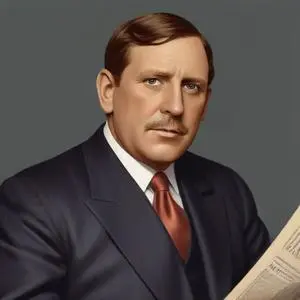
William Randolph Hearst: The Media Mogul Who Revolutionized Journalism
A Pioneer of Yellow Journalism
William Randolph Hearst is notoriously known for developing the nation's largest newspaper chain and media company, Hearst Communications. Through his flamboyant methods of yellow journalism, he transformed the landscape of popular media by emphasizing sensationalism and human-interest stories.
Rise to Prominence
Hearst entered the publishing business in 1887, taking control of The San Francisco Examiner from his wealthy father, Senator
George Hearst. He soon moved to New York City, acquiring the New York Journal and engaging in a bitter circulation war with
Joseph Pulitzer's New York World. Hearst's sensationalist approach, featuring crime, corruption, sex, and innuendos, propelled his papers to unprecedented circulation heights.
Newspaper Empire
At its peak, Hearst's newspaper chain consisted of nearly 30 papers in major American cities. He expanded into magazines, creating the largest newspaper and magazine business in the world. Through his publications, Hearst exercised significant control over editorial positions and coverage of political news, often publishing his personal views.
Political Ambitions
Hearst was twice elected as a Democrat to the U.S. House of Representatives. He ran unsuccessfully for President of the United States in 1904, Mayor of New York City in 1905 and 1909, and for Governor of New York in 1906. During his political career, Hearst espoused views associated with the left wing of the Progressive Movement, claiming to speak on behalf of the working class.
Shift to Conservatism
After 1918 and the end of World War I, Hearst gradually adopted more conservative views, promoting an isolationist foreign policy to avoid entanglement in European affairs. This shift marked a significant departure from his earlier progressive stance.
Controversies and Criticisms
Hearst's flamboyant and sensationalist approach to journalism has been widely criticized. His role in perpetuating yellow journalism has been linked to the erosion of journalistic standards and the manipulation of public opinion. Additionally, his involvement in politics has raised concerns about the blurring of lines between journalism and politics.
Personal Life and Legacy
Hearst's personal life was marked by extravagance and excess. He built the iconic Hearst Castle in San Simeon, California, a symbol of his vast wealth and influence. Despite controversies, Hearst's legacy as a pioneering media mogul and influential figure in American journalism remains undeniable.
Famous Quotes
- "News is what people want to keep secret; everything else is just publicity."
- "I am opposed to millionaires, but it would be dangerous to offer me the position."
Awards and Honors
- Honorary degree from the University of California, Berkeley (1912)
- Lifetime membership in the American Press Association (1920)
Historical Context and Legacy
Hearst's impact on American journalism and politics cannot be overstated. His innovative approaches to journalism, although controversial, have left an indelible mark on the industry. As a testament to his enduring influence, Hearst Communications remains one of the largest media conglomerates in the world.
Comparative Analysis with Contemporaries
Hearst's contemporaries, such as Joseph Pulitzer and
Adolph Ochs, shared similar ambitions to shape public opinion through journalism. However, Hearst's sensationalist approach and willingness to blur the lines between journalism and politics set him apart from his peers.
Personal Relationships and Anecdotes
Hearst's personal relationships, including his marriage to Millicent Veronica Willson, were often marked by extravagance and excess. His lavish spending and numerous affairs became the subject of public fascination and scrutiny.
Trivia and Fun Facts
- Hearst was known for his extensive art collection, featuring works by masters such as Rembrandt and El Greco.
- He was a prolific movie producer, producing films such as "The Unholy Three" (1930) and "The Lady from Shanghai" (1947).
Predictions and Speculations
Had Hearst adapted to the changing media landscape, incorporating more nuanced and balanced reporting, his legacy might have been less controversial. Nevertheless, his pioneering spirit and innovative approaches to journalism continue to shape the industry.
Charitable Work and Social Contributions
Hearst's philanthropic efforts, although often overshadowed by his sensationalist tactics, included supporting education and healthcare initiatives. His charitable contributions, such as the establishment of the Hearst Foundation, continue to benefit society.
Inspirational Stories and Motivations
Hearst's rags-to-riches story, rising from humble beginnings to become a media mogul, serves as a testament to his boundless energy and entrepreneurial spirit. Despite controversies, his legacy inspires future generations of journalists and media professionals.
FAQ
What is William Randolph Hearsts most notable achievement?
William Randolph Hearsts most notable achievement is the founding of the Hearst Corporation, one of the largest media conglomerates in the world. He built a media empire that includes newspapers, magazines, television stations, and entertainment companies.
What was William Randolph Hearsts role in yellow journalism?
William Randolph Hearst was a leading figure in yellow journalism, a style of journalism that emphasized sensationalism and scandal. He used his newspapers to shape public opinion and influence politics, often through inflammatory and exaggerated reporting.
What was William Randolph Hearsts relationship like with Orson Welles?
William Randolph Hearst had a complicated relationship with Orson Welles, who directed the film Citizen Kane, which was loosely based on Hearsts life. Hearst tried to suppress the film, and the two men had a public feud.
What was William Randolph Hearsts later life like?
William Randolph Hearsts later life was marked by declining health and increasing isolation. He continued to run his media empire from his private estate, San Simeon, until his death in 1951.
How is William Randolph Hearsts legacy remembered?
William Randolph Hearsts legacy is remembered through the Hearst Corporation, which continues to be a major player in the media industry. His contributions to journalism and media are also remembered, although his controversial style and practices are widely criticized.