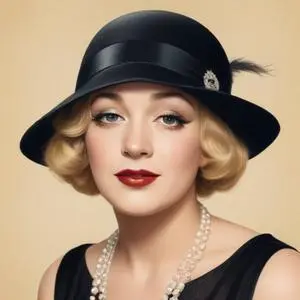
Marion Davies: The Golden Girl of Hollywood's Golden Age
A Shining Star of the Silver Screen
Marion Davies, born Marion Cecilia Douras, was an American actress, producer, screenwriter, and philanthropist who reigned supreme as the number one female box office star in Hollywood during the 1920s. With her captivating on-screen presence, she charmed audiences in over 40 films, cementing her status as one of the most beloved and influential actresses of her time.
Rise to Stardom
Born on January 3, 1897, in Brooklyn, New York, Davies' early life was marked by a strong desire to perform. She fled her convent education to pursue a career as a chorus girl, eventually landing roles in several Broadway musicals and her first film,
Runaway Romany, in 1917. Her big break came when she joined the Ziegfeld Follies, where she met the powerful newspaper tycoon,
William Randolph Hearst, who would become her longtime companion and mentor.
A Hollywood Powerhouse
Hearst's influence helped Davies' career soar, with him financing and promoting her films through his newspaper empire and newsreels. He even founded Cosmopolitan Pictures to produce her films, solidifying her position as a leading lady of Hollywood. Her most notable films, such as
When Knighthood Was in Flower (1922) and
Little Old New York (1923), became massive box office hits, earning her the adoration of audiences worldwide.
A Socialite and Philanthropist
During the height of her fame, Davies was renowned for hosting lavish parties and soirees, attended by Hollywood's elite and political dignitaries. Her philanthropic efforts also extended to charitable organizations, such as the Marion Davies Children's Clinic, which she founded in 1926.
Personal Turmoil and Later Life
Davies' life was not without controversy, particularly when film producer Thomas Ince died under mysterious circumstances aboard Hearst's yacht in 1924. As the Great Depression took its toll on the film industry, Davies' career began to decline, and she struggled with alcoholism. She retired from the screen in 1937 to devote herself to Hearst, who was ailing at the time. After Hearst's passing in 1951, Davies married sea captain Horace Brown and continued her charitable work until her own death on September 22, 1961, at the age of 64.
Lasting Legacy
Despite her impressive accomplishments, Davies' legacy was somewhat overshadowed by her connection to the character of Susan Alexander Kane in the film
Citizen Kane (1941). However, her impact on Hollywood's Golden Age, her trailblazing career, and her philanthropic endeavors ensure that Marion Davies remains an enduring icon of American cinema.
- Awards and Honors: Davies received a star on the Hollywood Walk of Fame in 1960.
- Philanthropic Contributions: Davies' charitable work extended to various organizations, including the Marion Davies Children's Clinic and the American Red Cross.
- Personal Milestones: Davies married sea captain Horace Brown in 1951, just 11 weeks after Hearst's passing.
Marion Davies' remarkable life and career serve as a testament to her unwavering dedication to her craft, her unbridled passion for life, and her lasting impact on the world of entertainment.
FAQ
What was Marion Davies early career like?
Marion Davies began her career as a chorine on Broadway, eventually becoming a popular actress and comedian in the 1910s and 1920s.
What was Marion Davies relationship with William Randolph Hearst?
Marion Davies was the mistress of William Randolph Hearst, the powerful newspaper magnate. Hearst promoted her career and used his influence to secure her film roles.
What was Marion Davies most famous role?
Marion Davies most famous role was as Mary Tudor in When Knighthood Was in Flower, a 1922 film produced by Hearsts Cosmopolitan Productions.
How did Marion Davies personal life affect her career?
Marion Davies personal life was often tumultuous, with rumors of Hearsts jealousy and possessiveness. Despite this, she maintained a successful career in film and was known for her wit and charm.
What is Marion Davies legacy in Hollywood?
Marion Davies is remembered as a talented actress and comedian of the silent era, as well as a symbol of the power and influence of William Randolph Hearst in Hollywood.