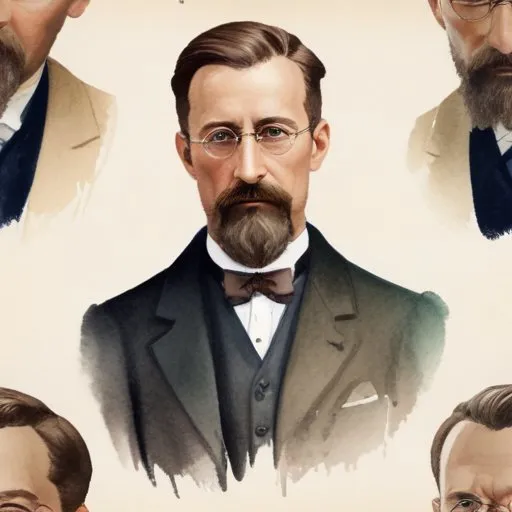
Joseph Pulitzer: The Maverick of American Journalism
A Life of Crusading Journalism and Philanthropy
Joseph Pulitzer, a Hungarian-American newspaper publisher, is best known for his pioneering work in journalism, his bold entrepreneurial spirit, and his legendary philanthropy. He is the founder of the Pulitzer Prizes, one of the most prestigious awards in American journalism, literature, and music.
The Formative Years
Born on April 10, 1847, in Mak, Hungary, Pulitzer was the son of Elize Berger and Flp Pulitzer. His family was part of the Jewish community in Hungary, and his father was a respected businessman. After his father's death in 1858, the family's business went bankrupt, and Pulitzer's mother moved the family to Pest, where he received a private education, learning French and German.
Rise to Prominence
In 1864, Pulitzer immigrated to the United States, where he worked as a waiter, a peddler, and a reporter for various newspapers. His big break came in 1878 when he bought the St. Louis Post-Dispatch, which he transformed into a crusading newspaper, exposing corruption and injustice. His innovative approach to journalism earned him national recognition, and he was elected to the U.S. House of Representatives from New York in 1885.
The Yellow Journalism Era
In the 1890s, Pulitzer's New York World engaged in a fierce circulation war with
William Randolph Hearst's New York Journal. This period, known as the Yellow Journalism era, was marked by sensationalism, scandal-mongering, and graphic horrors. While criticized for its excesses, Yellow Journalism also introduced new techniques, such as color comics, sports pages, and women's sections, which appealed to a wider audience.
A Legacy of Excellence
In 1917, Pulitzer established the Pulitzer Prizes, which recognize excellence in journalism, literature, music, and drama. He also founded the Columbia School of Journalism in 1912, which has become one of the most respected journalism schools in the world.
Philanthropy and Impact
Pulitzer's philanthropy extended beyond journalism. He was a supporter of the New York Free Circulating Library and donated generously to various charitable causes. His legacy continues to inspire generations of journalists, writers, and artists.
- Pulitzer's name is synonymous with excellence in journalism and literature.
- He was a pioneering entrepreneur who transformed the newspaper industry.
- His philanthropy has had a lasting impact on American culture and education.
Personal Milestones and Key Life Events
- 1847: Born in Mak, Hungary
- 1864: Immigrated to the United States
- 1878: Bought the St. Louis Post-Dispatch
- 1885: Elected to the U.S. House of Representatives from New York
- 1890s: Engaged in the Yellow Journalism era
- 1912: Founded the Columbia School of Journalism
- 1917: Established the Pulitzer Prizes
- 1911: Died on October 29, at the age of 64
Legacy and Impact on Modern Society
Joseph Pulitzer's legacy extends far beyond his newspaper empire. He played a crucial role in shaping American journalism, literature, and culture. His emphasis on investigative reporting, philanthropy, and education continues to inspire generations of journalists, writers, and artists. As a champion of freedom of the press and a passionate advocate for social justice, Pulitzer's impact on modern society is immeasurable.
FAQ
What was Joseph Pulitzers impact on American journalism?
Joseph Pulitzer revolutionized American journalism by introducing sensationalistic reporting, known as yellow journalism, which increased newspaper circulation and changed the way news was presented.
How did Joseph Pulitzer get his start in journalism?
Joseph Pulitzer got his start in journalism by working as a reporter for a German-language newspaper in St. Louis, Missouri, before eventually becoming the owner and publisher of the New York World.
What was the significance of the Pulitzer Prize?
The Pulitzer Prize, established by Joseph Pulitzers will, is a prestigious award that recognizes outstanding work in journalism, literature, and music, and is considered one of the most respected awards in American journalism.
How did Joseph Pulitzers Hungarian heritage influence his work?
Joseph Pulitzers Hungarian heritage had a significant impact on his work, as he often used his newspaper to advocate for immigrant rights and expose corruption, reflecting his own experiences as an immigrant.
What were Joseph Pulitzers contributions to politics?
Joseph Pulitzer made significant contributions to politics, serving as a congressman and a vocal advocate for progressive reforms, including labor laws and womens suffrage.