


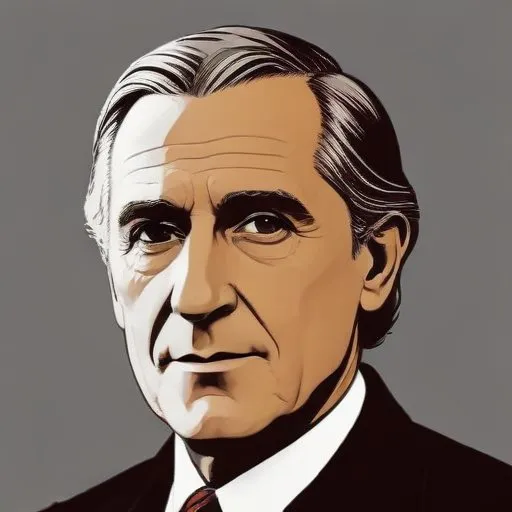
A wealthy mining magnate and U.S. Senator who dominated California politics in the late 19th century, known for his vast mining empire and influential newspaper holdings.
George Hearst, the patriarch of the renowned Hearst business dynasty, left an indelible mark on the world of mining, politics, and journalism. Best known for developing and expanding the Homestake Mine in the Black Hills of South Dakota, Hearst's entrepreneurial spirit and innovative approach propelled him to greatness, cementing his legacy as a trailblazer in his field.
Born on September 3, 1820, in Missouri, George Hearst grew up on a small farm in rural Franklin County. With limited access to formal education, Hearst's curiosity and resourcefulness drove him to seek knowledge through self-study. He devoured books on minerals and mining, gaining insights that would later shape his successful career.
In the late 1870s, Hearst founded many mining operations, including the Homestake Mine, which would go on to become one of the most prolific gold mines in the United States. His business acumen and strategic thinking led to the mine's listing on the New York Stock Exchange in 1879. This milestone marked the beginning of Hearst's stellar career, earning him recognition as a shrewd entrepreneur and visionary leader.
Parallel to his mining endeavors, Hearst ventured into politics, serving as a representative for San Francisco in the state legislature for one term. In 1886, he was appointed as a United States senator, solidifying his reputation as a respected statesman.
In 1862, at the age of 42, Hearst married Phoebe Apperson, with whom he had a son, William Randolph Hearst. This marriage marked the beginning of a new era for the Hearst family, as William would go on to become a renowned newspaperman and publisher, drawing inspiration from his father's unwavering dedication to his craft.
George Hearst's remarkable achievements, both in mining and politics, paved the way for his son's success. His legacy extends far beyond his own accomplishments, as his entrepreneurial spirit and innovative approach continue to inspire generations to this day.
Hearst's unwavering commitment to his craft was rooted in his conviction that hard work, perseverance, and strategic thinking were the keys to success. He believed that visionaries must be willing to take calculated risks and challenges, always pushing the boundaries of what is possible.
Hearst's entrepreneurial philosophy was firmly grounded in his understanding of the importance of self-reliance, resilience, and adaptability. He fervently advocated for the value of education, recognizing its potential to empower individuals to achieve greatness.
George Hearst's enduring legacy extends far beyond his own accomplishments, as his entrepreneurial spirit, innovative approach, and commitment to education continue to inspire future generations. His pioneering work in mining and politics has left an indelible mark on the world, shaping the course of history in profound ways.
Hearst's remarkable story serves as a testament to the power of perseverance, strategic thinking, and self-reliance, reminding us that even the most ambitious dreams can be achieved with dedication and hard work.
Born in 1863
Founded a massive media conglomerate, revolutionizing the newspaper industry and shaping public opinion through sensationalized journalism. Known for his extravagant lifestyle and grandiose architecture .
Born in 1842
A pioneering advocate for education and women's rights, she championed progressive causes and supported various social reform movements. Her philanthropic efforts improved lives and communities across the United States.
72 Years Old
Heiress turned actress and author, kidnapped by the Symbionese Liberation Army in 1974, later joining them and participating in a bank robbery, sparking a national sensation.
Born in 1911
The charismatic leader who championed conservative policies, helped end the Cold War, and is often credited with restoring American pride and optimism. He's also remembered for his folksy, actor-honed communication style.
Born in 1903
A renowned writer of dystopian classics, such as "1984" and "Animal Farm", who warned of totalitarianism's dangers through allegorical fiction.
Born in 1843
The 25th President of the United States, a strong leader who championed high tariffs and annexed Hawaii, is most known for being assassinated at the 1901 World's Fair. He played a significant role in shaping the country's economy and foreign policy.
Born in 1858
A pioneering leader who championed progressive reforms, trust-busting, and conservation, earning a Nobel Peace Prize for mediating the Russo-Japanese War. He's also famous for his rugged outdoorsmanship and "big stick" diplomacy.
Born in 1835
Witty writer of classics like "The Adventures of Tom Sawyer" and "The Adventures of Huckleberry Finn", known for humor and social commentary.
