


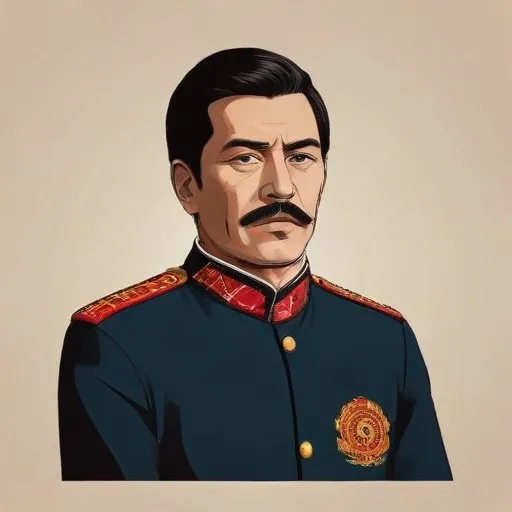
Led Mexico's struggle for independence from Spain and later became the country's president, abolishing slavery and promoting equality. He's remembered for his bravery and progressive reforms.
Vicente Guerrero, the second president of Mexico, is famously known for being one of the leading generals who fought against Spain during the Mexican War of Independence. He took his fight for freedom to the next level by abolishing slavery in Mexico during his presidency, earning him a revered place in Mexican history.
Vicente Guerrero was born on August 10, 1782, in Tixtla, a town 100 kilometers inland from the port of Acapulco, in the Sierra Madre del Sur. His parents, María Guadalupe Rodríguez Saldaña and Juan Pedro Guerrero, belonged to a family of landlords, wealthy farmers, and traders with broad business connections in the south. His family members were also part of the Spanish militia and gun and cannon makers.
Guerrero's father, Juan Pedro, supported Spanish rule, whereas his uncle, Diego Guerrero, held an important position in the Spanish militia. However, Vicente was opposed to the Spanish colonial government, and as an adult, he refused to present his sword to the viceroy of New Spain as a sign of goodwill, saying, "The will of my father is for me sacred, but my Fatherland is first." (Mi patria es primero)
Guerrero's travels across Mexico exposed him to the idea of independence, and he eventually joined the insurgency against the Spanish colonial government. He became a skilled military strategist and leader, earning the respect of his contemporaries, including fellow insurgent José María Morelos.
Morelos described Guerrero as a young man with bronzed or tanned skin, tall and strong, with an aquiline nose, bright and light-colored eyes, and big sideburns. This physical description, though subjective, gives us a glimpse into Guerrero's personality and charisma, which contributed to his later success as a leader.
In 1829, Guerrero became the second president of Mexico, and his presidency was marked by significant reforms. He issued a decree abolishing slavery in Mexico, making it one of the first countries in the Americas to do so. This bold move earned him admiration and respect from across the globe.
Guerrero's presidency was cut short when he was deposed in a rebellion by his Vice President, Anastasio Bustamante. Despite this setback, Guerrero's legacy endured, and he remained a symbol of Mexican independence and freedom.
Today, Vicente Guerrero is remembered as a hero who fought against oppression and fought for the rights of his people. His abolition of slavery in Mexico paved the way for a more equitable society, and his bravery inspires generations of Mexicans and people around the world.
Vicente Guerrero's life and legacy serve as a powerful reminder of the importance of fighting for freedom, equality, and justice. His story continues to inspire people around the world, making him one of the most revered figures in Mexican history.
Born in 1753
A Mexican priest who sparked the country's war for independence from Spain with his famous "Grito de Dolores" cry for freedom, leading a rebellion against colonial rule.
Born in 1765
A Mexican priest who led the country's war for independence from Spain, known for his bravery and strategic military tactics. He's considered a national hero in Mexico.
Born in 1783
Mexican royalist turned insurgent who led the country to independence and became its first emperor, known for uniting the country and establishing the Mexican Empire. He played a crucial role in shaping Mexico's early history.
Born in 1794
A charismatic and cunning leader who dominated Mexican politics for decades, known for his role in the Texas Revolution and multiple presidential terms.
Born in 1806
A champion of democracy and indigenous rights, he modernized Mexico, abolished slavery, and limited church power. He's revered as a national hero for his progressive reforms.
Born in 1830
A Mexican general and politician who ruled Mexico with an iron fist from 1876 to 1911, modernizing the country while suppressing dissent and opposition. He's infamous for his authoritarian regime and eventual exile.
Born in 1877
Mexican revolutionary leader who served as president from 1924 to 1928, known for implementing secular and anti-clerical policies, including restricting the Catholic Church's power. He also founded the National Revolutionary Party, which later became the dominant party in Mexico.
Born in 1895
A Mexican revolutionary general who served as president, implementing significant land reforms and nationalizing the oil industry, and father of a prominent politician.
