


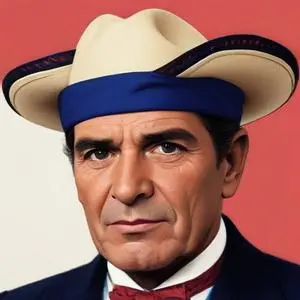
Led the successful fight for independence in Argentina, Chile, and Peru, and is revered as a national hero in these countries. He's also credited with creating the Army of the Andes, a crucial force in the Latin American wars of independence.
Jos de San Martn is renowned as the primary leader of the successful struggle for independence from the Spanish Empire in the southern and central parts of South America. He is credited with liberating Argentina, Chile, and Peru from Spanish rule, earning him the nickname "The Liberator."
Born on February 25, 1778, in Yapeyú, Corrientes, Argentina, San Martn left his homeland at the early age of seven to pursue his education in Málaga, Spain. This experience would later shape his perspective on the world and influence his decisions as a leader.
In 1808, after participating in the Peninsular War against France, San Martn made contact with South American supporters of independence from Spain in London. This marked the beginning of his journey to free his homeland from Spanish rule.
In 1812, he set sail for Buenos Aires, where he offered his services to the United Provinces of the Río de la Plata, present-day Argentina. San Martn's military prowess and strategic thinking soon earned him recognition, and he was appointed commander of the Army of the North in 1814.
San Martn's most daring feat was yet to come. In 1817, he organized a plan to defeat the Spanish forces that threatened the United Provinces from the north. This involved establishing a new army, the Army of the Andes, in Cuyo Province, Argentina.
From there, he led the Crossing of the Andes, a treacherous journey that would take his army across the mountain range into Chile. This bold move caught the Spanish off guard, and San Martn's army emerged victorious at the Battle of Chacabuco and the Battle of Maipón in 1818, liberating Chile from royalist rule.
In 1820, San Martn sailed to Peru, determined to attack the Spanish stronghold of Lima. On July 12, 1821, after seizing partial control of Lima, he was appointed Protector of Peru, and Peruvian independence was officially declared on July 28.
In 1822, San Martn met with fellow liberator Simón Bolívar at Guayaquil, Ecuador, to discuss the future of Peru. The details of this meeting have been the subject of much debate among historians, but it ultimately led to Bolívar taking over the task of fully liberating Peru.
San Martn's contributions to the independence of Argentina, Chile, and Peru have cemented his place in history as a hero and a symbol of freedom. He is revered in South America, and his legacy continues to inspire generations.
San Martn's life was marked by bravery, strategic thinking, and a relentless pursuit of freedom. His contributions to the independence of South America will forever be remembered as a testament to his unwavering dedication to his people.
Born in 1783
Led the Latin American wars of independence against Spanish rule, unifying several countries under the Gran Colombia republic. He's revered as a national hero and symbol of freedom.
Born in 1795
Led the Latin American wars of independence against Spain, and later became the president of Bolivia, playing a key role in the country's early development. He's revered as a national hero in Bolivia and Venezuela.
Born in 1778
Led Chile's struggle for independence from Spain, becoming a national hero and symbol of freedom. He's revered for his bravery, strategic thinking, and vision for a unified Chile.
Born in 1770
A key figure in Argentina's struggle for independence, he created the country's flag and played a crucial role in its early development.
Born in 1778
A key figure in Argentina's independence movement, he played a crucial role in shaping the country's early government and politics. He's also revered for his journalistic contributions and advocacy for social reform.
Born in 1852
The 19th President of Argentina, a key figure in the country's Radical Civic Union, known for his populist policies and efforts to reduce inequality. He's remembered for his strong leadership during a time of great social change.
Born in 1811
A pioneering journalist and politician who modernized Argentina's education system and infrastructure, earning him the nickname "Father of Education" in Argentina.
