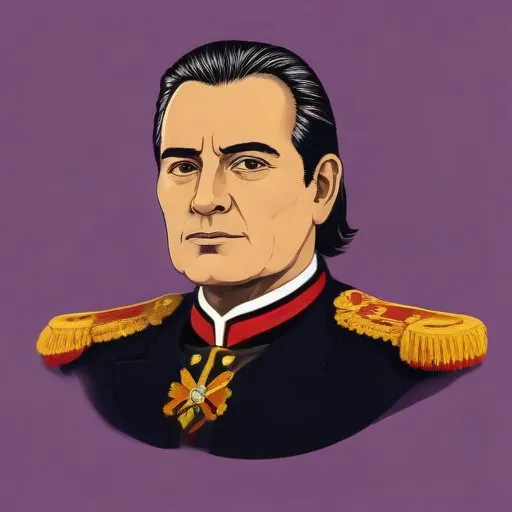
Antonio José de Sucre: The Unsung Hero of South American Independence
A Legacy Forged in Battle
Antonio José de Sucre, known as the Gran Mariscal de Ayacucho (Grand Marshal of Ayacucho), is revered as one of the primary leaders of South America's struggle for independence from the Spanish Empire. His military prowess and strategic genius played a crucial role in securing the independence of Peru, Bolivia, and Ecuador, earning him a place among the most revered figures in South American history.
Aristocratic Roots and Early Life
Born on February 3, 1795, in Cumaná, Venezuela, Sucre was part of an aristocratic family with roots tracing back to Flanders. His family's noble heritage and influential connections would later prove instrumental in his meteoric rise to leadership.
The Battlefield Prodigy
Sucre joined the revolt against Spanish rule in 1814, quickly establishing himself as a highly capable military leader. His first major triumph came at the Battle of Pichincha in 1822, where he led the Patriot forces to victory, liberating Quito and paving the way for modern Ecuador's emergence.
Bolivar's Right-Hand Man
As Simón Bolívar's chief lieutenant, Sucre played a pivotal role in the Battle of Ayacucho in 1824, scoring a decisive victory over the Spanish Royalist army. This triumph effectively secured the independence of Peru and cemented Sucre's reputation as a brilliant military strategist.
The President of Bolivia
After Bolívar passed on the duty, Sucre was inaugurated as the president of the newly formed Bolivia in 1825. His tenure was marked by difficulties, as opposition to his rule mounted and the populace turned against Bolívar and his followers.
A Life of Service and Sacrifice
Despite the challenges, Sucre remained committed to the cause of independence and was recalled to military duty in 1829 to command Colombian forces during the Gran Colombia-Peru War. He fought valiantly, leading his troops to a stalemate against the Peruvian invaders.
Tragic Demise and Enduring Legacy
Sucre's life was tragically cut short when he was assassinated on June 4, 1830, in Berruecos, Colombia. The identity of the conspirators remains a subject of historical speculation. However, his sacrifice and unwavering dedication to the cause of independence have ensured his place among the pantheon of South American heroes.
Quotes and Memorable Sayings
- "The independence of America is the only means of saving it from the fate that awaits it, and of securing the happiness of its inhabitants."
- "We must fight for our freedom, for our dignity, and for the future of our nations."
Historical Context and Legacy
Sucre's legacy extends far beyond his military achievements. He embodied the spirit of South American independence, inspiring generations to fight for their freedom and self-determination. His vision for a unified and liberated South America continues to resonate today, making him an enduring symbol of hope and courage.
By exploring the life and times of Antonio José de Sucre, we gain a deeper understanding of the complex tapestry of South American history and the sacrifices made by those who fought for independence. His story serves as a powerful reminder of the importance of perseverance, leadership, and dedication to the pursuit of freedom and justice.
FAQ
What were Antonio José de Sucres achievements as President of Bolivia?
Antonio José de Sucre was the 2nd President of Bolivia from 1828 to 1828. During his presidency, he implemented several reforms, including the creation of a new constitution, the establishment of a national bank, and the promotion of education and infrastructure development. He also played a key role in the countrys independence from Spain.
What was Antonio José de Sucres role in the Latin American wars of independence?
Antonio José de Sucre was a key figure in the Latin American wars of independence, fighting alongside Simón Bolívar in the Battle of Ayacucho, which led to the defeat of the Spanish forces and the independence of Peru. He also played a crucial role in the liberation of Ecuador and Bolivia from Spanish rule.
Where was Antonio José de Sucre born and raised?
Antonio José de Sucre was born on February 3, 1795, in Cumaná, Venezuela, and raised in a wealthy family. He received a good education and went on to study law at the University of Caracas.
What was Antonio José de Sucres legacy in South America?
Antonio José de Sucre is remembered as one of the most important figures in South American history, known for his bravery, strategic thinking, and commitment to independence and democracy. He is considered a national hero in Venezuela, Bolivia, and Ecuador, and his legacy continues to inspire people across the region.
How did Antonio José de Sucre die?
Antonio José de Sucre was assassinated on June 4, 1830, in Berruecos, Colombia, by a group of conspirators who were opposed to his leadership. His death was a tragic loss for the people of South America, who had come to admire and respect him as a leader and a champion of independence.