


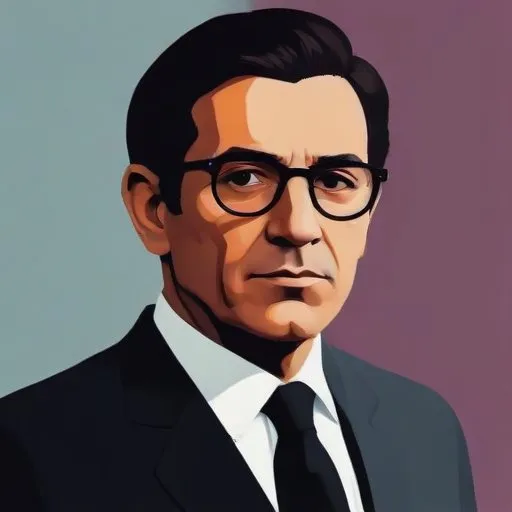
A key figure in Argentina's independence movement, he played a crucial role in shaping the country's early government and politics. He's also revered for his journalistic contributions and advocacy for social reform.
Mariano Moreno, a prominent Argentine lawyer, journalist, and politician, played a pivotal role in shaping the country's future, particularly during the Primera Junta, the first national government of Argentina created after the May Revolution. He is renowned for his decisive contributions to the country's struggle for independence, his unwavering commitment to the principles of the Enlightenment, and his vision for a modern, secular, and democratic Argentina.
Born on September 23, 1778, in Buenos Aires, Moreno was the firstborn of the Moreno family, with thirteen siblings. His father, Manuel Moreno y Argumosa, a Spanish immigrant, instilled in him the values of education and hard work. Moreno studied Latin, logic, and philosophy at San Carlos Royal College under Mariano Medrano, followed by college studies of law at Chuquisaca, where he was exposed to the new ideas of the Spanish Enlightenment.
Moreno's rejection of the Carlotist project and the administration of Santiago de Liniers, as well as his involvement in the ill-fated mutiny of Álzaga against him, demonstrated his unwavering commitment to the principles of liberty and democracy. As secretary of war of the Primera Junta, he worked tirelessly to strengthen the new government, implementing policies aimed at eradicating the remnants of the old regime.
One of his most significant contributions was the drafting of the Operations Plan, a secret document outlining the measures necessary to consolidate the new government and secure its future. Although its authorship is disputed by some historians, the plan's impact on the country's development is undeniable.
In addition to his political endeavors, Moreno was a prolific writer and journalist, founding La Gazeta de Buenos Ayres, the first Argentine newspaper. This pioneering initiative played a vital role in disseminating information, promoting public awareness, and shaping the country's cultural identity.
Moreno's dedication to the principles of the Enlightenment is evident in his translation of Jean-Jacques Rousseau's The Social Contract into Spanish. This seminal work, which introduced Argentine readers to the ideas of the French thinker, had a profound impact on the country's intellectual and cultural development.
As secretary of war, Moreno orchestrated several military campaigns, including the successful expedition to Paraguay and Upper Peru. His firm stance against the supporters of the former government led to the execution of Santiago de Liniers, a symbol of the old regime.
Mariano Moreno's legacy extends beyond his political and journalistic achievements. He embodied the principles of modernity, democracy, and secularism, paving the way for a new era of Argentine history. His vision for a free, independent, and enlightened nation continues to inspire generations of Argentines and beyond.
Born in 1778
Led the successful fight for independence in Argentina, Chile, and Peru, and is revered as a national hero in these countries. He's also credited with creating the Army of the Andes, a crucial force in the Latin American wars of independence.
Born in 1770
A key figure in Argentina's struggle for independence, he created the country's flag and played a crucial role in its early development.
Born in 1852
The 19th President of Argentina, a key figure in the country's Radical Civic Union, known for his populist policies and efforts to reduce inequality. He's remembered for his strong leadership during a time of great social change.
Born in 1811
A pioneering journalist and politician who modernized Argentina's education system and infrastructure, earning him the nickname "Father of Education" in Argentina.
Born in 1821
A 19th-century leader who modernized Argentina's economy and infrastructure, and is also revered for his literary and journalistic contributions.
