


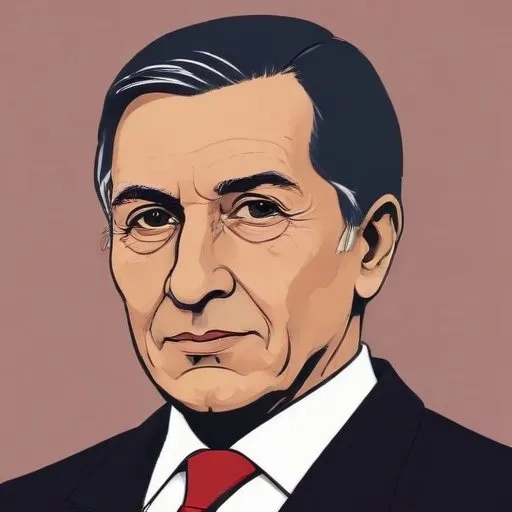
A key figure in Argentina's struggle for independence, he created the country's flag and played a crucial role in its early development.
Illuminating the annals of Argentine history, Manuel Belgrano stands tall as a passionate advocate for independence, a pioneer of economic reform, and the mastermind behind the country's beloved flag. This multifaceted personality is revered as one of the founding fathers of Argentina, leaving an indelible mark on the nation's trajectory.
Born on June 3, 1770, in Buenos Aires, Manuel Belgrano was the fourth child of Italian businessman Domingo Belgrano y Peri and María Josefa González Casero. His early years were marked by an insatiable thirst for knowledge, which led him to pursue higher education in Spain. It was during this period that he was exposed to the revolutionary ideas of the Age of Enlightenment, which would later shape his vision for Argentina.
In 1794, Belgrano returned to the Viceroyalty of the Río de la Plata, where he became an ardent proponent of autonomy and reform. His attempts to promote new political and economic ideals, however, were met with fierce resistance from local peninsulares. Undeterred, Belgrano continued to work tirelessly towards a greater autonomy for his country, ultimately contributing to the ousting of Viceroy Baltasar Hidalgo de Cisneros during the May Revolution of 1810.
Beyond his role in shaping Argentina's independence, Belgrano is perhaps most iconic for designing the country's flag. The celestial blue, white, and sky blue tricolor, adorned with the radiant sun, has become an emblem of national pride and identity. This testament to Belgrano's creativity and vision continues to inspire generations of Argentines.
As a delegate for the Primera Junta, Belgrano led the ill-fated Paraguay campaign of 1810-1811, which ultimately ended in defeat at the hands of Bernardo de Velasco. Despite this setback, the military campaign sparked a chain reaction that led to Paraguay's independence in May 1811. Belgrano's unwavering dedication to the cause of independence remained unbroken, even in the face of adversity.
Today, Manuel Belgrano is celebrated as a champion of Argentine independence, a visionary who dared to challenge the status quo and forge a new path for his nation. His legacy extends far beyond his military campaigns and patriotic endeavors, encompassing a profound impact on the country's economic, political, and cultural landscape. As a testament to his enduring influence, Belgrano's name is etched in the annals of Argentine history, forever intertwined with the country's struggle for independence and self-determination.
"The love of country is the most sacred of all loves, and the defense of its liberties, the most sublime of all virtues."
Manuel Belgrano's remarkable journey serves as a beacon of inspiration, illuminating the path towards independence, self-determination, and nationhood. His enduring legacy continues to captivate and motivate generations, solidifying his place as one of Argentina's most revered founding fathers.
Born in 1778
Led the successful fight for independence in Argentina, Chile, and Peru, and is revered as a national hero in these countries. He's also credited with creating the Army of the Andes, a crucial force in the Latin American wars of independence.
Born in 1783
Led the Latin American wars of independence against Spanish rule, unifying several countries under the Gran Colombia republic. He's revered as a national hero and symbol of freedom.
Born in 1795
Led the Latin American wars of independence against Spain, and later became the president of Bolivia, playing a key role in the country's early development. He's revered as a national hero in Bolivia and Venezuela.
Born in 1821
A 19th-century leader who modernized Argentina's economy and infrastructure, and is also revered for his literary and journalistic contributions.
Born in 1811
A pioneering journalist and politician who modernized Argentina's education system and infrastructure, earning him the nickname "Father of Education" in Argentina.
Born in 1852
The 19th President of Argentina, a key figure in the country's Radical Civic Union, known for his populist policies and efforts to reduce inequality. He's remembered for his strong leadership during a time of great social change.
