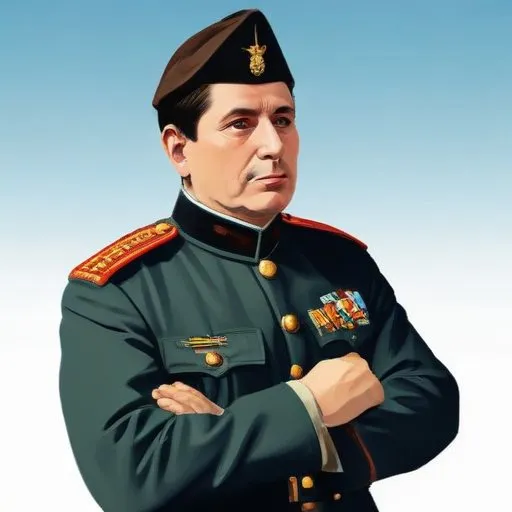
Bartolomé Mitre: A Statesman, Soldier, and Polymath of 19th Century Argentina
A Leading Figure in Argentine History
Bartolomé Mitre is revered as a versatile statesman, military man, politician, journalist, historian, writer, and poet, whose multifaceted career has left an indelible mark on the history of Argentina during the second half of the 19th century. As the first president of unified Argentina, serving from 1862 to 1868, Mitre is credited with embodying the spirit of liberalism in Argentina, albeit with a moderate and flexible approach.
Early Life and Formative Years
Born on June 26, 1821, in Buenos Aires, Mitre's family had Greek roots, with the original family name being Mitropoulos. In 1831, his family settled in Uruguay, where he would later become a soldier and graduate from the Military School of Montevideo in 1839 with the rank of second lieutenant of artillery. During this period, he also began his journalistic pursuits, writing in support of
Fructuoso Rivera, who would later appoint him lieutenant colonel in the Uruguayan Army.
A Career Marked by Political Involvement and Literary Pursuits
Mitre's association with the Colorado Party in the civil wars against the Blancos in Uruguay led him to support the unitario faction of Argentina, which opposed the Rosista regime in Buenos Aires, an ally of the Uruguayan blancos. This tumultuous period saw the emergence of Mitre as a prolific writer, with his first poems and journalistic publications appearing in Uruguayan media. His literary talents would soon take him to Bolivia and Chile, where he collaborated with fellow Argentine exile
Juan Bautista Alberdi on the newspaper El Comercio in Valparaíso. Later, he wrote for El Progreso in Santiago, under the direction of
Domingo Faustino Sarmiento.
Return to Argentina and Rise to Prominence
Following the defeat of
Juan Manuel de Rosas at the 1852 Battle of Caseros, Mitre returned to Argentina and became a leader in the revolt of Buenos Aires Province against Justo José de Urquiza's federal system in the Revolution of 11 September 1852. His involvement in the provincial government led to his appointment to important posts, paving the way for his future presidency.
Presidency and Legacy
As the first president of unified Argentina, Mitre's tenure from 1862 to 1868 was marked by a concerted effort to modernize and centralize the Argentine state. His presidency saw the establishment of a national army, the development of infrastructure, and the promotion of education. Mitre's commitment to liberal values and his ability to strike a balance between rival factions have earned him a revered place in Argentine history.
Personal Milestones and Key Life Events
- 1831: Family settles in Uruguay
- 1839: Graduates from the Military School of Montevideo
- 1846: Appointed lieutenant colonel in the Uruguayan Army
- 1852: Returns to Argentina after the defeat of Juan Manuel de Rosas
- 1862-1868: Serves as the first president of unified Argentina
- 1906: Passes away on January 19
Historical Context and Legacy
Mitre's life and career are deeply intertwined with the tumultuous history of Argentina during the 19th century. His presidency marked a critical period of transition, as the country began to consolidate its national identity. As a statesman, soldier, and polymath, Mitre's contributions to Argentine history are a testament to his enduring legacy, which continues to inspire and influence contemporary Argentine society.
FAQ
What was Bartolomé Mitres role in Argentine politics?
Bartolomé Mitre was a prominent Argentine politician, journalist, and soldier who served as the 6th President of Argentina from 1862 to 1868. He played a key role in modernizing Argentinas economy and infrastructure.
What were Bartolomé Mitres military achievements?
Bartolomé Mitre was a decorated military leader who fought in several conflicts, including the Paraguayan War. He is remembered for his bravery and strategic thinking on the battlefield.
How did Bartolomé Mitre contribute to Argentine journalism?
Bartolomé Mitre was a pioneering journalist who founded and edited several influential newspapers, including La Nación. He advocated for freedom of the press and played a crucial role in shaping Argentine journalism.
What were Bartolomé Mitres presidential accomplishments?
Bartolomé Mitres presidency saw significant economic growth, infrastructure development, and educational reforms. He also established the Argentine Navy and promoted national unity.
What is Bartolomé Mitres legacy in Argentina?
Bartolomé Mitres legacy is that of a statesman, military leader, and journalist who played a formative role in shaping modern Argentina. He remains an important figure in Argentine history and politics.