


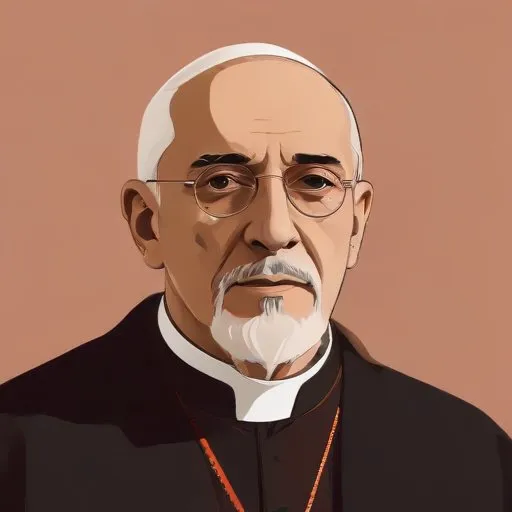
A 16th-century Spanish priest, philosopher, and theologian who developed influential concepts in metaphysics, ethics, and law, shaping modern Western philosophy. His works heavily influenced Enlightenment thinkers and the development of international law.
Francisco Suárez, a Spanish Jesuit priest, philosopher, and theologian, left an indelible mark on the history of scholasticism, making him one of the most influential figures of the School of Salamanca movement. His groundbreaking work, which spanned philosophy, theology, and law, continues to inspire thinkers across the globe, including prominent minds such as Leibniz, Grotius, Pufendorf, Schopenhauer, and Heidegger.
Born on January 5, 1548, in Granada, Andalusia, southern Spain, Suárez was the youngest son of a noble family with possible Jewish converso ancestry. He began his education at the tender age of 10, studying law and philosophy at the University of Salamanca in 1561.
In 1564, Suárez entered the Society of Jesus in Salamanca, embarking on a journey of spiritual growth under the guidance of Fr. Alonso Rodriguez. He took his first vows as a Jesuit in 1566 and began studying theology at Salamanca. Although he struggled initially, failing his entrance exam twice, he persevered and eventually passed, going on to teach philosophy and theology at various Jesuit colleges in Spain.
Suárez's most significant contribution lies in his work, Disputationes Metaphysicae, which marked a turning point in the history of second scholasticism, bridging the gap between its Renaissance and Baroque phases. His philosophical ideas had a profound impact on modern thought, influencing the development of metaphysics, ethics, and political philosophy.
In addition to his metaphysical works, Suárez made substantial contributions to the fields of law, theology, and philosophy, earning him recognition as one of the most important thinkers of the 16th century.
"The ultimate end of man is not to know, but to act."
Suárez's work has been compared to that of his contemporaries, such as Thomas Cajetan and Domingo de Soto, highlighting his unique contributions to the School of Salamanca movement. His influence can be seen in the works of later philosophers, cementing his place as a pivotal figure in the history of philosophy.
| 1548 | Born in Granada, Andalusia, southern Spain |
| 1561 | Matriculated at the University of Salamanca |
| 1564 | Entered the Society of Jesus in Salamanca |
| 1566 | Took his first vows as a Jesuit |
| 1570 | Completed his course of study in theology at Salamanca |
| 1572 | Ordained as a priest in Segovia |
| 1574 | Moved to the Jesuit College in Valladolid to teach theology |
| 1617 | Passed away on September 25 |
Francisco Suárez's remarkable life and work have left an enduring impact on the world of philosophy, theology, and law. His contributions continue to inspire and influence thinkers to this day, solidifying his position as one of the most important figures of the School of Salamanca movement.
Born in 1502
Introduced the Gregorian calendar, a solar-based calendar that's widely used today, reforming the Julian calendar's inaccuracies.
