


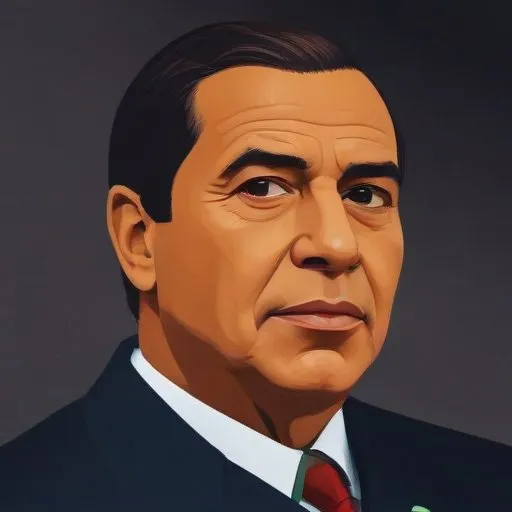
The 5th President of Brazil, who served from 1902 to 1906, is known for his efforts to modernize and beautify Rio de Janeiro, including the construction of the city's iconic Avenue Rio Branco. He also played a key role in establishing Brazil's coffee industry.
Francisco de Paula Rodrigues Alves is renowned for his remarkable tenure as the fifth president of Brazil, from 1902 to 1906, during which he spearheaded a comprehensive urban renewal project in Rio de Janeiro, the then Brazilian capital. This ambitious endeavor not only modernized the city's infrastructure but also left an indelible mark on Brazil's history.
Born on July 7, 1848, in Guaratinguet, São Paulo, Rodrigues Alves graduated as a lawyer from the Faculdade de Direito do Largo de São Francisco in 1870. He began his public service career as a councilman in his native city, serving from 1866 to 1870, and later became a prosecutor in 1870.
Rodrigues Alves' political career gained momentum as he served as a member of the state house of representatives from 1872 to 1879 and later as the president of the province of São Paulo from 1887 to 1888. After the proclamation of the Republic, he played a key role in the Constitutional Assembly and was a member of the house of representatives from 1891 to 1893.
Rodrigues Alves' most notable achievement was his visionary urban renewal project in Rio de Janeiro, which transformed the city's landscape. He applied his expertise in public finance to modernize the city's infrastructure, including the construction of roads, public gardens, and buildings. This effort was punctuated by the 1904 Vaccine Revolt, a challenging period in Brazilian history.
Rodrigues Alves' personal life was marked by key milestones, including his marriage to Ana Guilhermina de Oliveira Paula Sousa and the birth of their six children. His second presidential term was cut short when he fell ill during the 1918 influenza pandemic and passed away on January 16, 1919, before assuming power.
Rodrigues Alves' leadership and vision had a lasting impact on Brazil's history, leaving behind a legacy of urban planning and development. His contributions paved the way for future generations of Brazilian leaders, solidifying his place as one of the most influential presidents in Brazilian history.
Rodrigues Alves' leadership style and policies were distinct from those of his contemporaries, such as President Campos Sales, who focused on consolidating the young Brazilian Republic. Rodrigues Alves' emphasis on urban renewal and modernization set him apart as a visionary leader.
Born in 1841
A Brazilian lawyer and politician who served as the country's third president, known for his efforts to modernize and stabilize the young nation during a tumultuous period. He's remembered for his strong leadership and commitment to democracy.
Born in 1847
The 6th President of Brazil, a key figure in the country's early 20th-century development, known for modernizing the nation's infrastructure and economy. He's also recognized for his role in establishing the country's Supreme Court.
Born in 1865
A Brazilian jurist and politician who served as the 11th President of Brazil, known for his role in shaping the country's modern government and international relations. He's also recognized for his contributions to the Brazilian Supreme Court.
